Main course Japanese-inspired
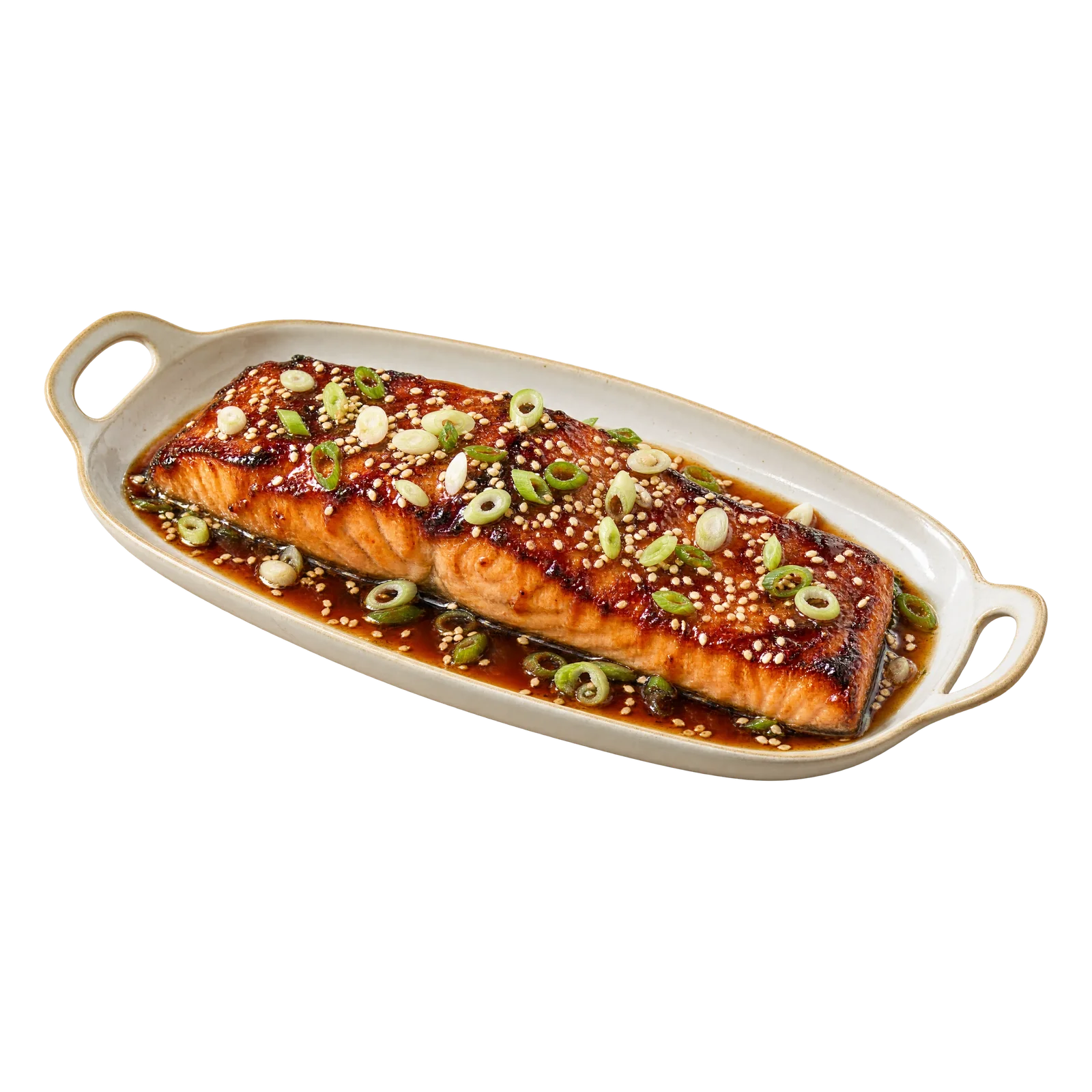
Teriyaki Salmon under the Oven Grill
Meat & fish
Editorially prepared
A large salmon fillet cooked under the oven grill with a glossy soy and sesame glaze. Two thin coats of sauce create a bold sweet-savoury surface, finished with spring onions and toasted sesame seeds.
Plan this meal
Set your servings and add the meal. Open your plan to choose more meals and find your combined shopping list.
COOK YOUR WAY
Take this recipe to the kitchen
Start a session to tick off ingredients and steps and use timers.
Ingredients
4 servings · metric units
Scale the ingredients proportionally, but not the grilling time. For a larger quantity, use several pieces of similar thickness. If they do not fit beneath the element in a single layer, grill in batches; allow approximately 15 extra minutes per additional batch. Reduce a larger quantity of glaze in a wider saucepan to the same consistency.
Substitutions
Substitute amounts are adjusted to your selected servings.
- Instead of unseasoned rice vinegarmild cider vinegar
This can replace rice vinegar but adds a fruity note. Start with less and taste the glaze before it touches raw fish; stronger vinegar can easily dominate the sauce.
- Instead of dark brown soft sugarlight brown soft sugar
Use the same weight as the dark brown sugar. The glaze will be lighter, with a milder molasses flavour.
Shopping for this recipe
Your list uses the selected servings and fridge. Stock quantities are unknown — check you have enough.
Optional ingredients and substitutions
You’ll need
Oven with a grill function · Grill-safe metal tray large enough for the whole fillet · Aluminium foil · Small saucepan and spoon · Kitchen scales and measuring jug · Two small bowls · Pastry brush · Chopping board, knife and kitchen paper · Food thermometer · Two wide fish slices and a serving platter
Method
0/7 stepsCook the glaze
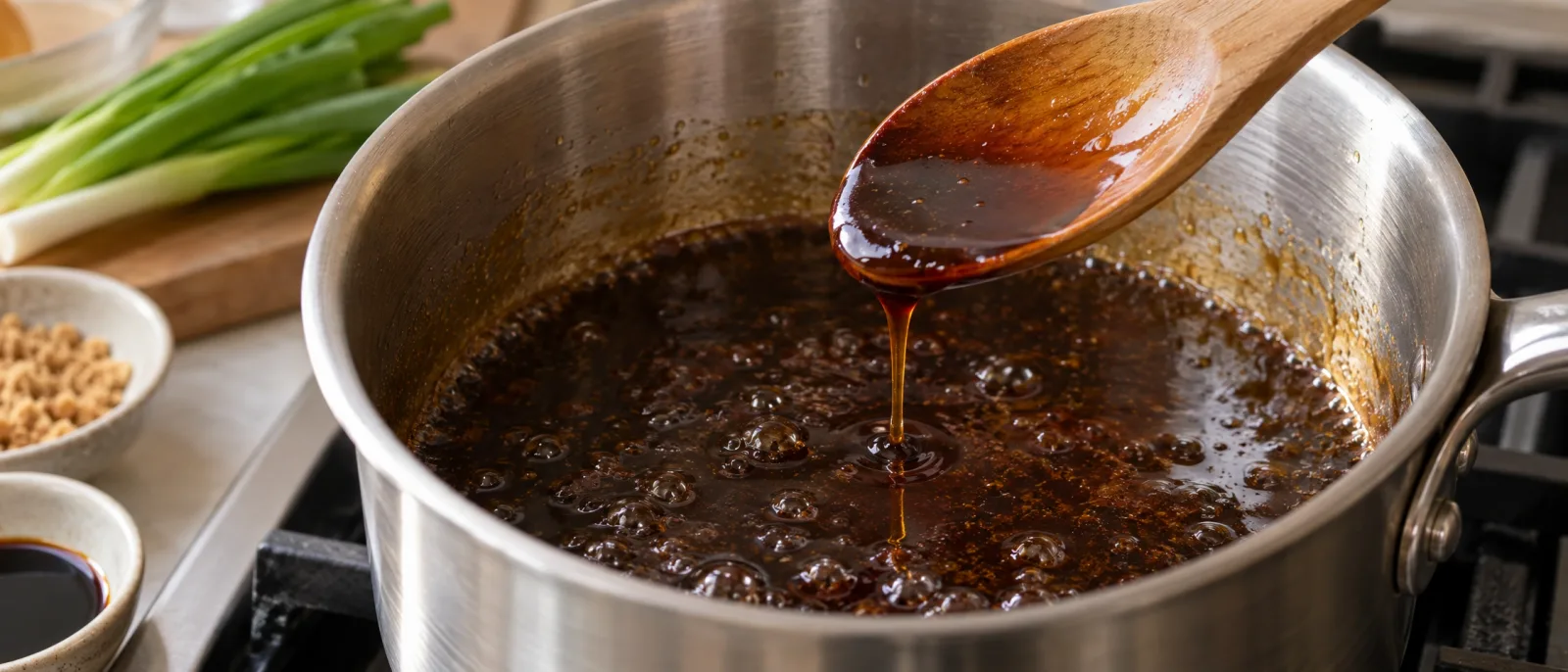
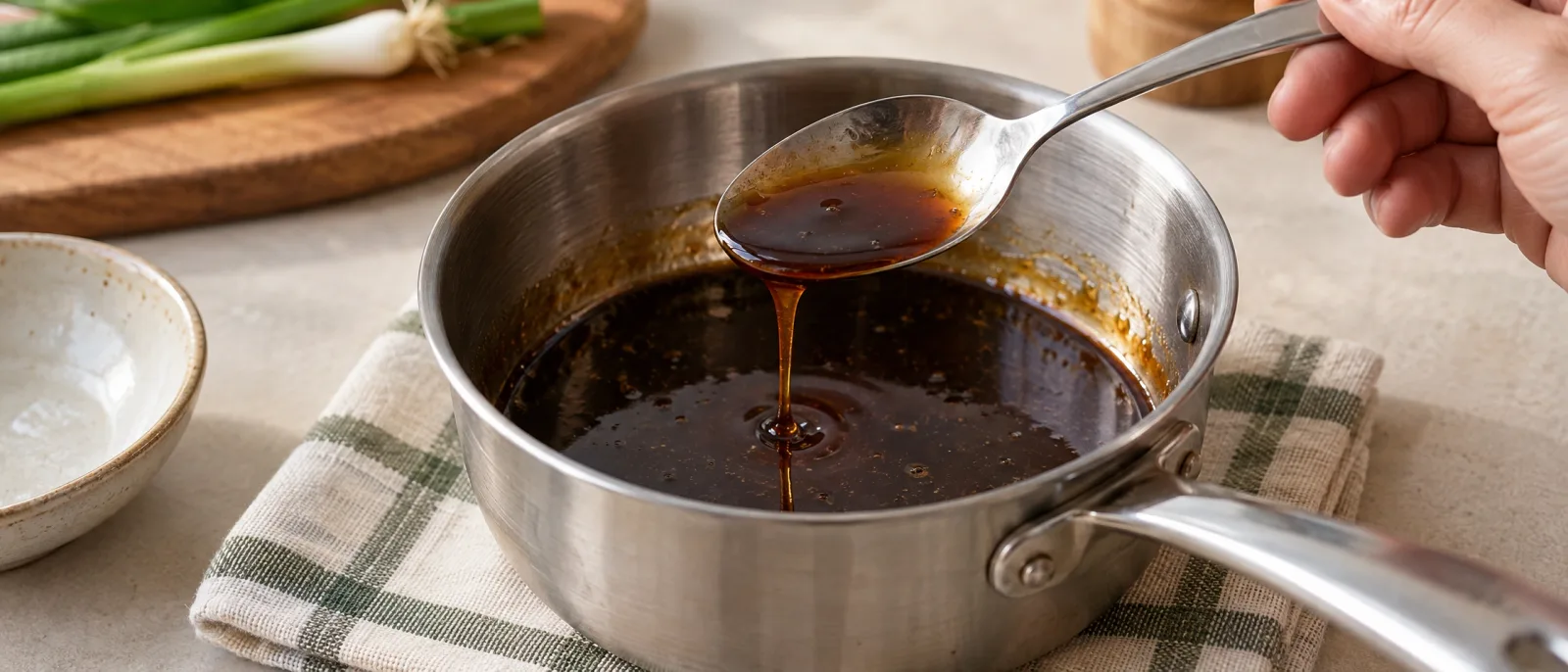
Combine the soy sauce, brown sugar, rice vinegar and sesame oil in a small saucepan. Heat over a medium heat, stirring, until the sugar dissolves and the liquid reaches a gentle simmer, approximately 3 minutes. From that point, simmer gently for approximately 5 minutes, stirring and scraping the sides. The glaze should lightly coat a spoon but still pour freely. If watery, simmer a little longer, checking every minute; do not reduce it to a thick paste.
05:00Cook the glaze Cool the sauce
Remove the saucepan from the heat and leave the glaze to cool for approximately 8 minutes, starting when it comes off the hob. Meanwhile, begin preparing the oven and fish in the next step. Before brushing, check the sauce: it should be warm rather than scalding and spread in a thin layer. If it has thickened too much, stir in a little warm water.
08:00Cool the sauce Prepare the fish and grill
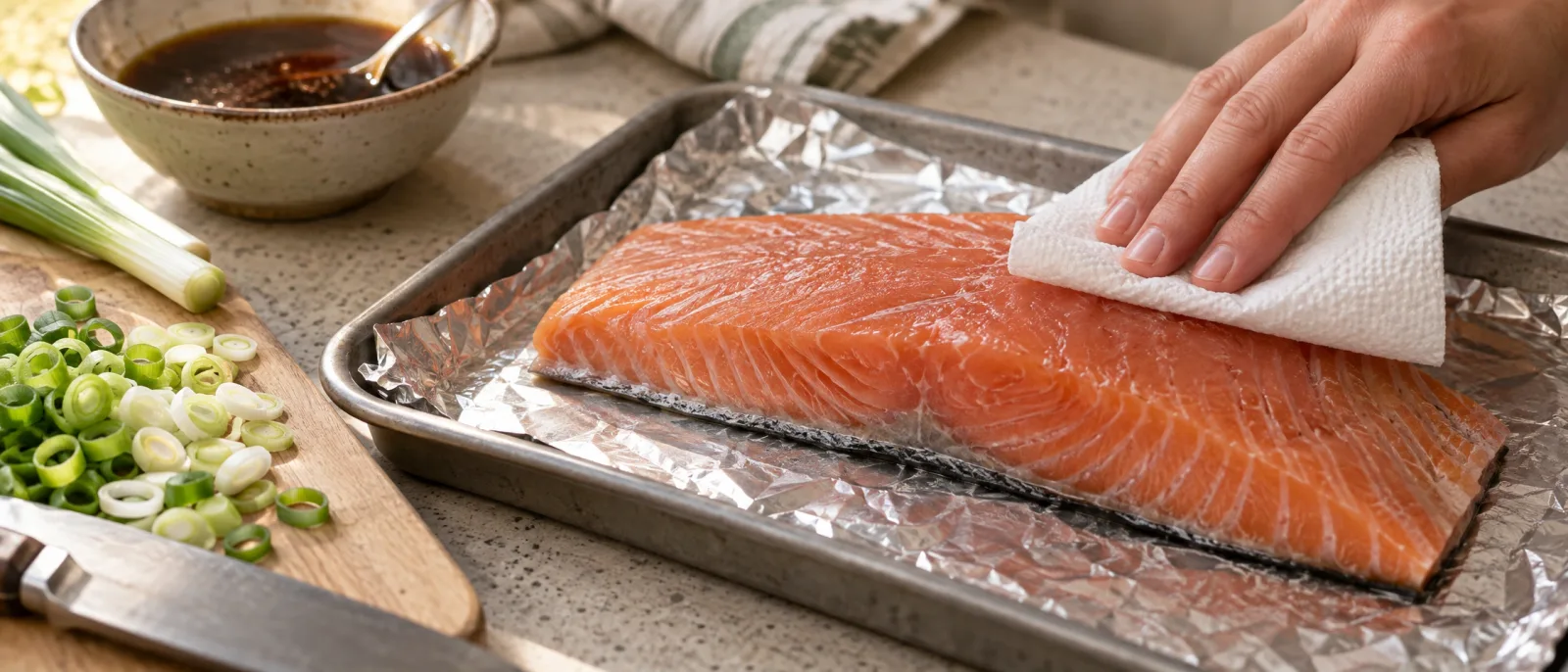
While the glaze cools, position the rack so the top of the fish will sit approximately 15 cm below the upper element. Set the grill to high, approximately 240°C if your appliance requires a temperature setting, and preheat for approximately 10 minutes. Line a metal tray with aluminium foil. Pat the salmon dry, check for remaining pin bones and place it skin-side down; tuck any very thin end underneath. Wash and dry the spring onions and slice into thin rings. The grill will still be preheating.
Prepare the fish and grill Divide the sauce and coat the fish
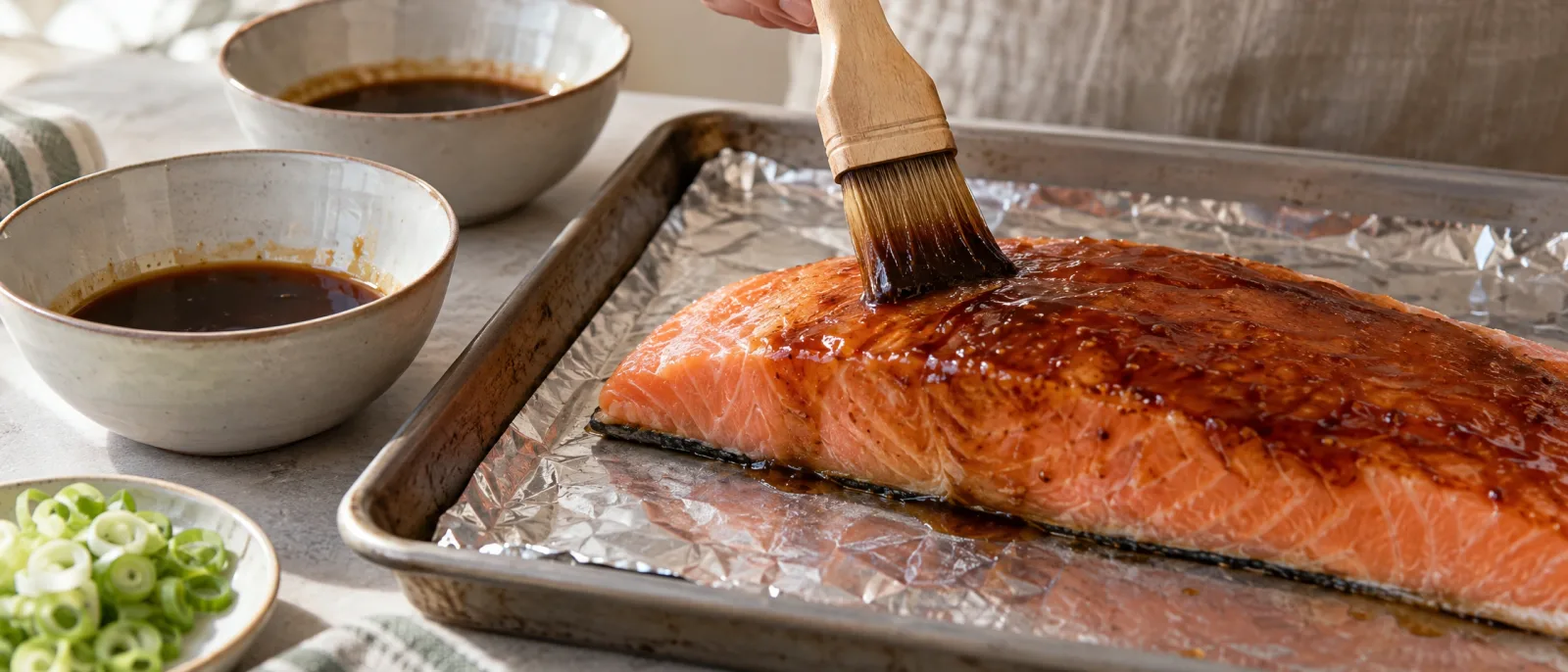
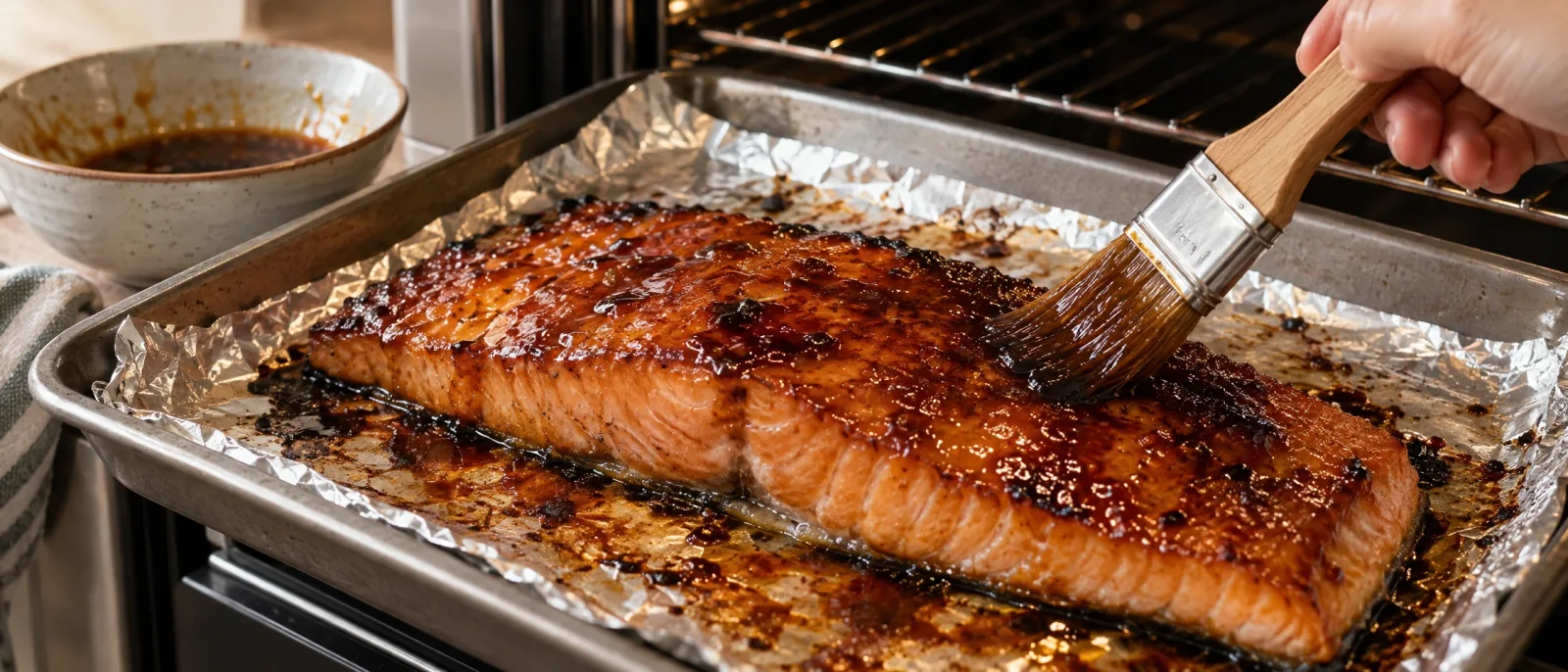
Once the glaze has cooled enough to spread thinly, pour one third into a clean bowl for serving. Pour the remaining glaze into a second bowl. Brush the top and sides of the salmon with half the glaze from this second bowl, keeping the rest for the second coating. Do not put a brush that has touched raw fish into the sauce reserved for serving.
Divide the sauce and coat the fish Brown the first coating
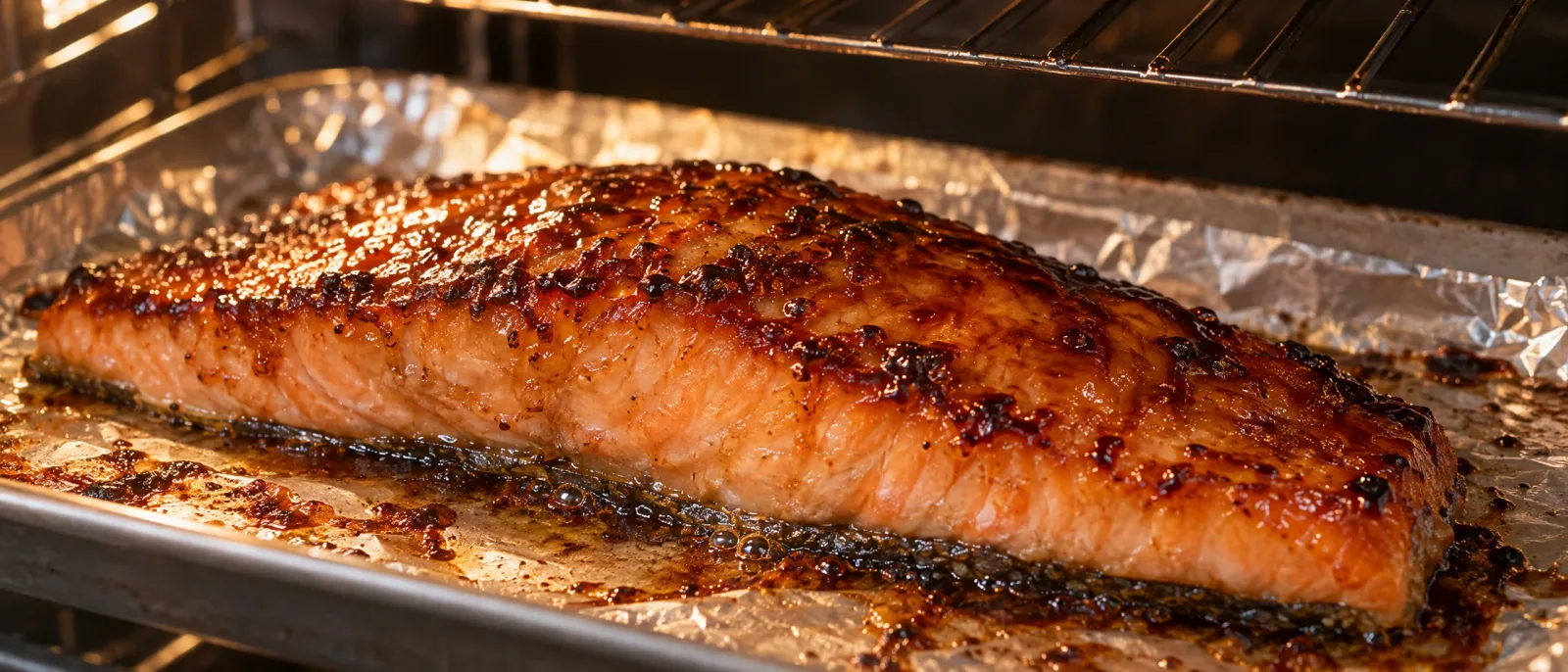
Check that the grill is hot and slide in the tray. Grill for approximately 5–7 minutes from putting the fish in, until the glaze bubbles and browns in patches. Stay in the kitchen and watch the surface through the door. If it darkens too quickly, move the tray down one level. If the glaze is still pale after this time, continue in one-minute intervals, checking its colour. Do not turn the fillet.
06:00Brown the first coating Add the second coating and finish cooking
Pull out the tray and brush the salmon with the remaining glaze from the brushing bowl. Return it to the grill for approximately 5–7 minutes, starting when the tray goes back in. The fish is ready when its thickest part reaches 63°C and the flesh separates easily into flakes. The surface should be glossy and dark brown, not black. If the centre is not ready but the glaze is already deeply browned, move the tray lower, reduce the grill setting and check the temperature every 1–2 minutes. Do not serve any leftover brushing sauce or reuse the brush that touched undercooked fish.
06:00Add the second coating and finish cooking Finish and serve
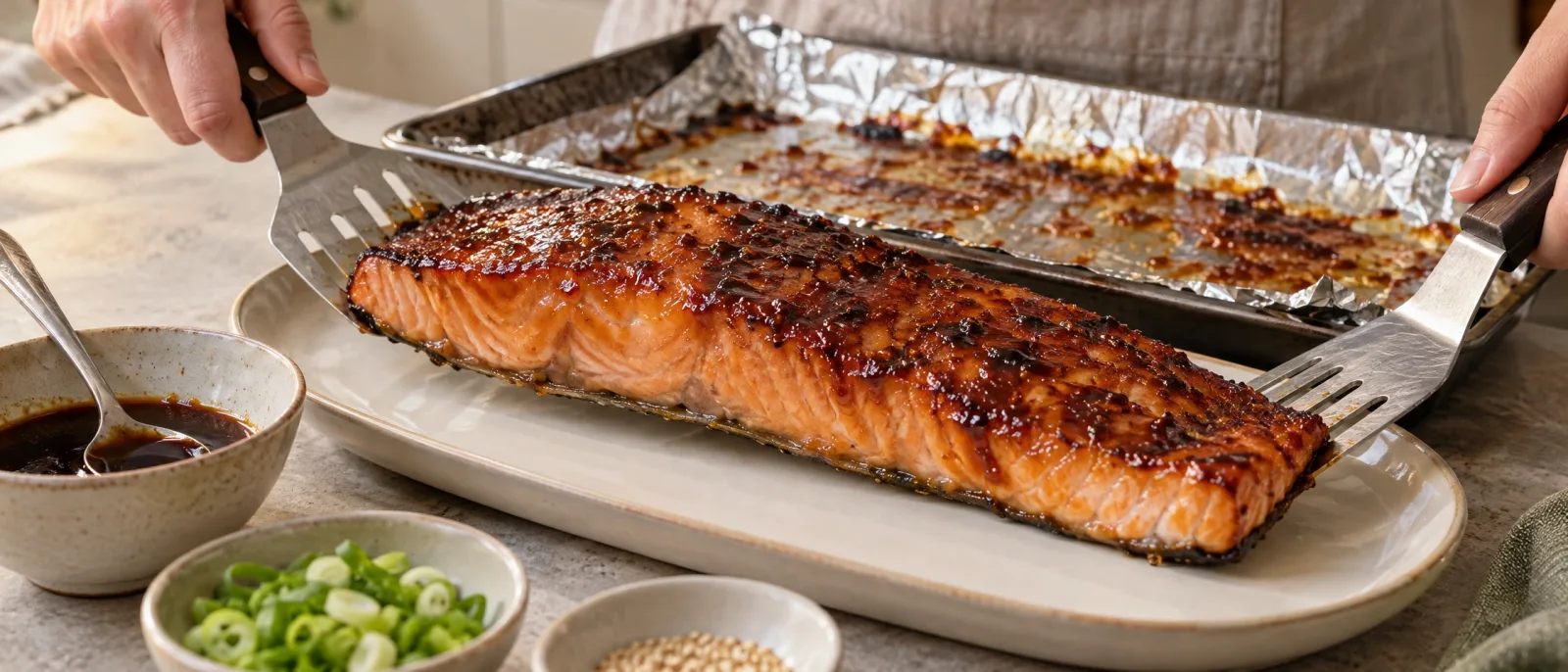
Using two wide fish slices, transfer the cooked salmon to a platter, skin-side down. Spoon over the clean sauce reserved for serving. Scatter with the prepared spring onions and toasted sesame seeds. Serve immediately, dividing the fillet into portions at the table.
Finish and serve
My note for next time
Saved automatically in this browser. This note is not sent to the editors. 0/2000
Tips
- Do not add extra salt before cooking: the glaze already contains soy sauce.
- Use a metal tray and aluminium foil under the grill, not baking parchment. Check that your cookware is suitable.
- Do not wait for a black crust. The glaze should be dark brown and glossy, with a few more deeply browned patches.
- Serve with separately prepared rice and green vegetables; their preparation is not included in the recipe timing.
Storage
Store only fully cooked fish. Transfer leftover portions to a shallow, lidded container and refrigerate at 4°C or below within 2 hours of cooking. Use within 3 days. Alternatively, freeze for up to 3 months and thaw in the fridge. Reheat covered until the centre reaches 74°C; the glaze will soften and the fish may become less succulent.
Timing
Hands-on: 28 min · Cooking: 20 min · Resting: 8 min
The total allows for tasks done in parallel. The individual times can overlap.