Main course Mediterranean
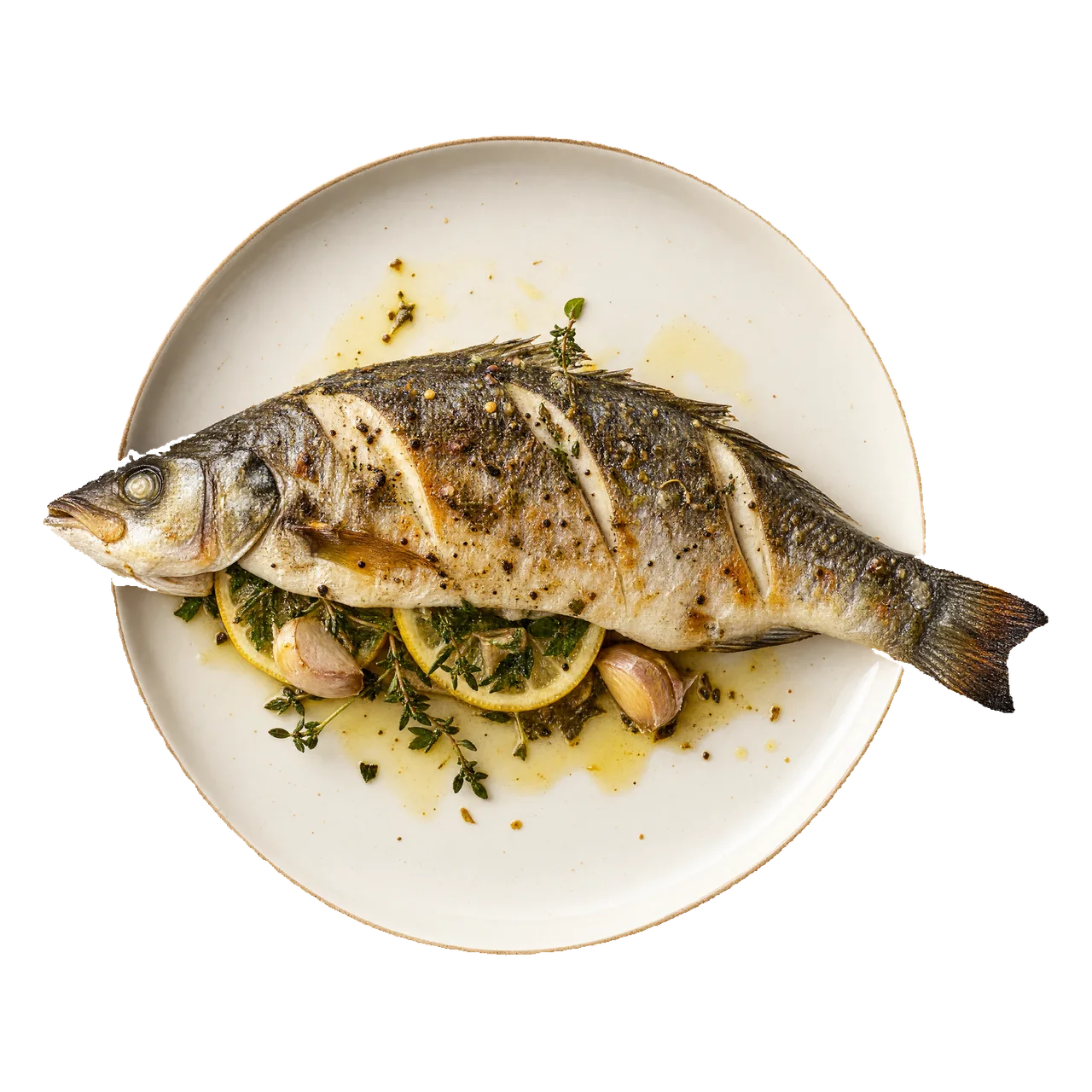
Roast sea bass with lemon and herbs
Whole sea bass roasted with lemon, garlic and fresh herbs. Roast it uncovered for a more browned skin, or in a parchment parcel to hold in the aromatic juices.
Ingredients
2 servings · metric units
For more servings, use more fish of a similar size. Arrange them in a single layer with space between them; do not multiply the roasting time by the number of fish. Check each fish separately.
You’ll need
Oven · Baking tray or shallow roasting dish · Baking parchment · Chopping board and sharp knife · Kitchen paper · Wide fish slice · Kitchen thermometer, optional · Metal tray without parchment for the optional grill finish
Method
0/7 stepsHeat the oven
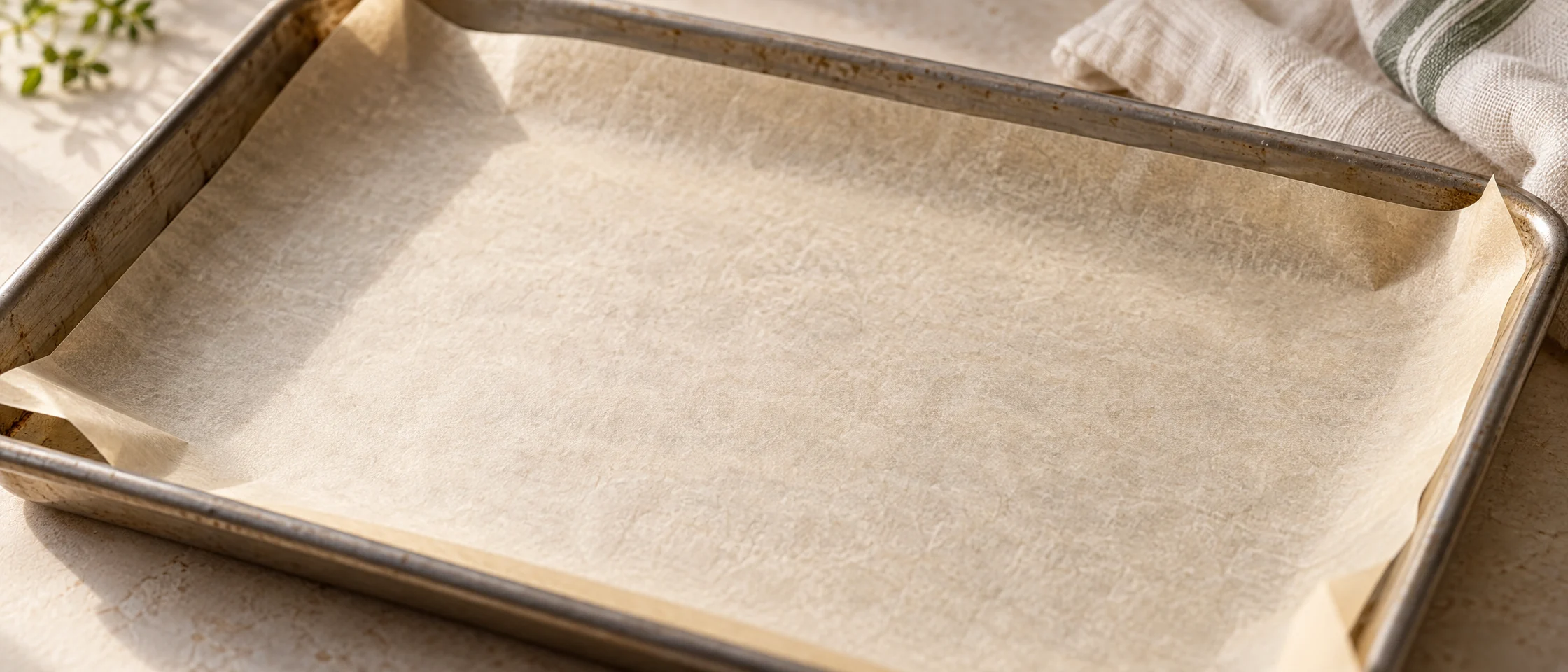
Heat the oven to 200°C conventional or 180°C fan. Line a baking tray with baking parchment. For a sealed parcel, use a sheet large enough to enclose the fish loosely and fold the edges shut.
Heat the oven Dry and slash the fish
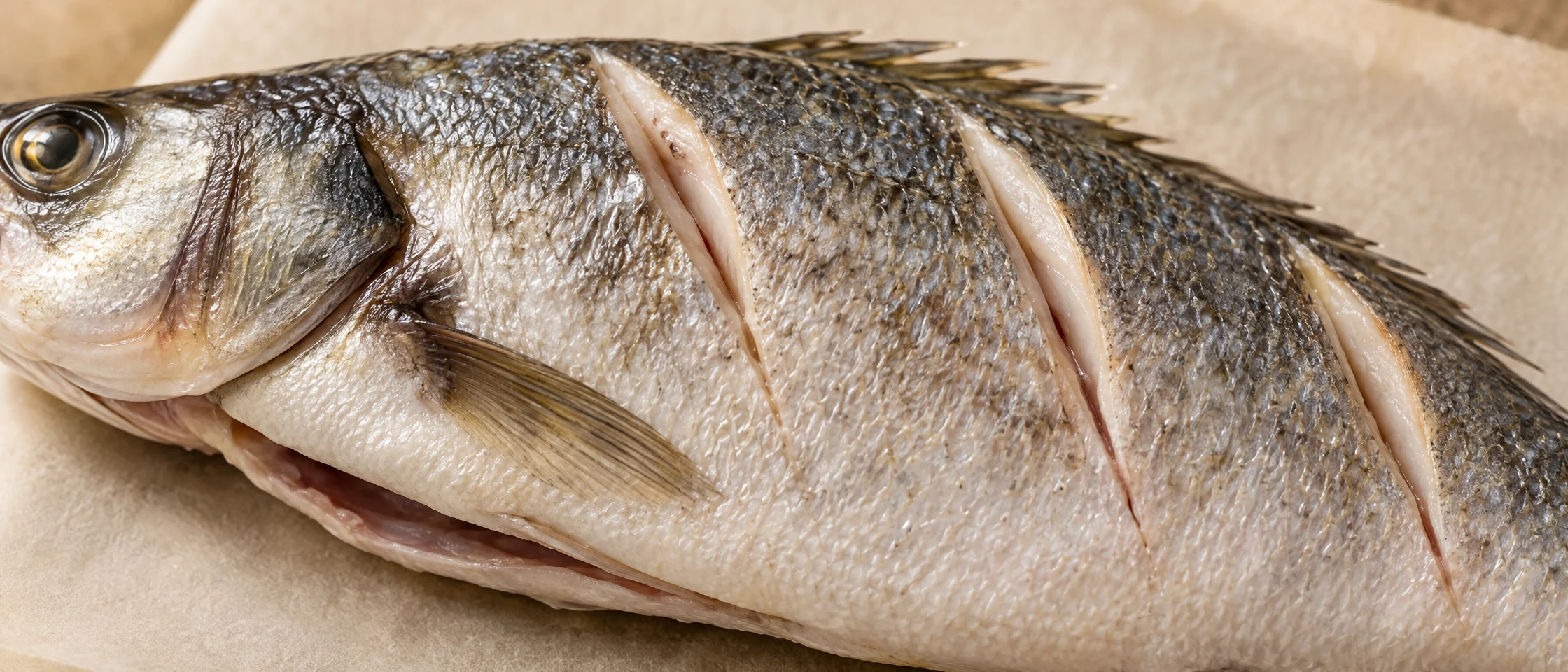
Check that the sea bass is thoroughly gutted. Wipe any residue from the cavity with damp kitchen paper, then dry the fish very thoroughly inside and out. Make 2–3 diagonal slashes on each side across the thickest part, cutting through the skin and slightly into the flesh rather than down to the backbone.
Dry and slash the fish Season and fill
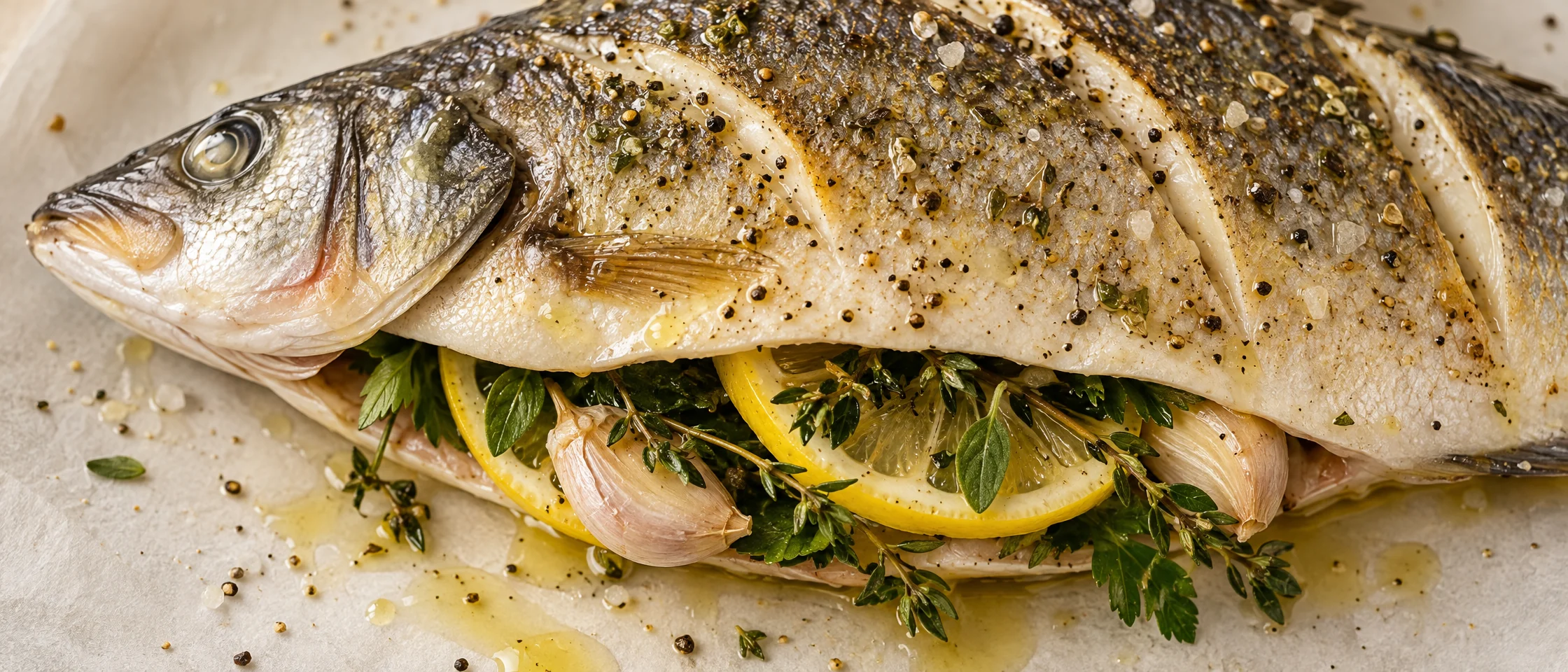
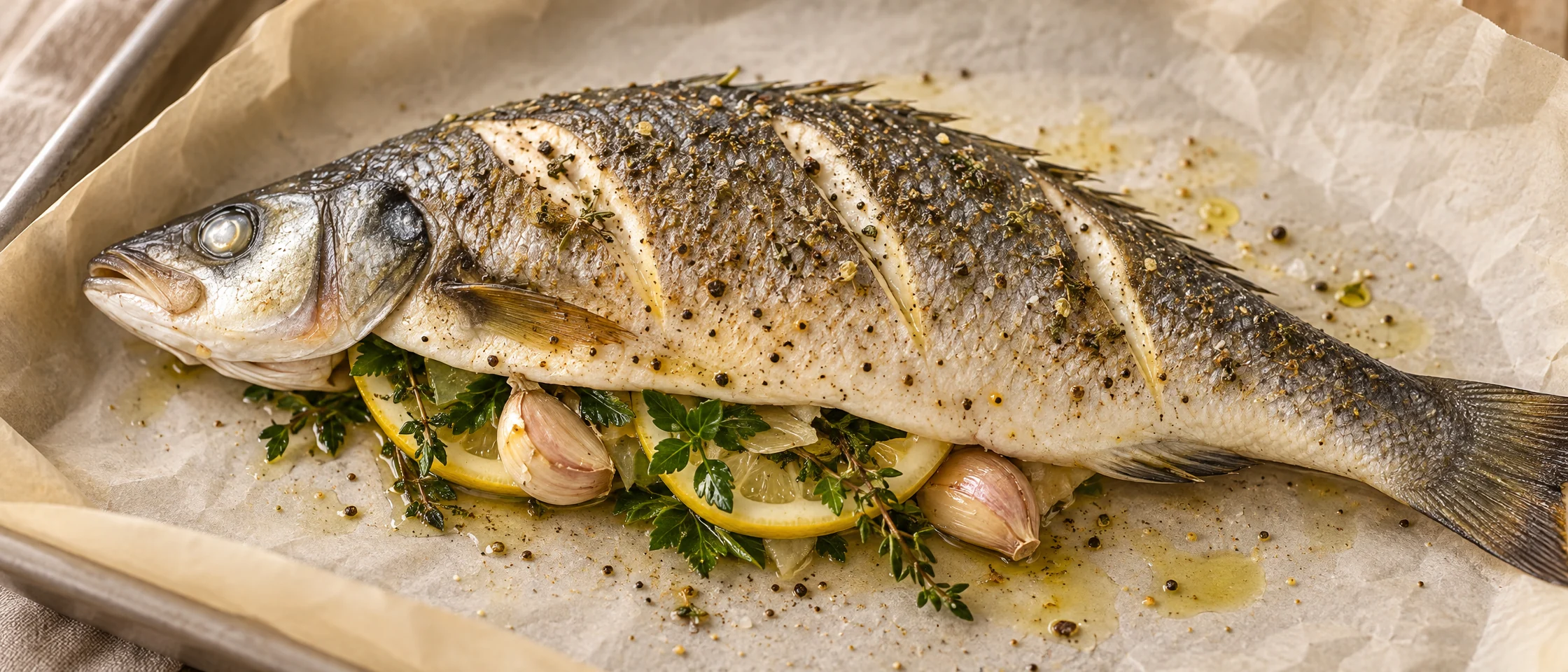
Thinly slice half the lemon and squeeze the juice from the other half. Crush the garlic with its skins on. Reserve a little olive oil for serving. Season the fish with salt and pepper outside, inside and in the slashes. Fill the cavity with the garlic, parsley, thyme, fresh oregano and lemon slices. Drizzle the lemon juice inside and over the skin. Rub the fish with the remaining olive oil, including the slashes. If using dried oregano, sprinkle it over the skin.
Season and fill Arrange uncovered or seal in parchment
Place the fish on the prepared tray. Leave it uncovered or enclose it in a loose parchment parcel, folding the edges tightly shut. For the parcel version, you can pour about 30 ml of white wine beside the fish before sealing. Leave room inside for steam.
Arrange uncovered or seal in parchment Roast and check the flesh
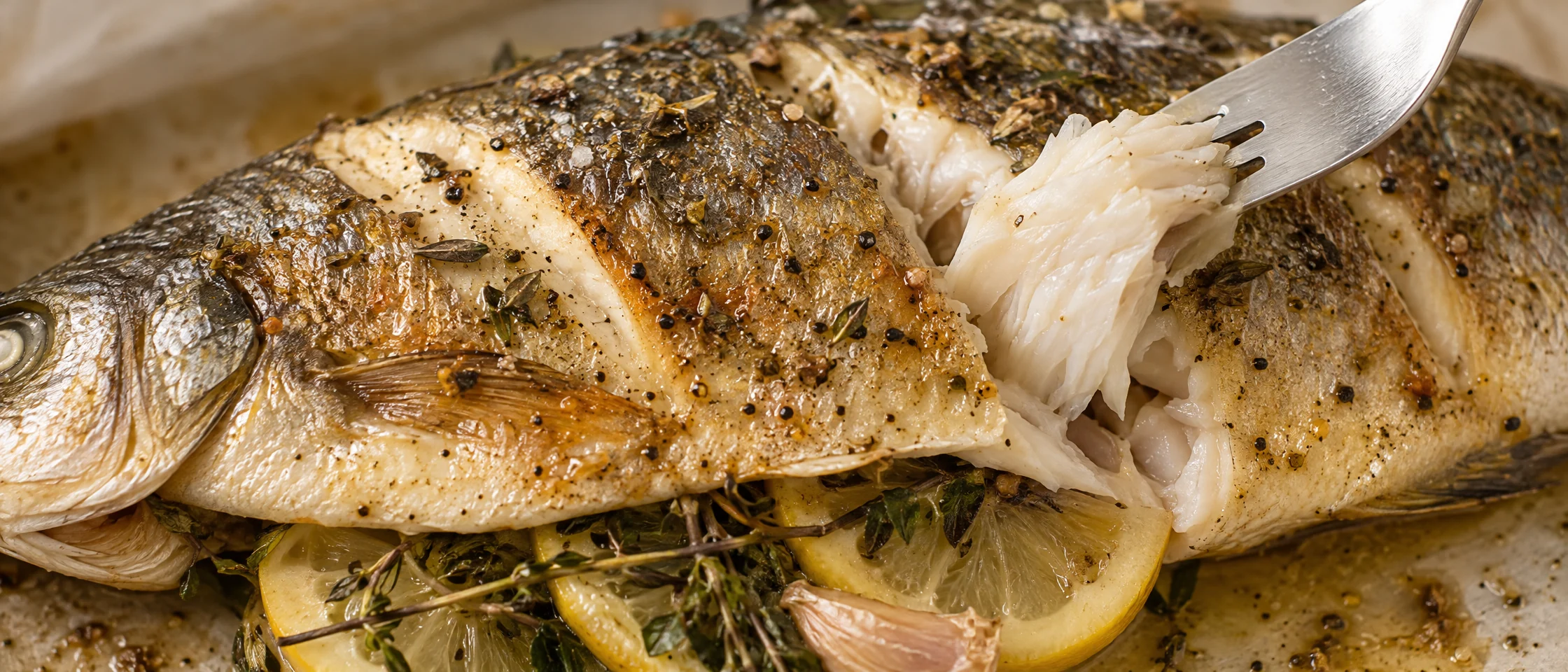
Roast on the middle shelf for 15–22 minutes. Check a smaller fish after 15 minutes; a larger one will usually need 20–22 minutes. Open a parcel carefully, directing the steam away from you. At the thickest part beside the backbone, the flesh should be opaque white, moist and easy to lift from the bones, with no translucent patches. A thermometer inserted into the flesh without touching bone should read 63°C. If needed, continue cooking and check every 2 minutes.
15:00Roast and check the flesh Optionally brown the skin
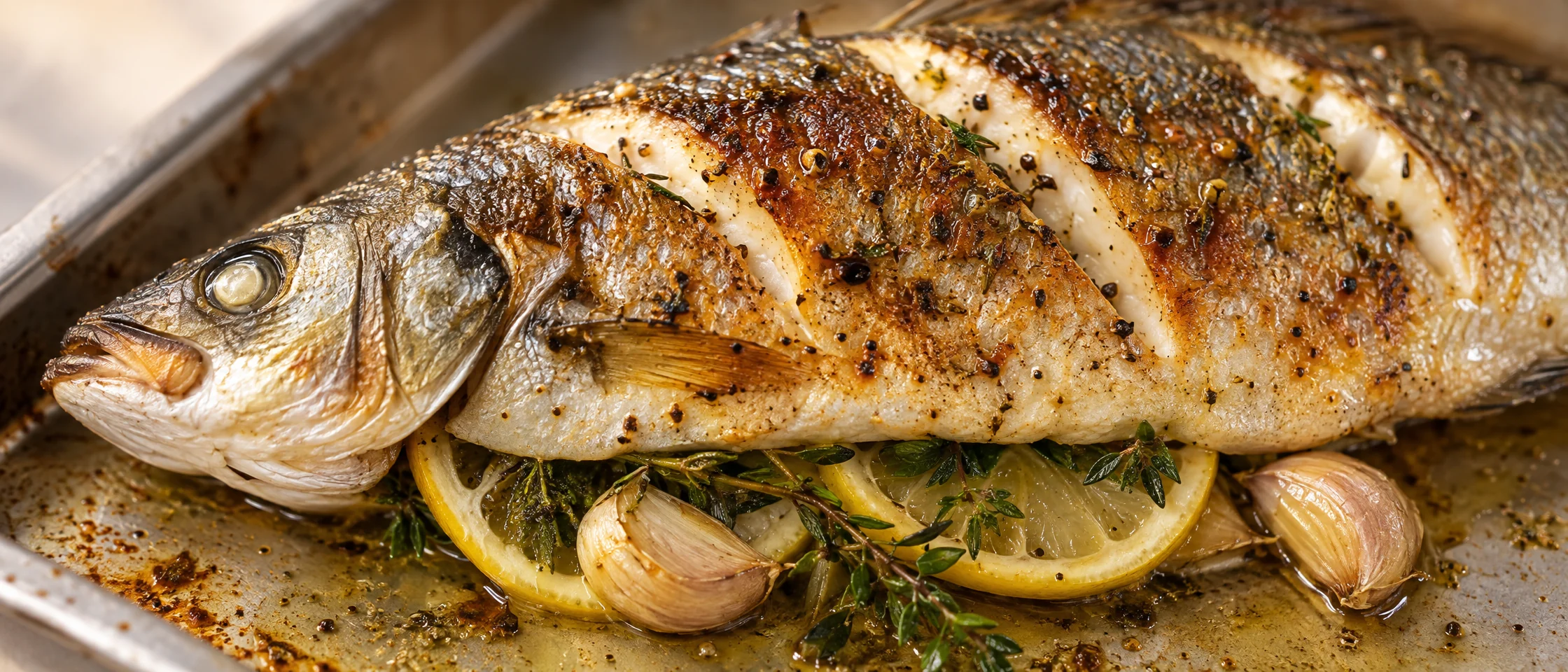
If roasting uncovered and you want more colour on the skin, towards the end of cooking transfer the fish to a metal tray without parchment, using a little of the roasting oil and juices to grease the surface. Grill for 2–3 minutes, watching the skin constantly. Do not put baking parchment under the grill. Skip this stage if the fish is already fully cooked or if you prefer the soft skin of the parcel version.
Optionally brown the skin Serve straight away
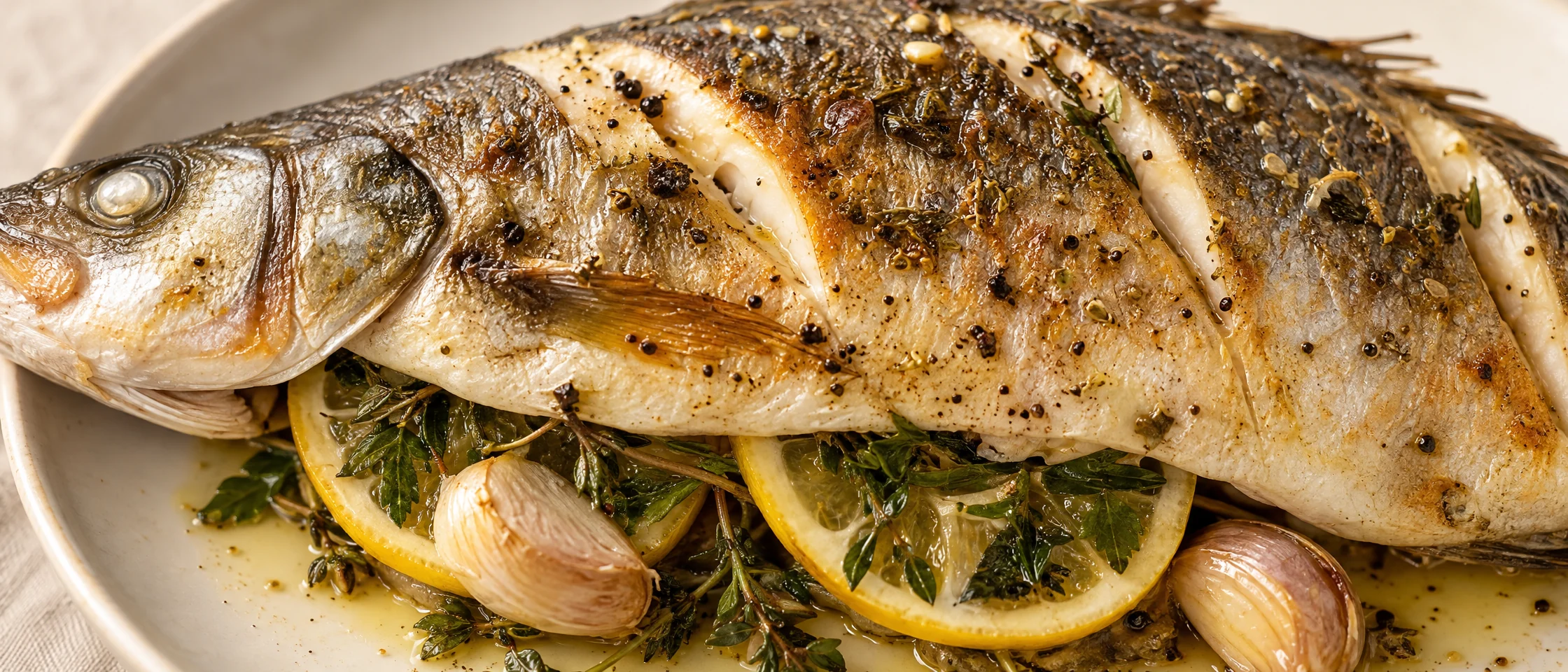
Use a wide fish slice to transfer the fish to a plate, adding the juices from the parcel if used. Drizzle with the reserved olive oil and serve straight away. When portioning, remove the backbone and check the flesh for small bones. Discard the garlic skins and woody herb stems; if the fish was cooked with its scales on, do not eat the skin. Serve with roast potatoes, a green salad with vinaigrette or roasted root vegetables.
Serve straight away
Tips
- Dry the cavity and slashes as well as the skin. A wet surface browns less readily, while baking parchment helps prevent sticking.
- Do not pack the filling tightly: the herbs and lemon should sit loosely in the cavity.
- Roasting uncovered gives a more browned skin. In a sealed parcel, the skin stays soft and aromatic juices collect underneath.
- The grill finish is optional. If the flesh is already cooked, do not prolong cooking just to colour the skin.
- Start roasting potatoes and firm root vegetables earlier so they are ready alongside the fish.
Storage
Best served straight away. Remove any leftover fully cooked fish from the bones and place in a sealed container. Refrigerate within 2 hours of cooking and eat within 2 days. Reheat only once, covered, until piping hot throughout; the flesh may become a little drier.
Timing
Hands-on: 15 min · Cooking: 25 min
Cooking questions
Should I roast sea bass uncovered or in parchment?
Uncovered roasting browns the skin more. A sealed parchment parcel holds in the aromatic juices but leaves the skin softer. Both methods are described in the instructions.
Should I roast more fish for longer?
Do not multiply the roasting time by the number of fish. Use similarly sized fish, arrange them in a single layer with space between them and check each one separately.