Main course French
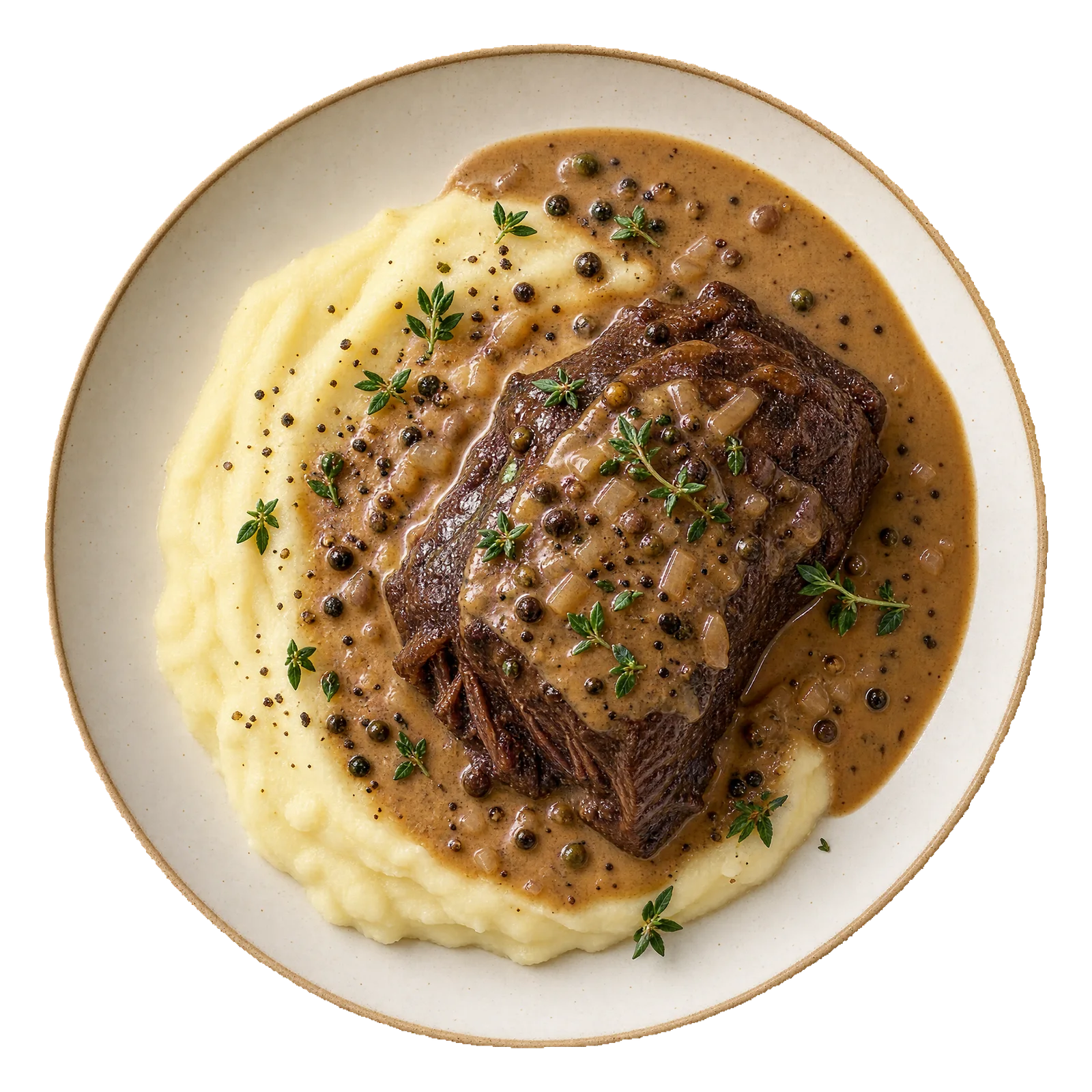
Beef cheeks with Cognac peppercorn sauce
Beef cheeks slowly braised in red wine and stock, served with buttery mash and a creamy sauce of coarsely crushed peppercorns and Cognac. The meat should yield easily to a fork while still holding its shape.
Ingredients
4 servings · metric units
For a larger batch, brown the meat in extra batches. Choose a casserole that holds the cheeks fairly snugly, with liquid reaching about two-thirds of their height. Braising time depends mainly on the size and toughness of the cheeks, rather than the number of servings. Reduce a larger volume of liquid in a wide saucepan.
Meat and braising base
Seasoning and topping up
Au poivre sauce
Buttery mash
To serve
You’ll need
Heavy ovenproof casserole with a close-fitting lid · Frying pan or saucepan for the sauce · Saucepan for the potatoes · Fine sieve and a bowl for collecting the liquid · Measuring jug · Pestle and mortar or rolling pin for crushing peppercorns · Potato ricer · Tongs, knife and chopping board · Warm plates and a sauceboat
Method
0/11 stepsPrepare the meat and vegetables
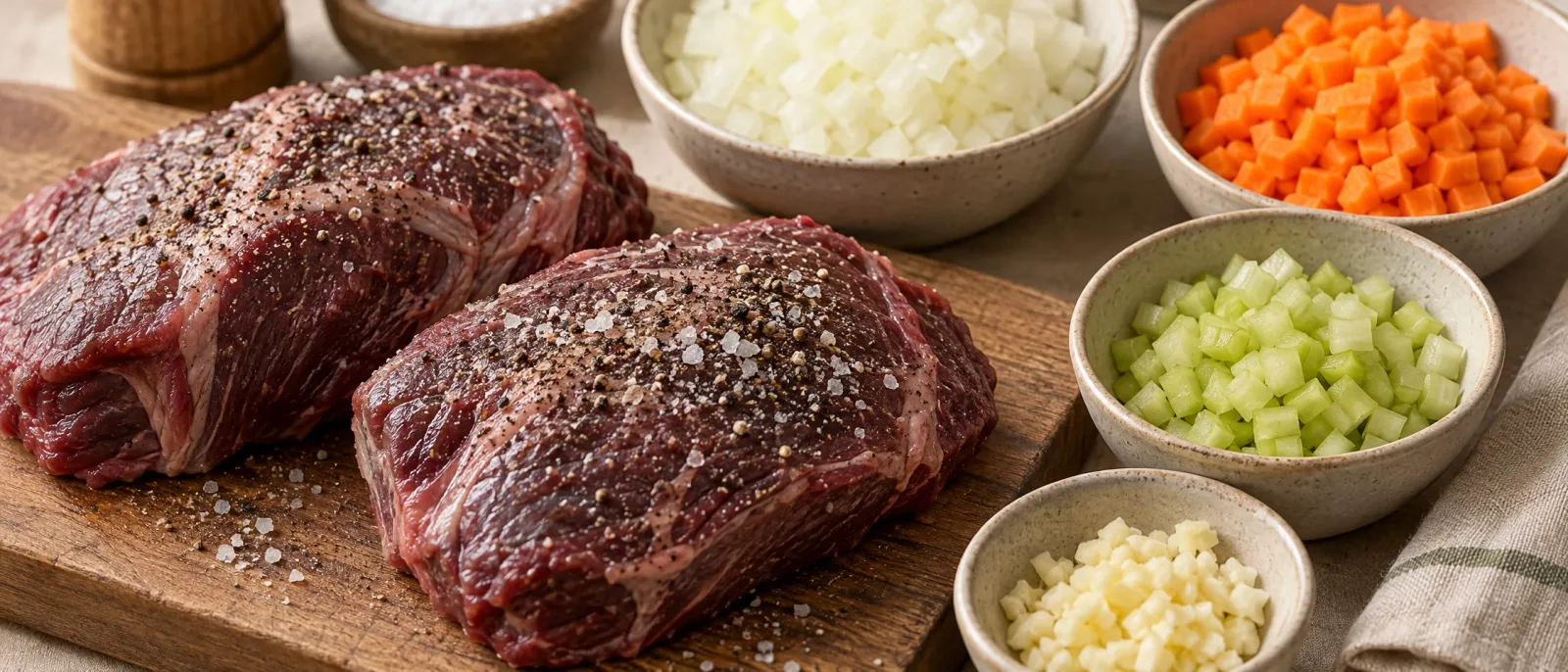
Check the beef cheeks and remove any remaining tough outer membranes and excess sinew. Leave the connective tissue inside the meat intact. Pat thoroughly dry, season with salt and leave for 20–30 minutes. Meanwhile, finely dice the onion, carrot and celery and chop the garlic. Heat the oven to 150°C, conventional heat.
20:00Prepare the meat and vegetables Brown the cheeks
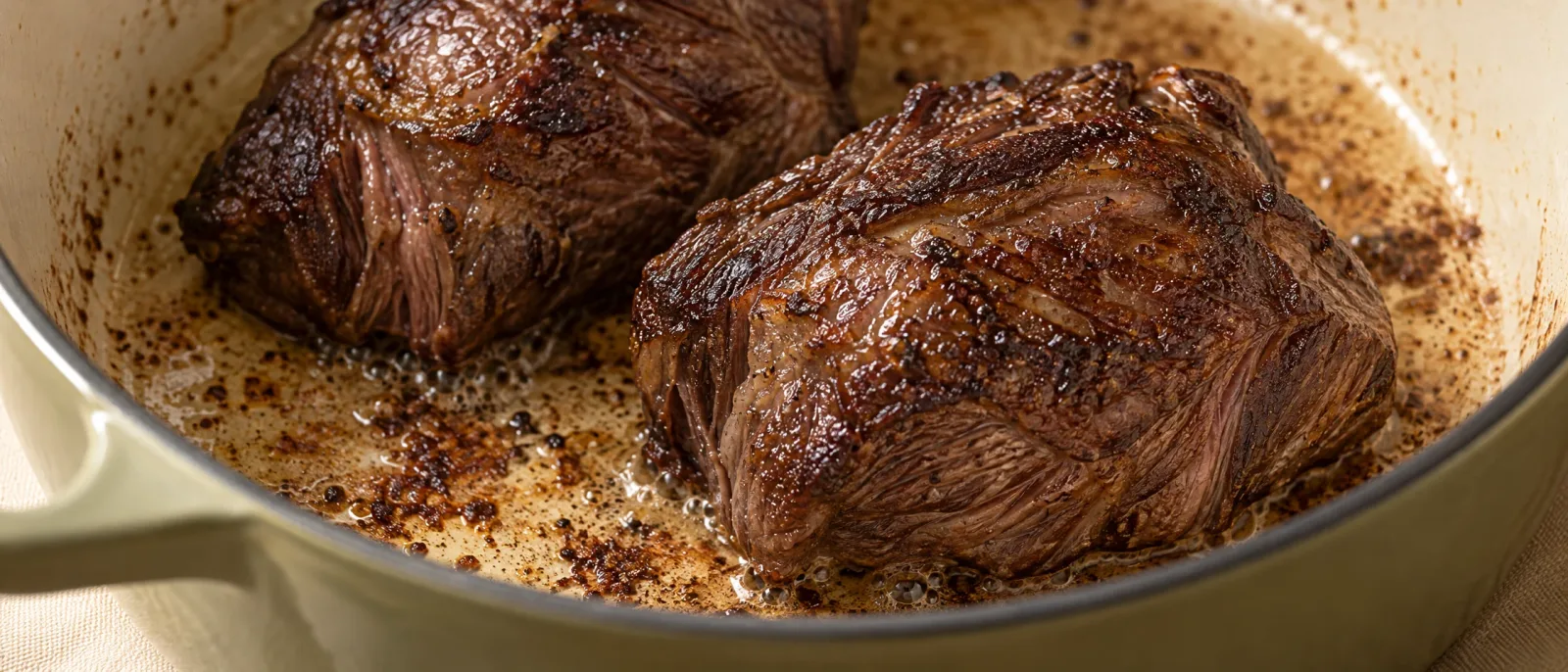
Heat the rapeseed oil in a heavy casserole over a medium-high heat. Brown the cheeks in batches for 3–4 minutes on each side, until they develop a deep brown crust. Avoid moving them unnecessarily as they brown. Allow about 12–16 minutes for two batches. Transfer to a plate; the meat will continue cooking once the braising base is ready.
Brown the cheeks Build the braising base
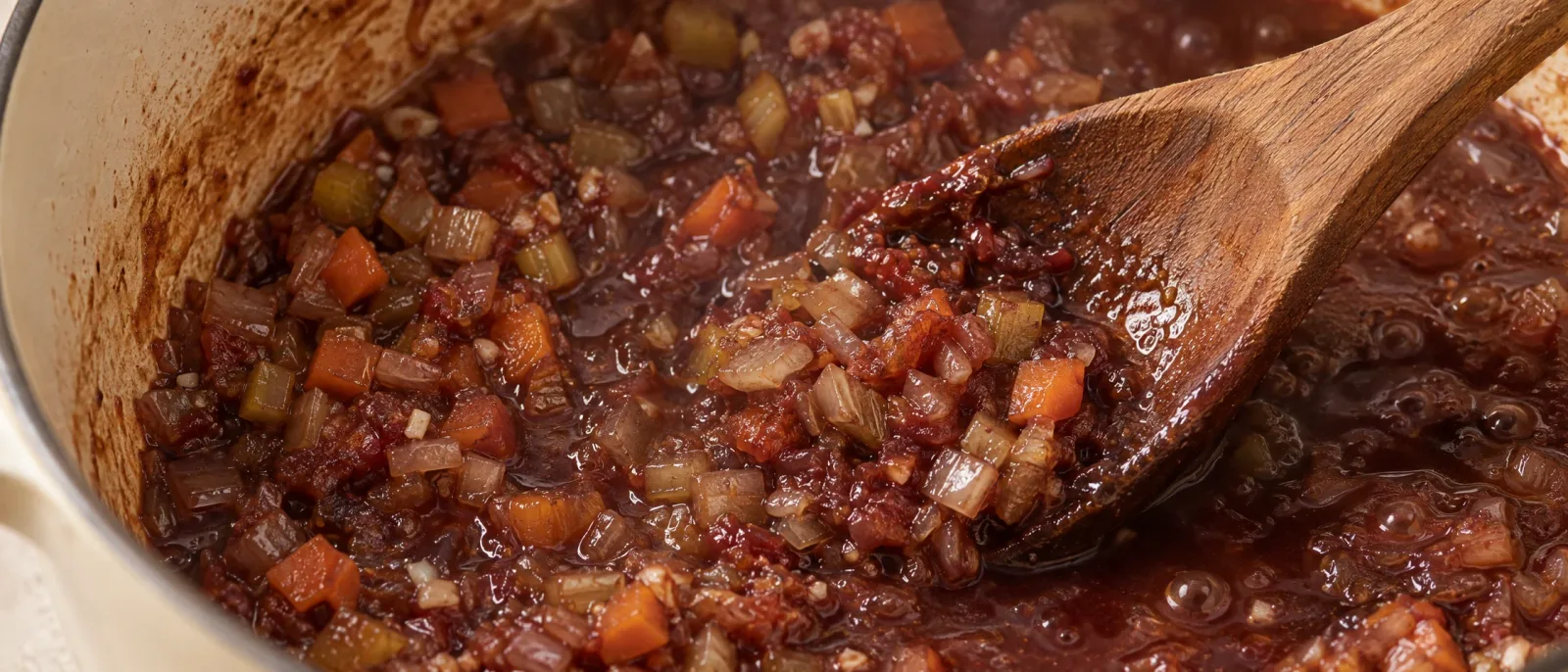
Reduce the heat to medium. Cook the onion, carrot and celery in the fat left in the casserole for 7–8 minutes, stirring, until softened and lightly coloured. Add the garlic and tomato purée and cook for 2 minutes. Pour in the red wine and scrape the browned bits from the base. Boil uncovered for 5–7 minutes, until the wine has noticeably reduced.
Build the braising base Braise until tender
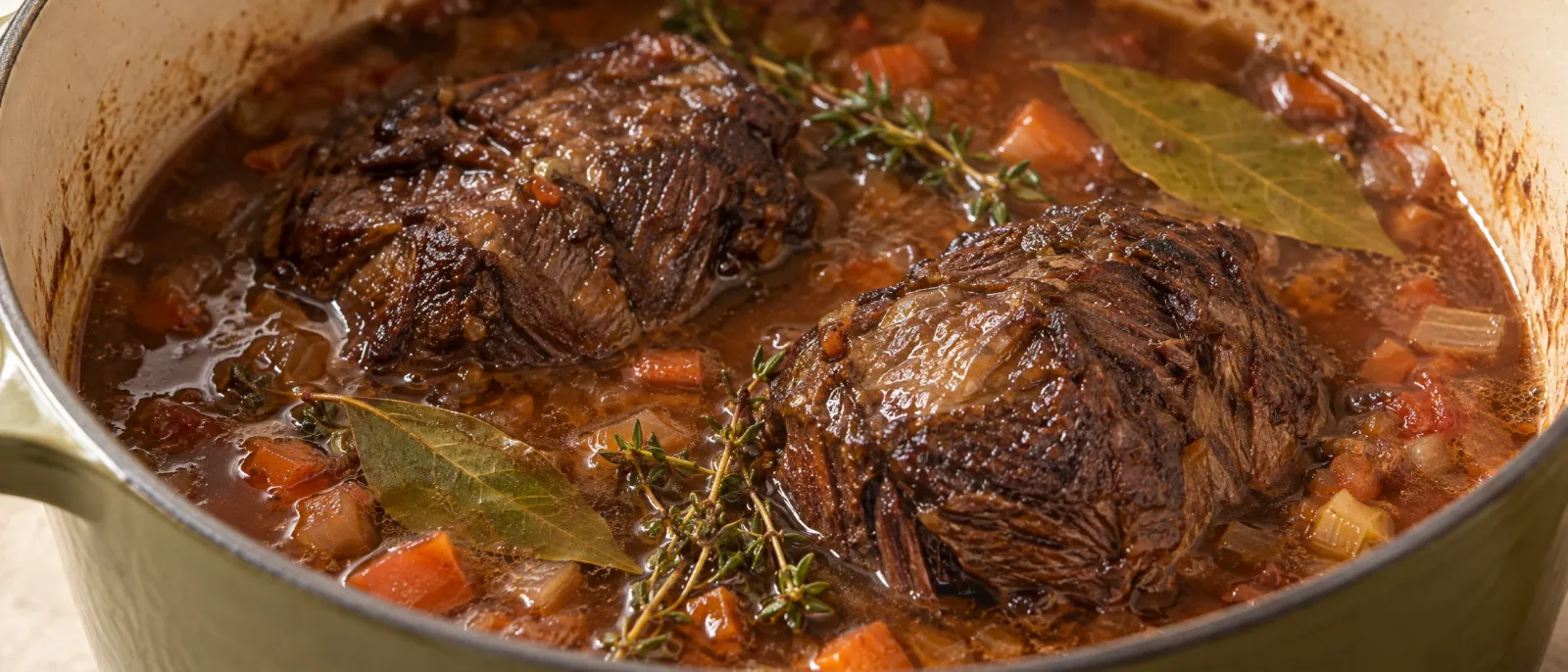
Return the cheeks and any plate juices to the casserole. Add the beef stock, thyme sprigs and bay leaves. The liquid should reach about two-thirds of the way up the meat; top up with water if needed. Bring to a gentle simmer, cover tightly and place in the oven for 180–240 minutes. Check after 180 minutes: a fork should slide in with almost no resistance, while the cheek still holds its shape. If it is firm, continue braising, checking every 20–30 minutes. Add a little hot water if too much liquid evaporates.
180:00Braise until tender Cook the potatoes
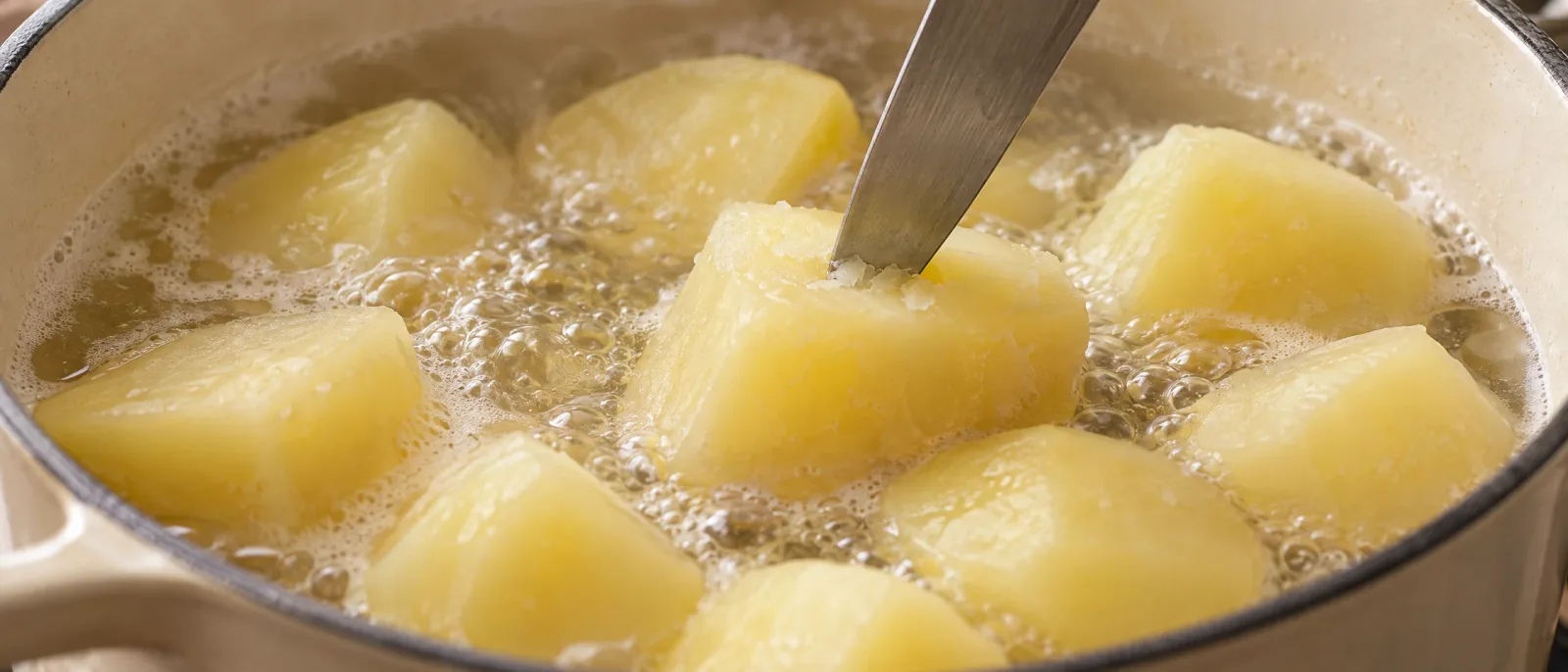
Once the cheeks are tender, peel the potatoes and cut into even pieces. Place in a saucepan, cover with cold water and add salt. Bring to the boil, then simmer for 15–20 minutes, until a knife passes through the centre of a piece without resistance. Make the reduction in the next step while the potatoes cook.
20:00Cook the potatoes Strain and reduce the liquid
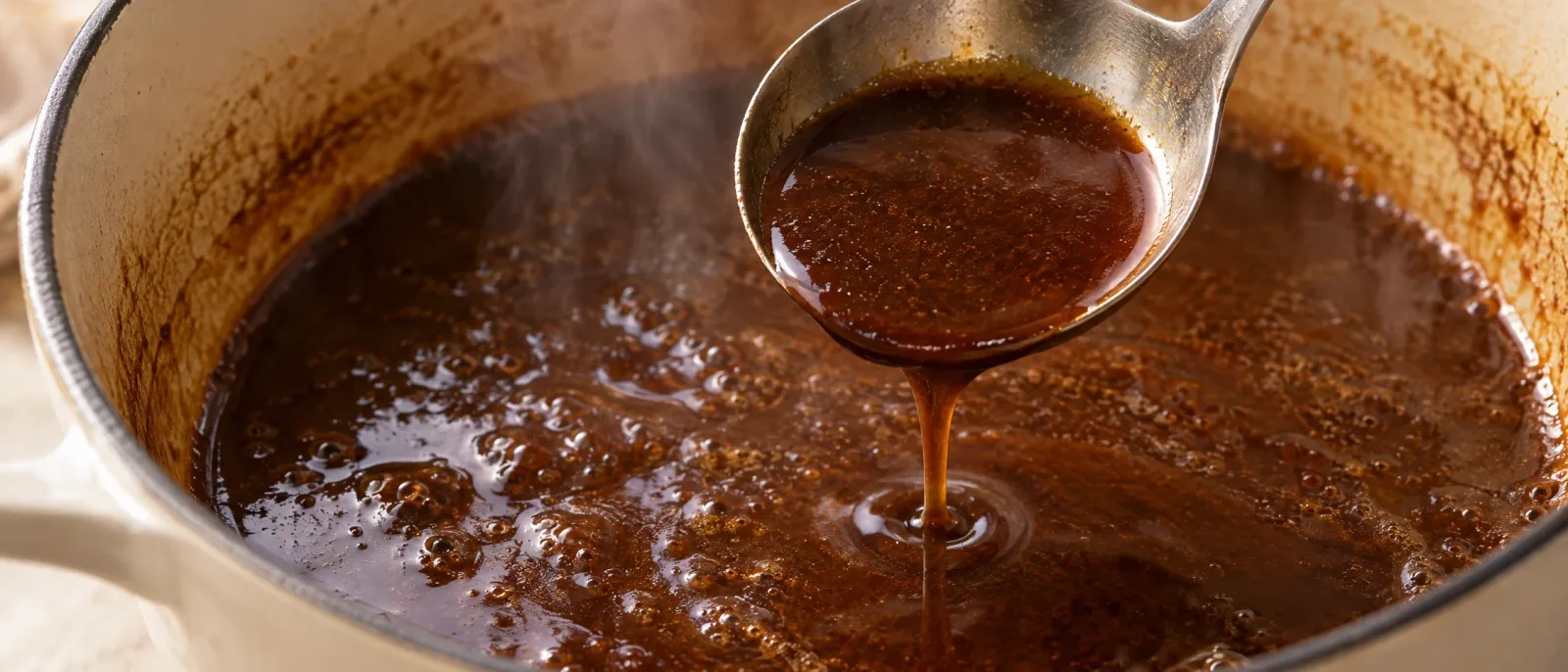
Carefully lift the cheeks into a dish, add a few spoonfuls of braising liquid and cover. Keep warm while finishing the dish. Strain the remaining liquid through a fine sieve, pressing the vegetables lightly; discard the vegetables and herbs. Skim off excess fat. Simmer the liquid uncovered over a medium heat for about 15–20 minutes, until deeply flavoured and lightly syrupy. Taste as it reduces and stop before it becomes too salty. Measure out the quantity of reduction listed for the sauce. Keep the liquid set aside with the meat for reheating the cheeks.
15:00Strain and reduce the liquid Finish the buttery mash
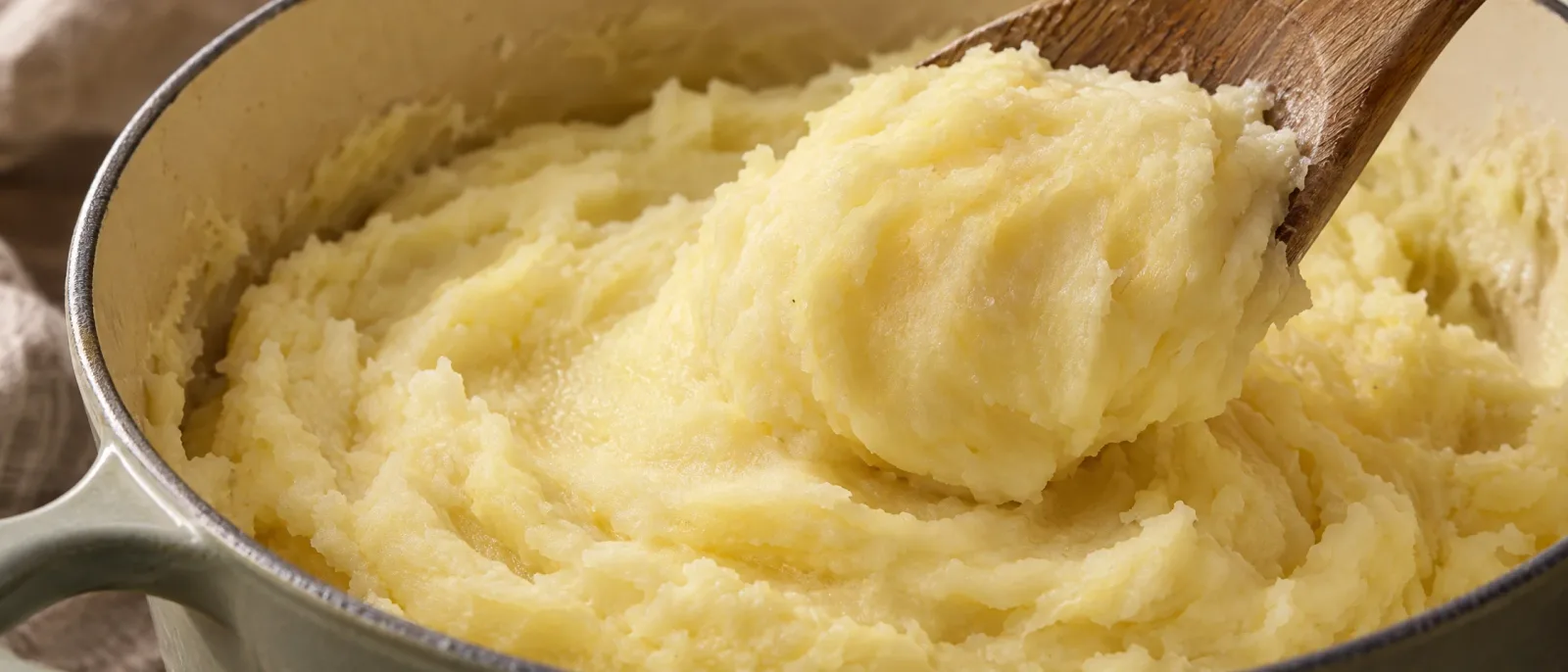
Drain the potatoes thoroughly, return them to the pan and let them steam dry over a low heat for 1 minute. Pass through a ricer while still hot. Gradually fold in the cold butter allocated to the mash. Warm the milk without boiling and add it gradually until the mash is smooth, soft and holds a gentle mound on a spoon. Season with salt and nutmeg. Do not use a blender. Cover and keep warm, for example over a pan of hot water without letting the bowl touch the water.
Finish the buttery mash Cook the shallot and peppercorns
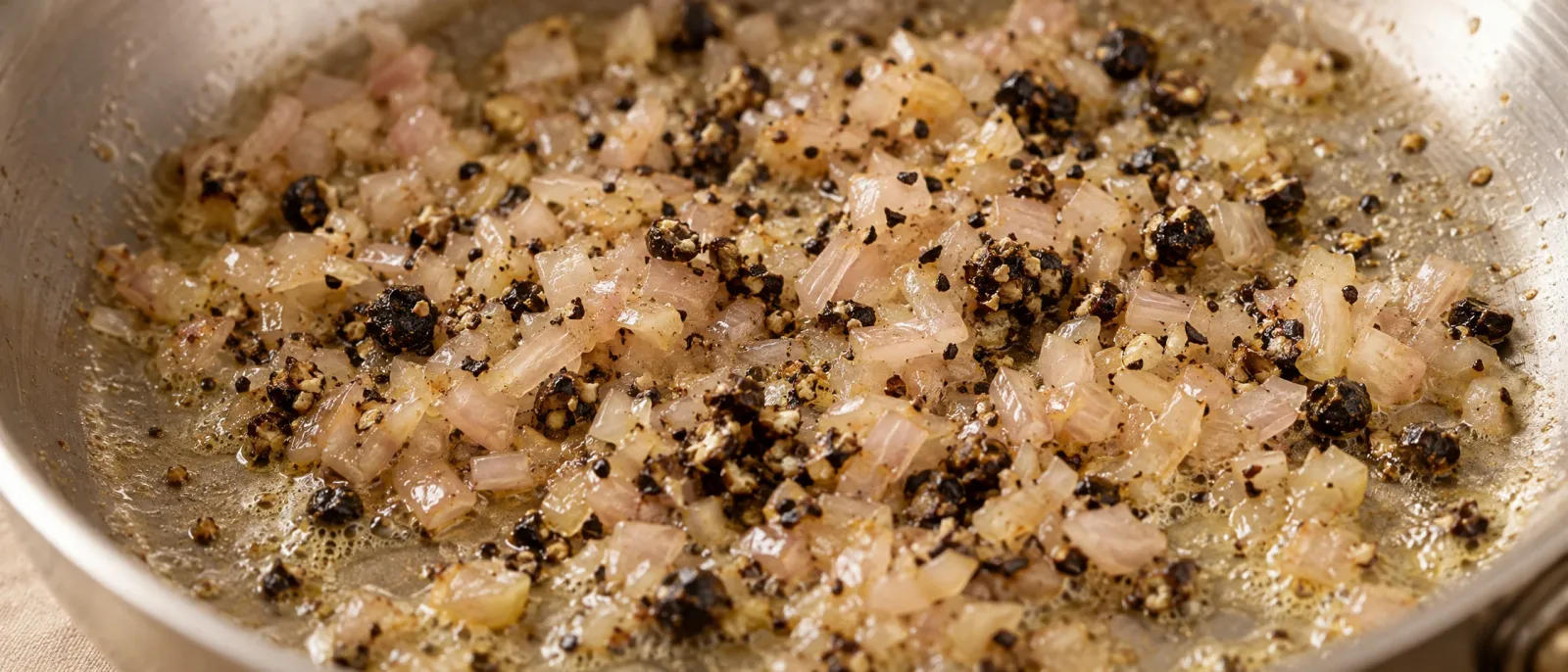
Coarsely crush the black peppercorns allocated to the sauce in a pestle and mortar; do not grind them to a powder. Finely chop the shallot. Melt half the sauce butter in a frying pan, keeping the other half in the fridge for finishing. Cook the shallot over a medium-low heat for 2–3 minutes until softened, without browning it deeply. Add the crushed peppercorns and stir over the heat for 30–40 seconds.
Cook the shallot and peppercorns Add the Cognac and cream
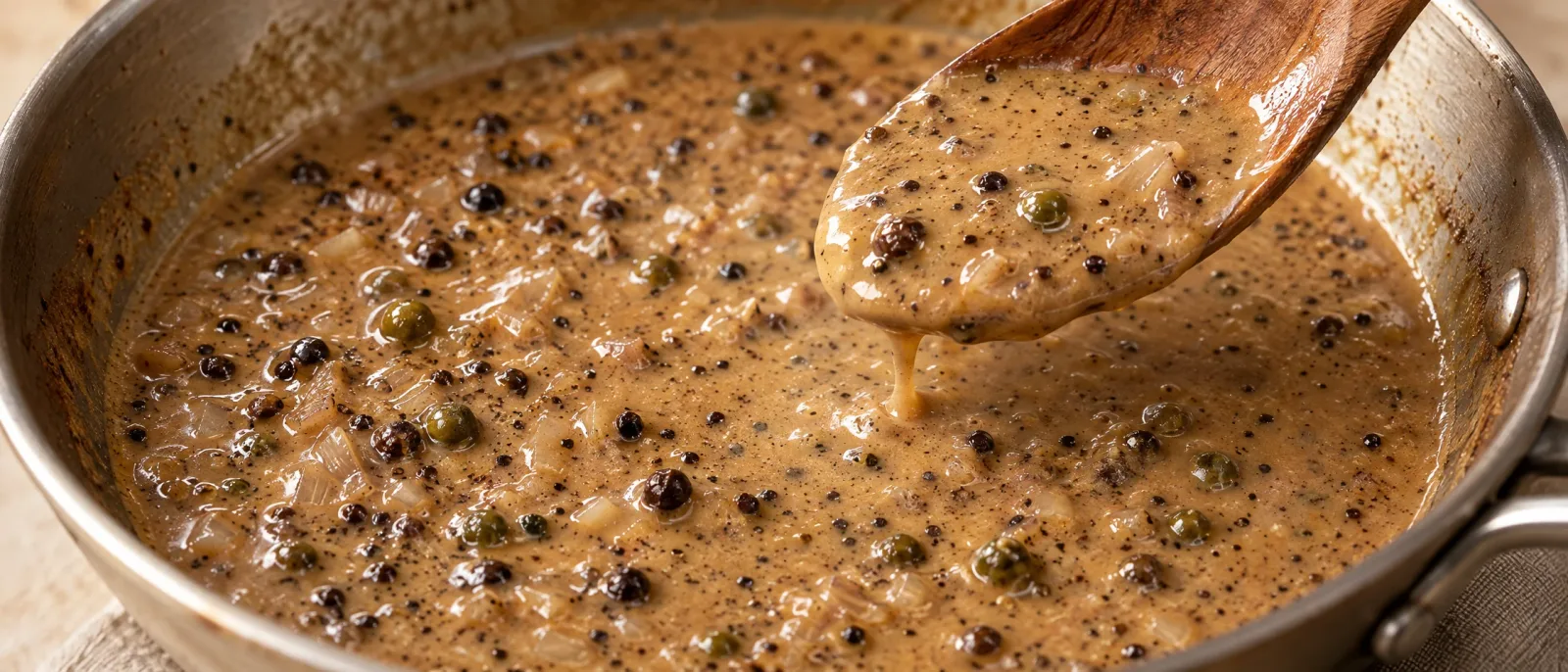
Take the pan off the heat and add the Cognac from a measuring vessel, not directly from the bottle. Return to the heat and cook for about 1–2 minutes, until almost evaporated. Do not flambé. Add the measured braising reduction, cream, Dijon mustard and optional drained green peppercorns. Simmer gently for 3–5 minutes, stirring, until the sauce coats the back of a spoon in a thin, creamy layer.
05:00Add the Cognac and cream Finish the sauce with butter
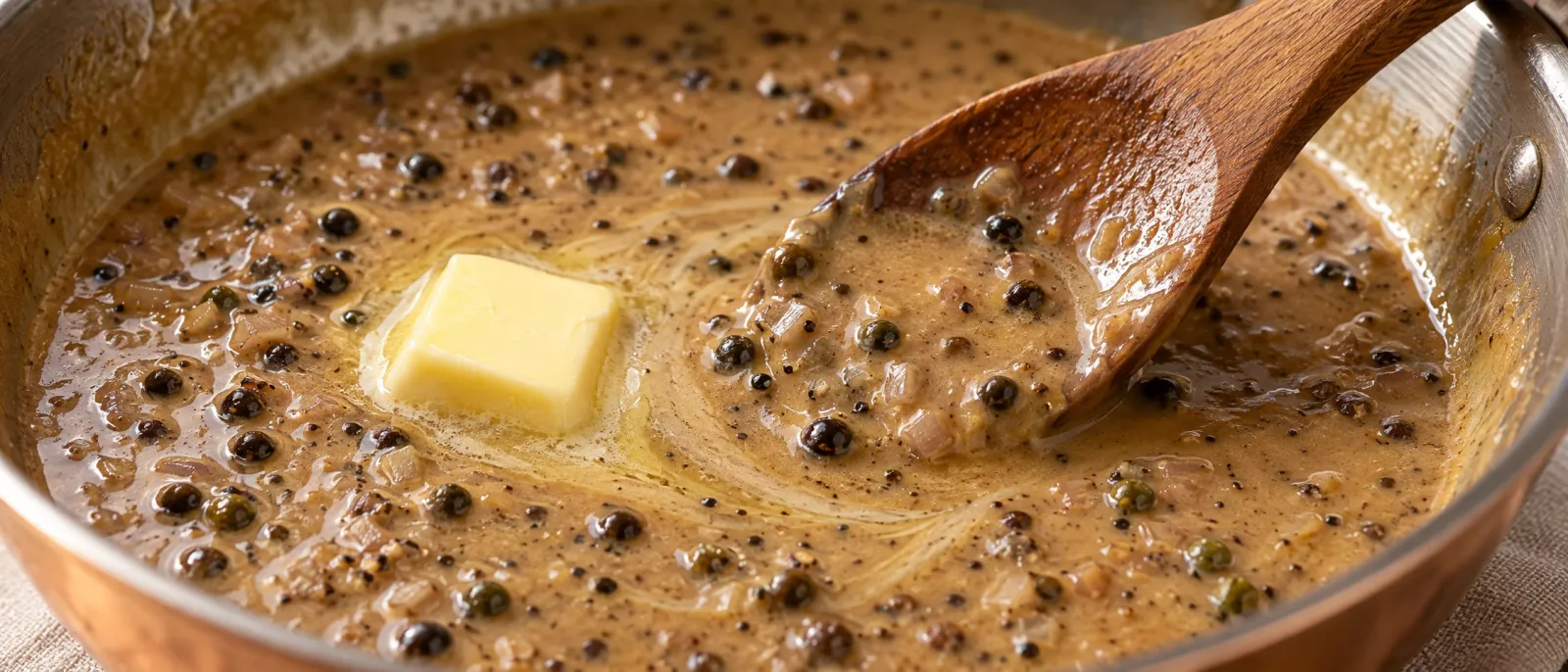
Remove the sauce from the heat and stir in the remaining reserved half of the cold sauce butter. Add the lemon juice and taste, adding salt only if needed. The finished sauce should be glossy and pourable, with distinct pepper fragments and finely chopped shallot. Loosen with a little water if too thick. Do not let it boil hard after adding the butter.
Finish the sauce with butter Reheat and serve
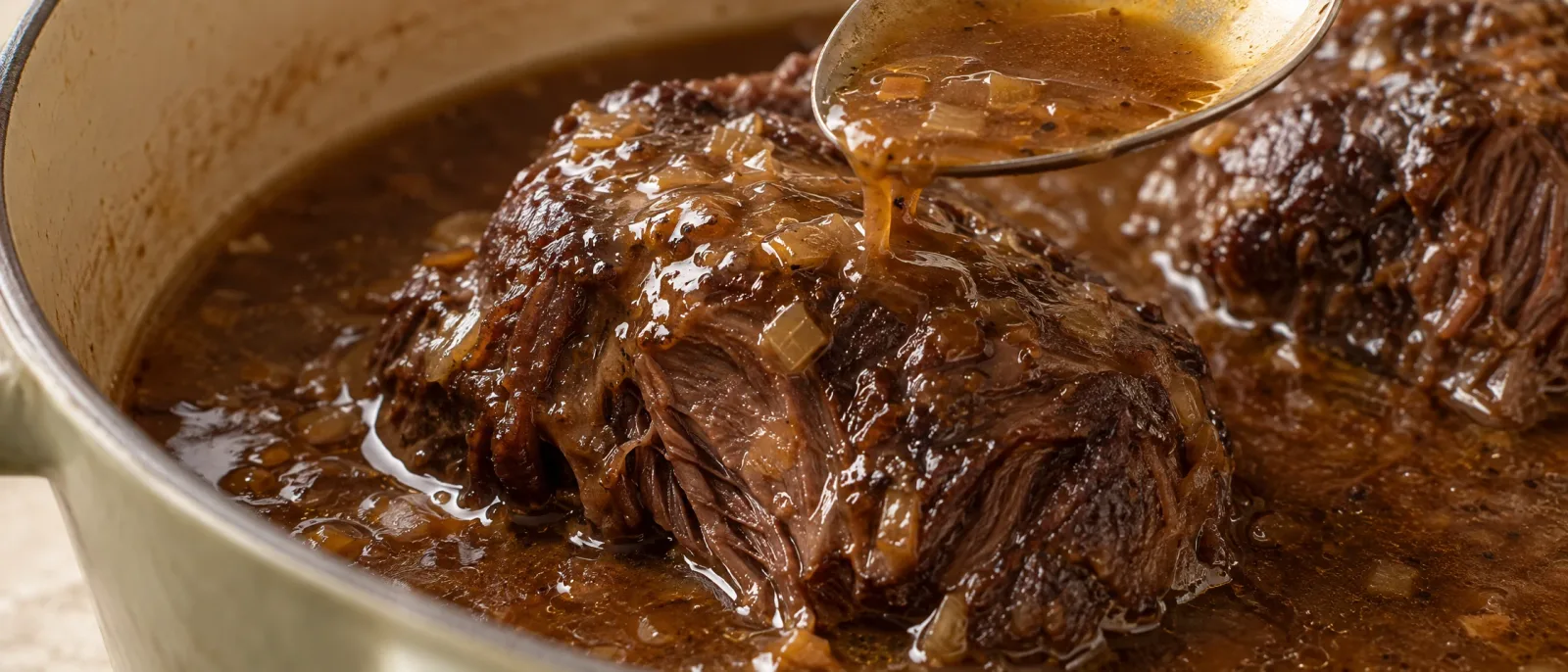
Gently reheat the cheeks in the liquid kept with them for about 5 minutes, until hot in the centre. Towards the end, you can uncover and briefly reduce the liquid, spooning it over the meat to form a thin, glossy glaze. Spoon the mash onto warm plates, arrange the cheeks on top and add some peppercorn sauce. Serve the remaining sauce in a sauceboat. Finish with the thyme leaves and, to taste, the freshly crushed peppercorns allocated for serving.
05:00Reheat and serve
Tips
- Dry the meat thoroughly and do not crowd the casserole. Moisture and tightly packed pieces prevent a deep brown crust from forming.
- Crush the peppercorns coarsely and add them only to the finishing sauce. Finely ground pepper gives a different texture and spreads the heat more evenly.
- Taste the liquid as it reduces. Stop reducing if it becomes too salty rather than chasing a thicker consistency.
- You can fully braise the cheeks a day ahead. Cool them quickly in their liquid following the storage guidance. The next day, remove the set fat, reheat the meat and make the sauce fresh.
- Rice the potatoes while hot. A blender or prolonged vigorous mixing can make the mash gluey.
Storage
Store fully braised cheeks in their braising liquid. Transfer to shallow containers, cool quickly and refrigerate within 2 hours. Keep for up to 2 days. Cool the sauce and mash in the same way and store separately for up to 2 days. Reheat the meat covered in its liquid until piping hot throughout; warm the sauce gently, stirring. Reheat the mash with a splash of milk. Fully cooked cheeks in their liquid can be frozen for up to 3 months; defrost in the fridge. The peppercorn sauce is best made fresh.
Timing
Hands-on: 85 min · Cooking: 315 min · Resting: 20 min