Main course European
Cabbage Schnitzel with Mushroom Gravy
Editorially prepared
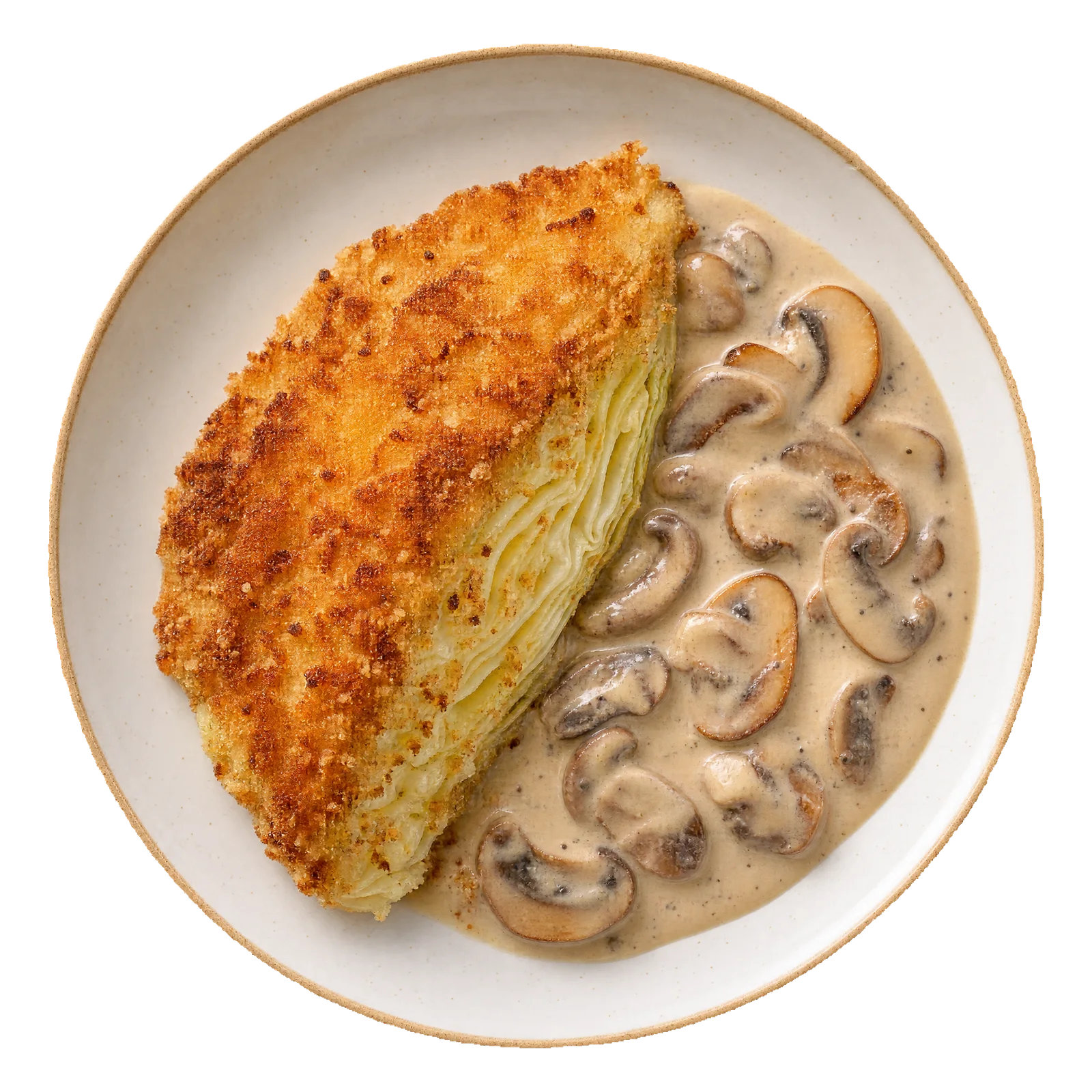
Tender white cabbage wedges in a crisp breadcrumb coating, served with creamy mushroom gravy. Simmer the cabbage until tender and dry it thoroughly before coating and frying until golden.
Plan this meal
Set your servings and add the meal. Open your plan to choose more meals and find your combined shopping list.
COOK YOUR WAY
Take this recipe to the kitchen
Start a session to tick off ingredients and steps and use timers.
Ingredients
4 servings · metric units
Allow one cabbage wedge per serving. When scaling up, use more small heads rather than one very large cabbage so the wedges cook evenly. Boil and fry in batches without crowding; allow extra time.
Substitutions
Substitute amounts are adjusted to your selected servings.
- Instead of small white cabbageSavoy cabbage
Choose a Savoy cabbage of a similar weight in place of the white cabbage. Its leaves are more delicate and loosely packed, so keep the core attached and start checking tenderness after 8 minutes of simmering. Dry the crinkled leaves particularly carefully.
- Instead of whipping cream18% fat soured cream
This can replace the whipping cream but gives a distinctly tangy, thicker sauce. Add gradually until creamy. First mix it with a little warm cabbage cooking water, then stir it into the mushrooms over a low heat. Warm without boiling to reduce the risk of splitting.
Shopping for this recipe
Your list uses the selected servings and fridge. Stock quantities are unknown — check you have enough.
Optional ingredients and substitutions
You’ll need
large saucepan · large frying pan for the cabbage · second wide frying pan for the sauce · chopping board and sharp knife · slotted spoon and wide spatula · colander, tray and kitchen paper · three shallow dishes for coating · fork or whisk
Method
0/6 stepsPrepare the cabbage and mushrooms
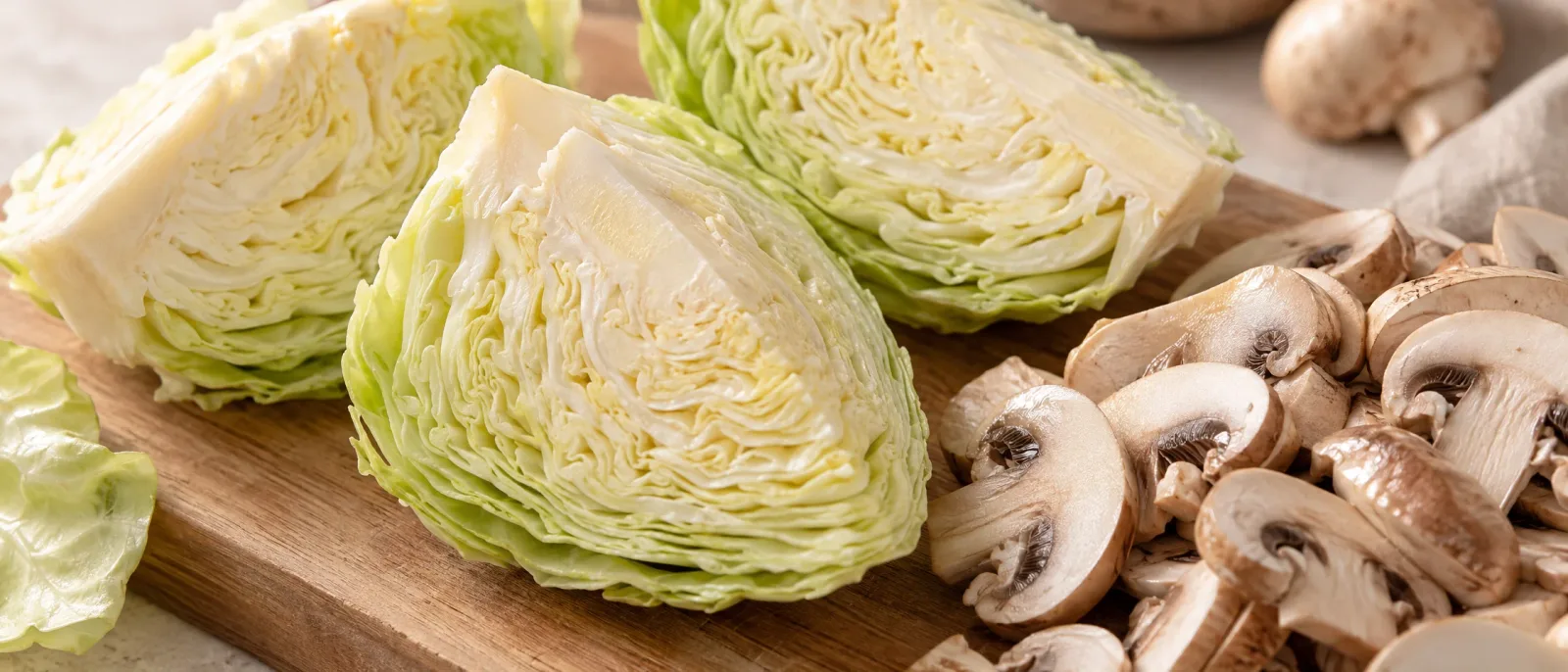
Bring enough water to cover the cabbage to the boil in a large saucepan and salt it lightly. Remove any damaged outer cabbage leaves and trim the protruding end of the core. Cut each head through the core into four wedges, keeping a section of core in each. Clean 400 g of mushrooms and cut them into even slices.
Cut through the cabbage core, retaining a section in each wedge; slice the mushrooms. Cook and dry the cabbage
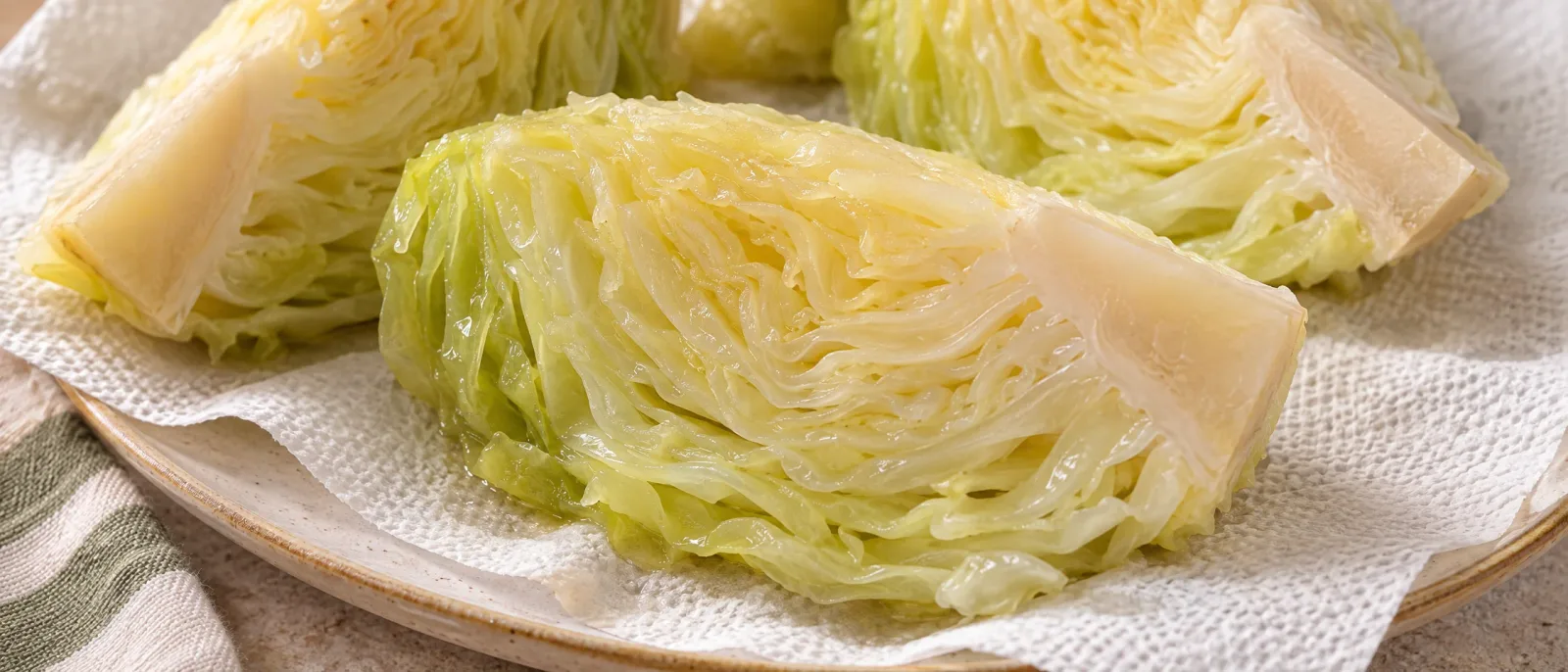
Carefully lower the wedges into the water. Once it returns to the boil, reduce the heat and simmer gently for 12–15 minutes. A knife should slide easily into the thickest part near the core, but the leaves must still hold together. Cook longer if needed. Reserve some cooking water for the sauce. Lift out the cabbage with a slotted spoon, supporting it with a spatula, drain and leave for about 10 minutes to steam dry. Gently pat all sides dry with kitchen paper, including between loose outer leaves, without crushing the wedges.
15:00After cooking, let the cabbage steam dry and blot it thoroughly without pulling the leaves apart. Make the mushroom gravy
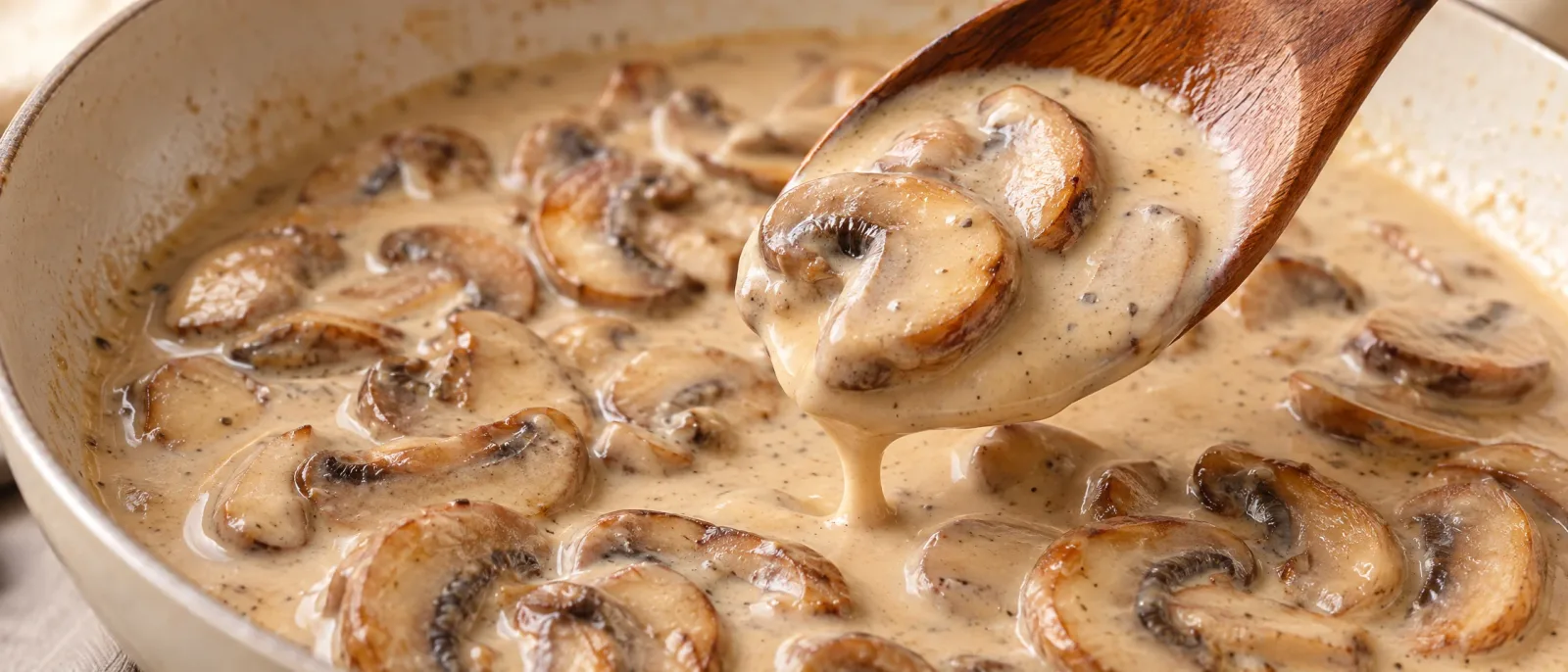
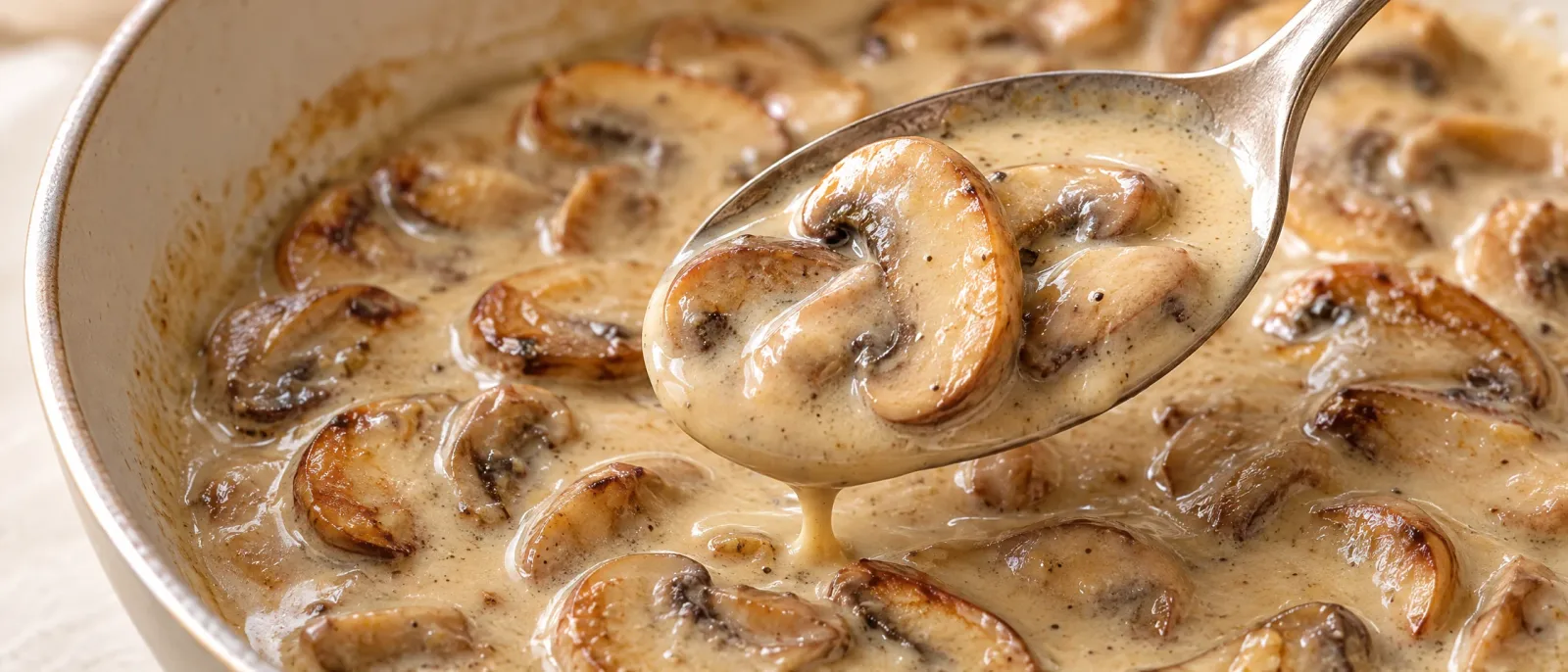
While the cabbage dries, heat one quarter of the oil in the second frying pan, reserving the rest for the schnitzels. Add the mushrooms and fry over a medium-high heat for 8–10 minutes, stirring occasionally, until their liquid has evaporated and the slices are browned. Pour in 200 ml of whipping cream and simmer gently for 4–5 minutes, until the sauce coats a spoon but is still easy to spoon onto a plate. If it is too thick, add a little reserved cabbage cooking water at a time. Taste, season with salt and take off the heat.
The gravy should coat a spoon but still be easy to spoon onto a plate. Coat the wedges
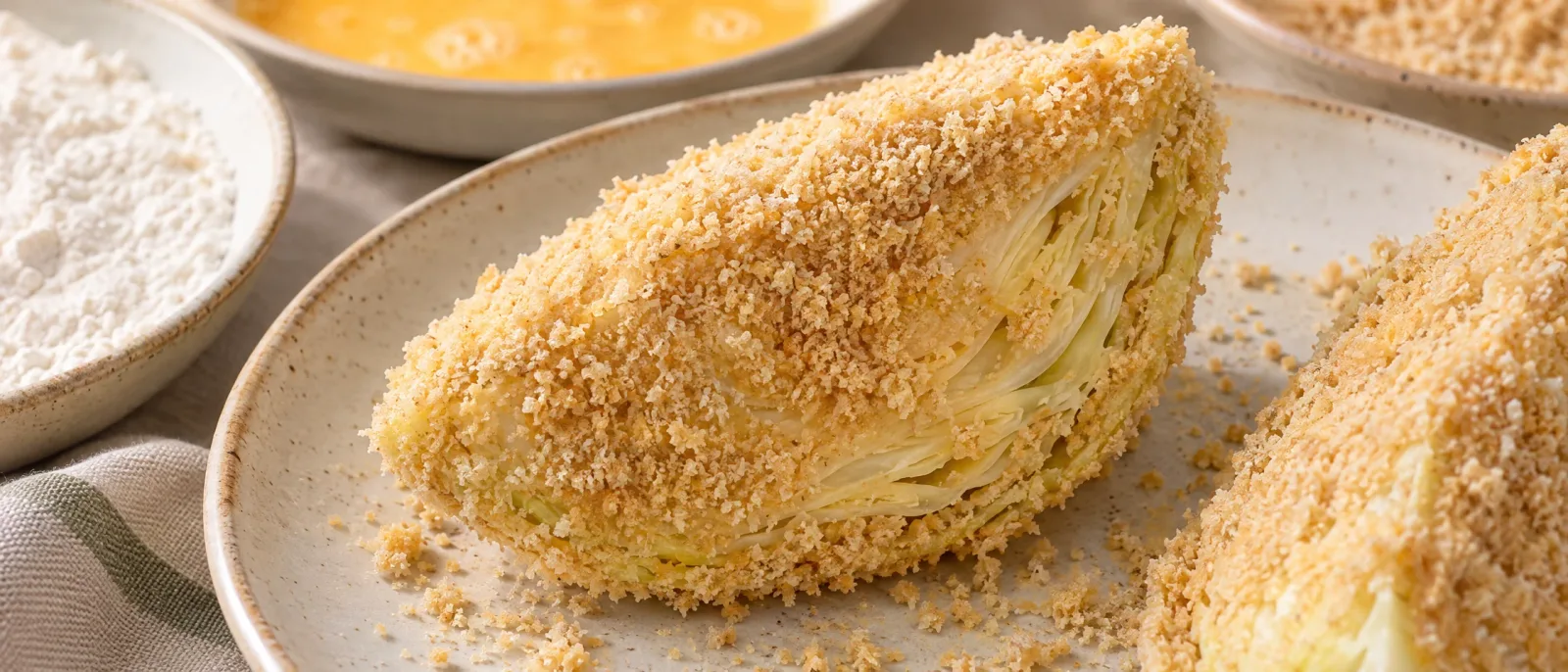
Put 80 g of plain flour in a shallow dish. Beat 2 pcs eggs with a little salt in a second dish and put 120 g of dried breadcrumbs in a third. Coat each dry wedge in flour, then egg, then breadcrumbs. Shake off excess flour, let excess egg drip off and gently press the crumbs onto all sides of the cabbage. Aim for an even coating with no wet, bare patches.
Coat the dried wedge in flour, egg and breadcrumbs in that order, gently pressing on the crumbs. Fry until golden
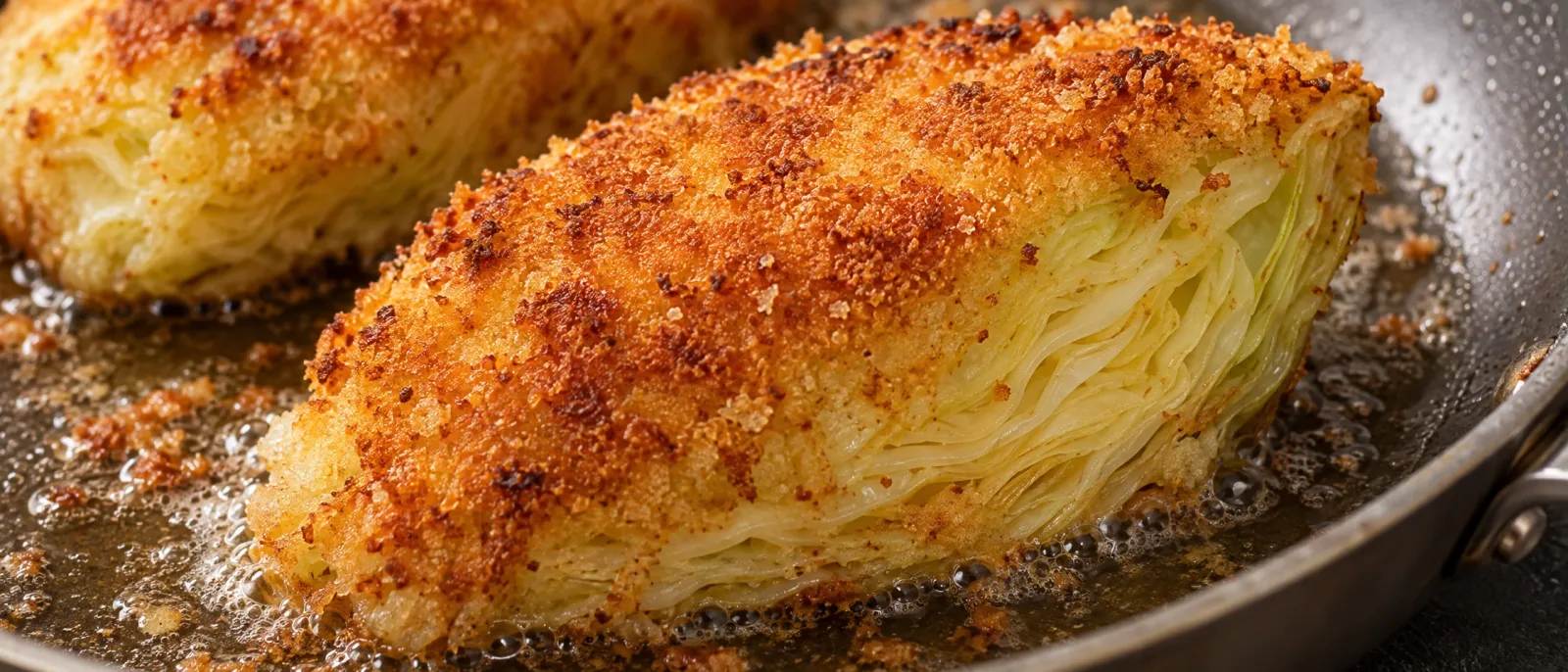
Heat half the oil reserved for the schnitzels in a large frying pan over a medium heat. A breadcrumb should sizzle gently straight away without darkening rapidly. Fry the cabbage in two batches without crowding, allowing 4–5 minutes on each broad side, until the coating is golden brown and crisp and the centre is hot. Turn with a wide spatula, supporting each wedge. Use the remaining reserved oil for the second batch and let it heat up before adding the cabbage. Briefly drain the cooked schnitzels on kitchen paper; do not cover or stack them.
Fry without crowding until the coating is golden brown; turn the wedge with a wide spatula, supporting the leaves. Serve with the gravy
Towards the end of frying, reheat the sauce if needed over a low heat for 2–3 minutes, stirring until hot. If it has thickened, loosen it with a splash of the reserved cabbage cooking water. Place the schnitzels on plates and spoon the mushroom gravy alongside, leaving most of the coating uncovered. Serve immediately while the coating is crisp.
If the gravy has cooled, reheat it before serving. Spoon it alongside the schnitzel, leaving most of the coating uncovered.
My note for next time
Saved automatically in this browser. This note is not sent to the editors. 0/2000
Tips
- Do not remove the whole core: the leaves may separate during cooking and turning. Keep a section of core in each wedge.
- The cabbage must be tender before coating. Test the thickest part near the core with a knife; frying will brown the coating but will not soften a firm centre.
- Blot away water trapped between the outer leaves without pulling the wedge apart. Moisture makes the coating harder to attach and causes the oil to spit.
- Fry the mushrooms in a wide pan. Add the cream only once their liquid has evaporated and the slices are starting to brown.
- If the coating darkens within a minute, reduce the heat. Remove burnt crumbs with a heatproof spoon between batches.
- Do not cover or stack the fried schnitzels: trapped steam will soften the coating.
Storage
Serve straight away for the best texture. Cool the fried cabbage and sauce promptly and refrigerate in separate sealed containers within 2 hours of cooking. Keep for up to 2 days. Reheat the cabbage in a conventional oven at 190°C for about 15–20 minutes, until hot throughout; the coating may be less crisp. Reheat the sauce in a saucepan, stirring until hot throughout. Add a splash of water if it has thickened. Freezing is not recommended: the cabbage can become watery and the coating soft after thawing.
Timing
Hands-on: 45 min · Cooking: 60 min · Resting: 10 min
Cooking questions
Should I remove the cabbage core before cooking?
Trim only the protruding end of the core. Cut the head through its centre and keep a section in each wedge so the leaves hold together during cooking and turning.
How can I tell when the cabbage is ready to coat?
A knife should slide easily into the thickest part near the core while the leaves still hold together. Let the cooked wedges steam dry, then blot them thoroughly. Frying browns the coating but will not soften a firm centre.
How do I keep the coating crisp when serving?
Briefly drain the fried schnitzels on kitchen paper without covering or stacking them. Spoon the gravy alongside, leaving most of the coating uncovered, and serve immediately.