Soup French
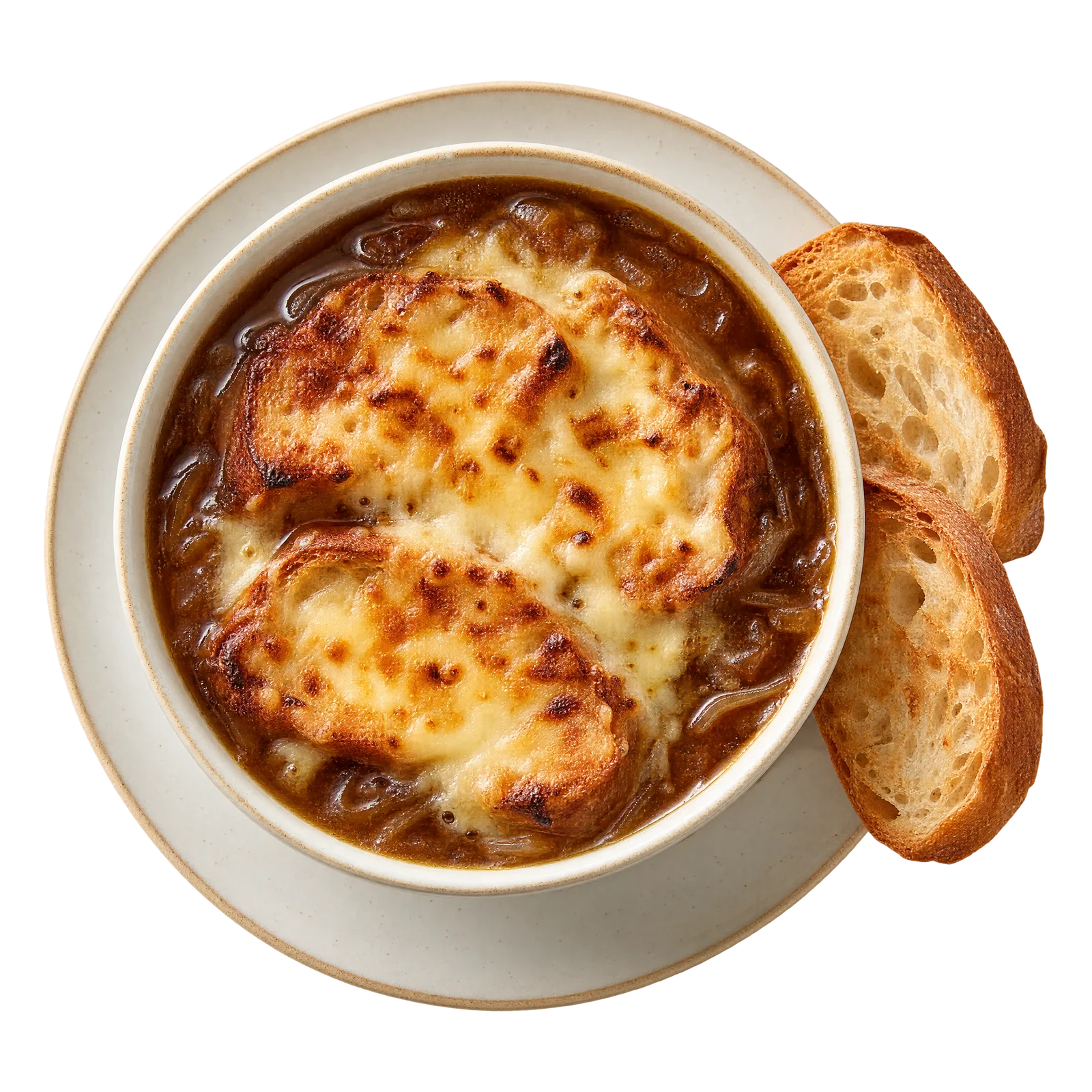
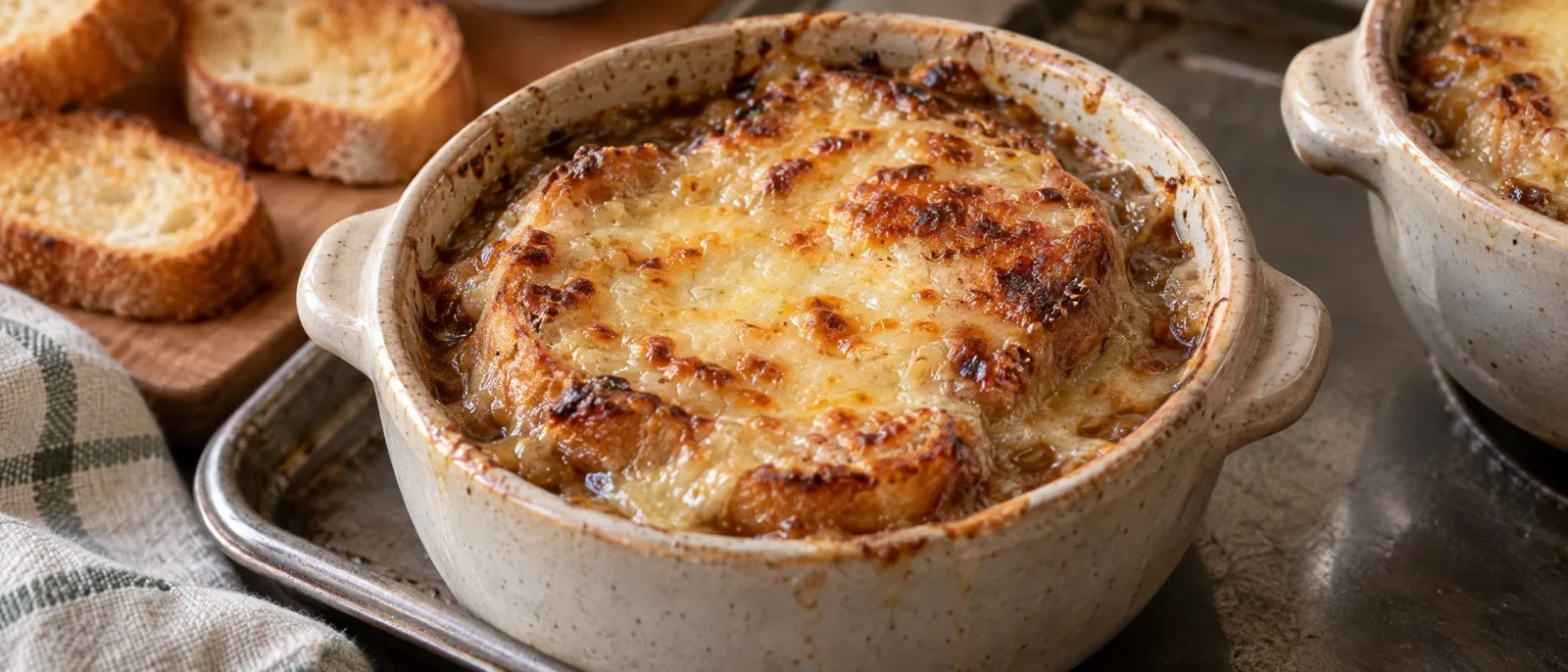
French onion soup with a Gruyère topping
Meat & fish
Editorially prepared
French soup made with slowly caramelised onions, beef and chicken stock, white wine, Cognac and thyme. Served in individual bowls beneath toasted baguette and a browned Gruyère topping.
Plan this meal
Set your servings and add the meal. Open your plan to choose more meals and find your combined shopping list.
COOK YOUR WAY
Take this recipe to the kitchen
Start a session to tick off ingredients and steps and use timers.
Ingredients
4 servings · metric units
For a larger batch, use a wider pan or caramelise the onions in batches. Do not reduce cooking times proportionally for a smaller batch: judge by the colour of the onions and the flavour of the soup. The bowls must fit under the grill in a single layer; grilling in batches will increase the serving time.
Substitutions
Substitute amounts are adjusted to your selected servings.
- Instead of Cognacdry sherry
Replace the Cognac with the same volume of dry sherry. It adds a nuttier aroma; avoid sweet sherry.
- Instead of Cognacbrandy
If Cognac is unavailable, use the same volume of ordinary brandy. The aroma varies with the spirit, but the addition and reduction method remain the same.
- Instead of Gruyère cheesemature Comté
Replace some or all of the Gruyère, keeping the total cheese weight unchanged. Comté gives a similar nutty flavour; very mature cheese may brown more quickly.
- Instead of Gruyère cheeseEmmental
A more readily available cheese for the topping. Use the same weight; the flavour will be milder and the melted cheese stretchier.
Shopping for this recipe
Your list uses the selected servings and fridge. Stock quantities are unknown — check you have enough.
Optional ingredients and substitutions
You’ll need
Wide heavy-based pan with a lid, approximately 5–6 litres · Second saucepan, approximately 2 litres · Two hob rings · Oven with a grill · Four wide grill-safe bowls, approximately 650–750 ml each · Two rimmed baking trays · Knife, chopping board and garlic press · Cheese grater, wooden spoon or spatula and ladle · Oven gloves and plates for the hot bowls
Method
0/13 stepsPrepare the ingredients
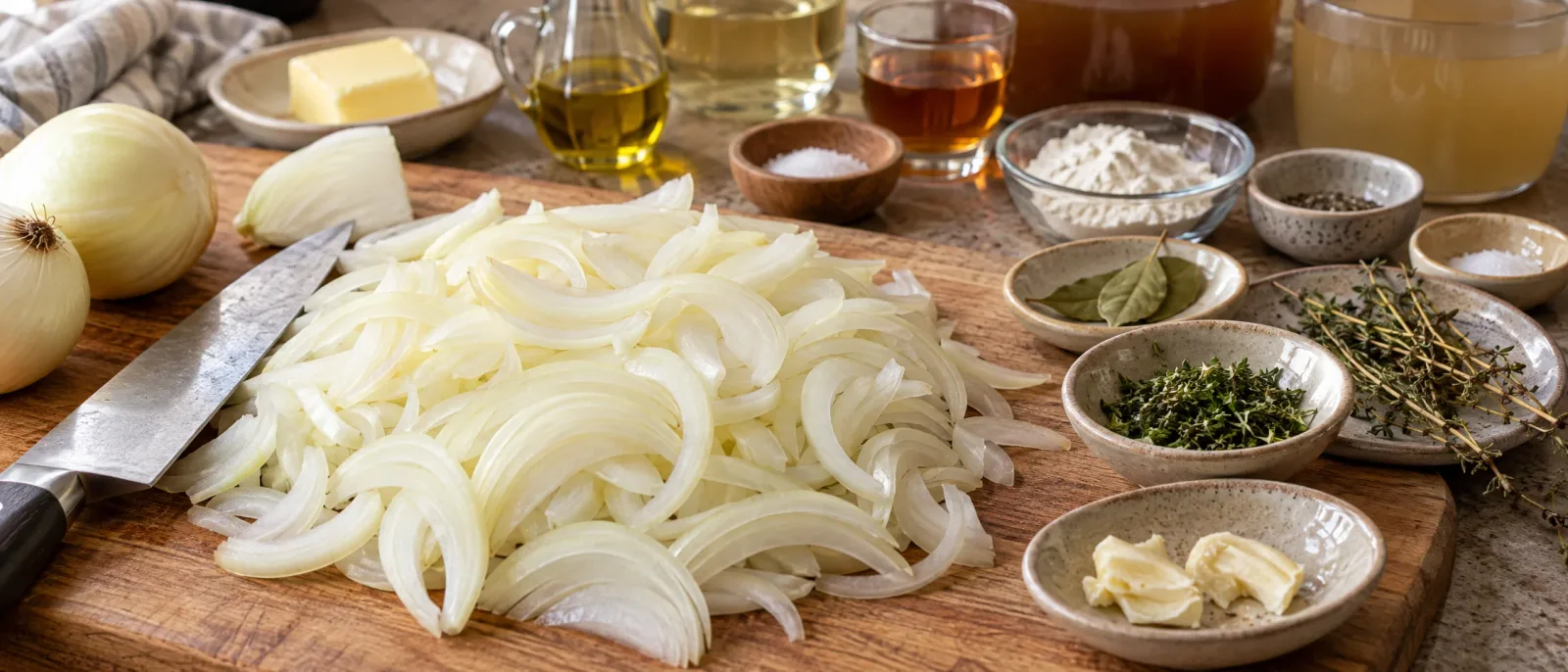
Peel the onions and cut into half-moon slices about 2–3 mm thick. Peel and crush the garlic. Rinse and dry the thyme, then strip off the leaves, keeping the stalks separately. Measure the remaining soup ingredients. Allow about 25 minutes for preparation.
Prepare the ingredients Soften the onions
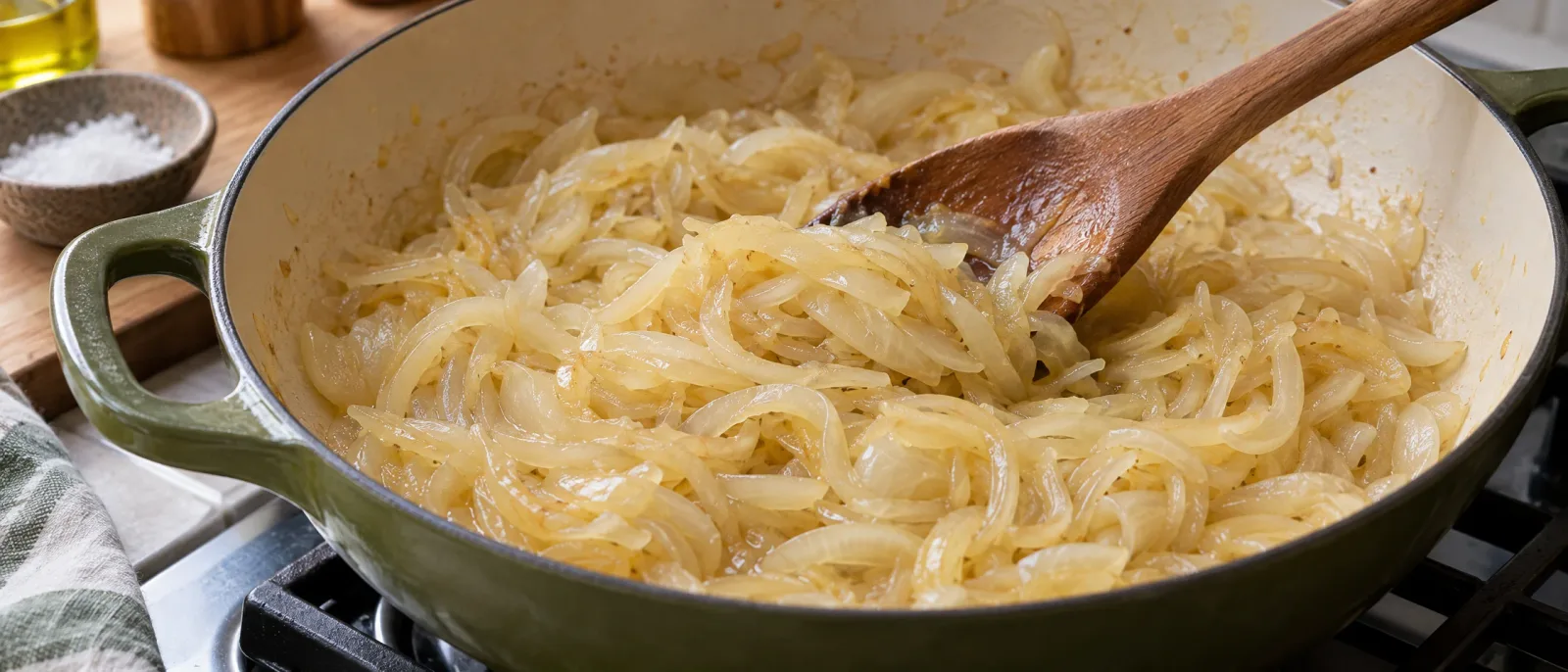
Heat the butter and olive oil in the wide pan over a medium heat until the butter melts without browning, allowing about 3 minutes. Add the onions and ½ tsp of fine salt. Cook uncovered for 15–20 minutes from adding the onions, stirring frequently and scraping the base thoroughly. They should soften, release their juices and noticeably reduce in volume. If still firm, cook for a few minutes longer.
20:00Soften the onions Caramelise the onions
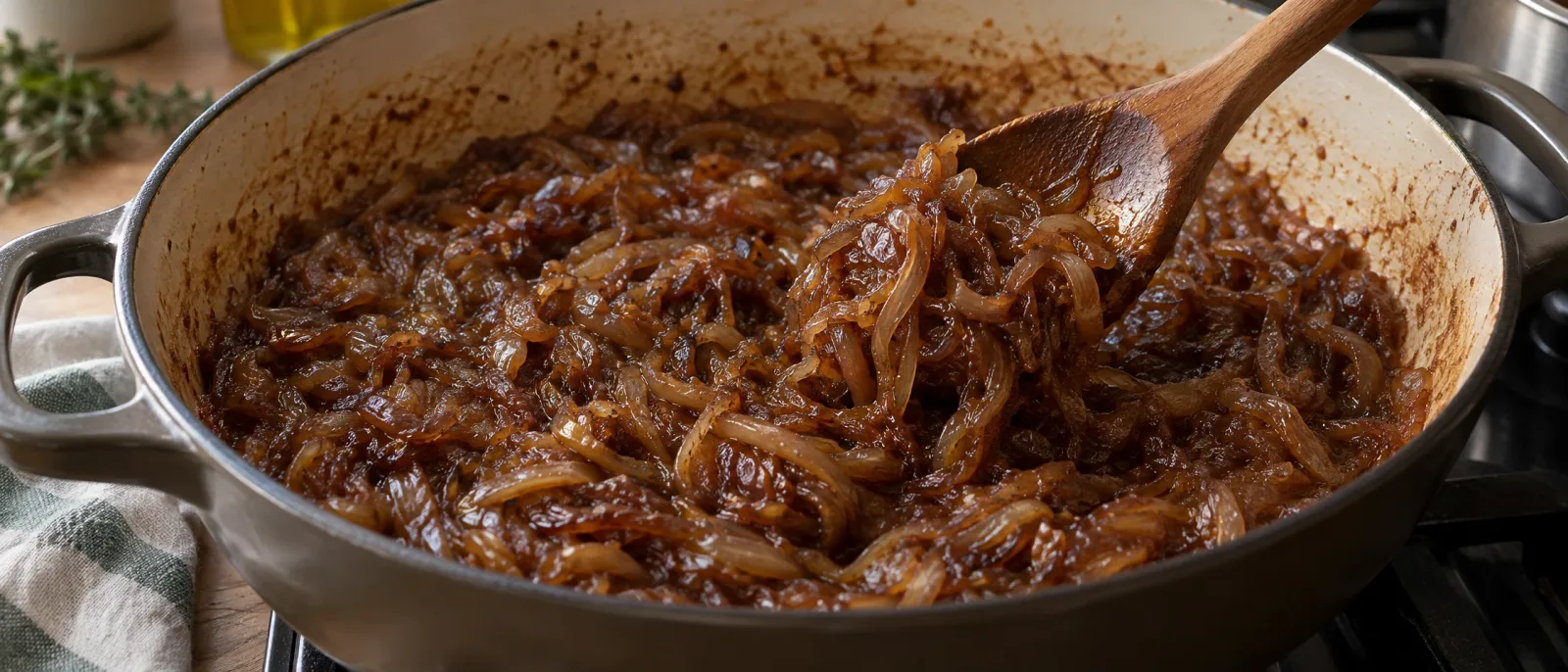
Reduce the heat to low or medium-low. Cook uncovered for a further 40–50 minutes from lowering the heat, stirring every few minutes and more often towards the end. When a dark brown deposit forms on the base, add a small splash of water and scrape it into the onions. The onions should be deep brown, very soft and almost jam-like. If still pale, continue cooking and check every 5 minutes. Towards the end of this stage, start heating the stocks in a second saucepan while continuing to watch the onions.
50:00Caramelise the onions Heat the stocks
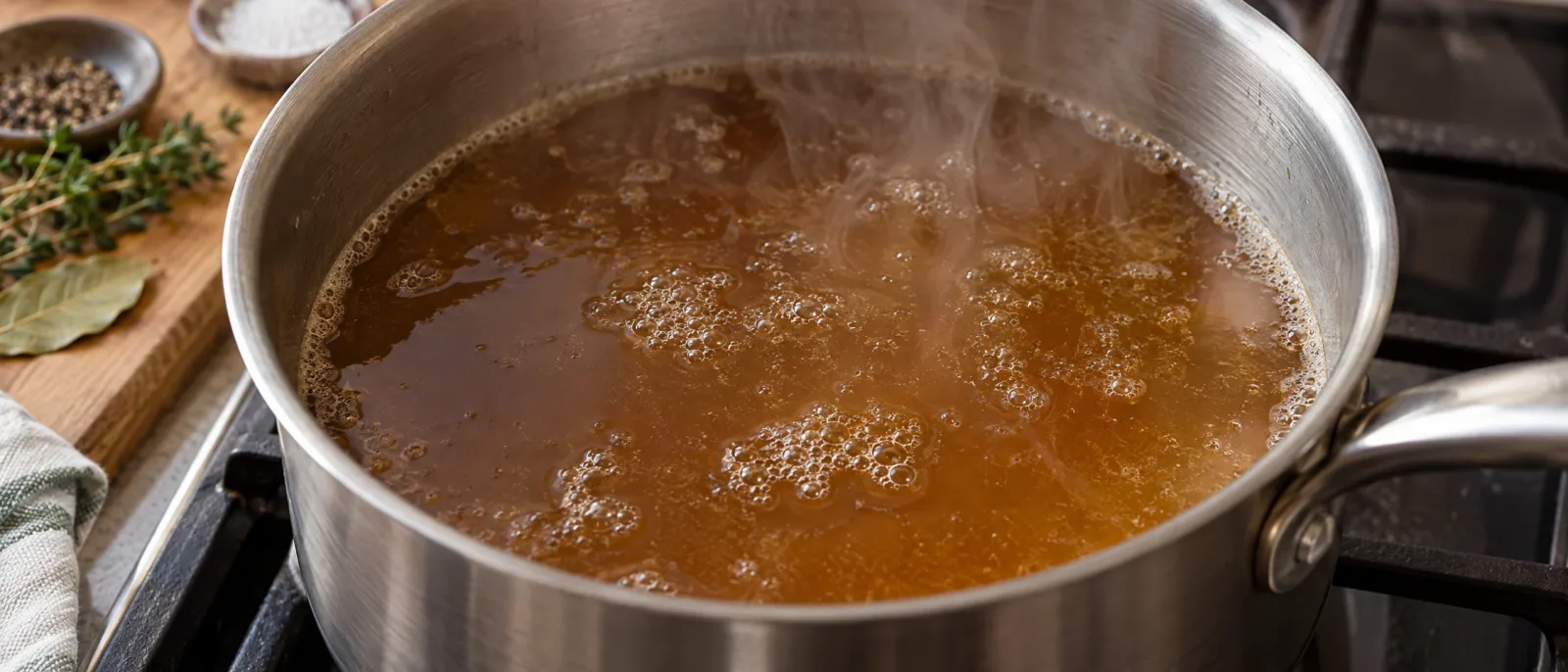
When the onions are approaching the right colour, pour both stocks into the second saucepan. Heat over a medium heat for about 10–12 minutes from turning on the hob, until steaming with small bubbles appearing. Lower the heat and keep covered and hot, without boiling vigorously, until needed. If still cool after this time, continue heating. Meanwhile, finish caramelising the onions.
12:00Heat the stocks Add the garlic, thyme and flour
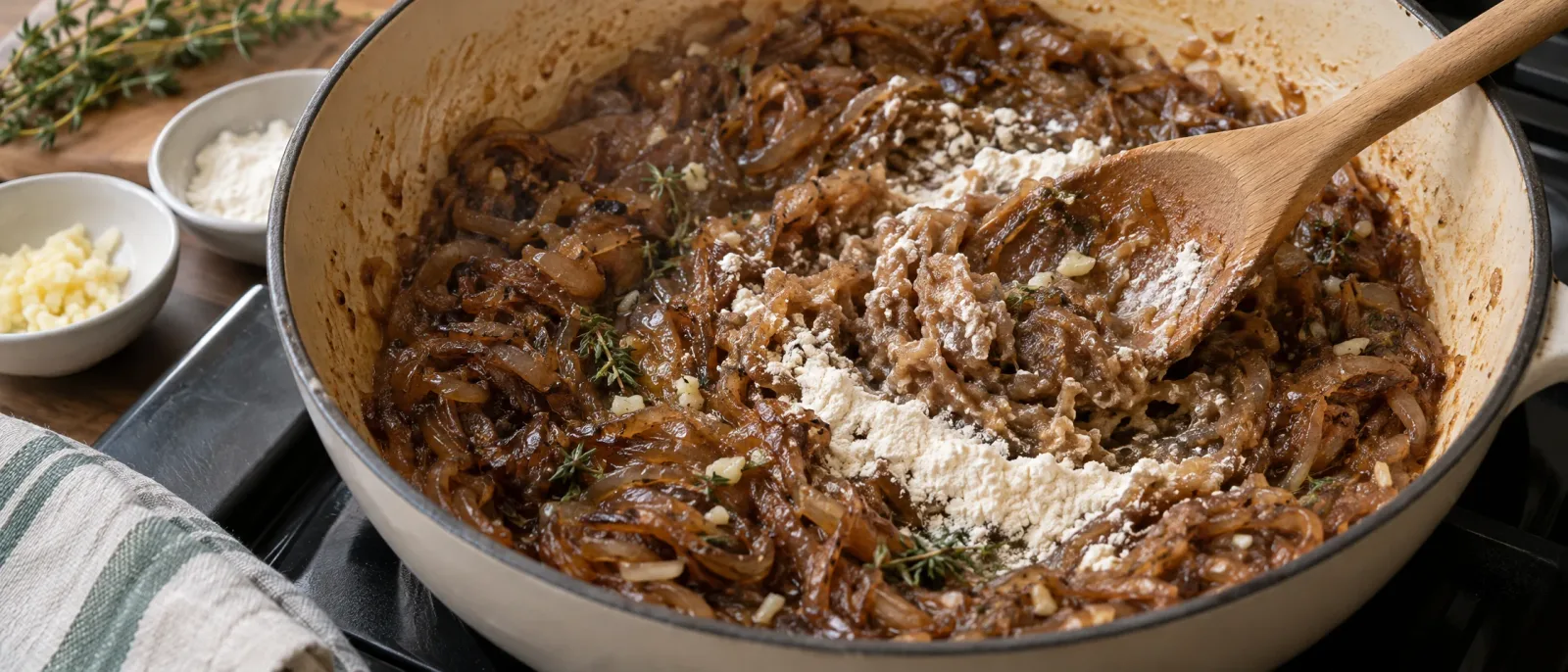
Only when the onions are properly brown and soft, add the garlic and stripped thyme leaves. Cook over a low heat for about 3 minutes from adding them, stirring; the garlic should become fragrant without darkening. Sprinkle in the flour, mix thoroughly and cook for about 2 minutes from adding it, until no dry flour remains. Reduce the heat if the mixture starts sticking and darkening too quickly.
Add the garlic, thyme and flour Reduce the Cognac and wine
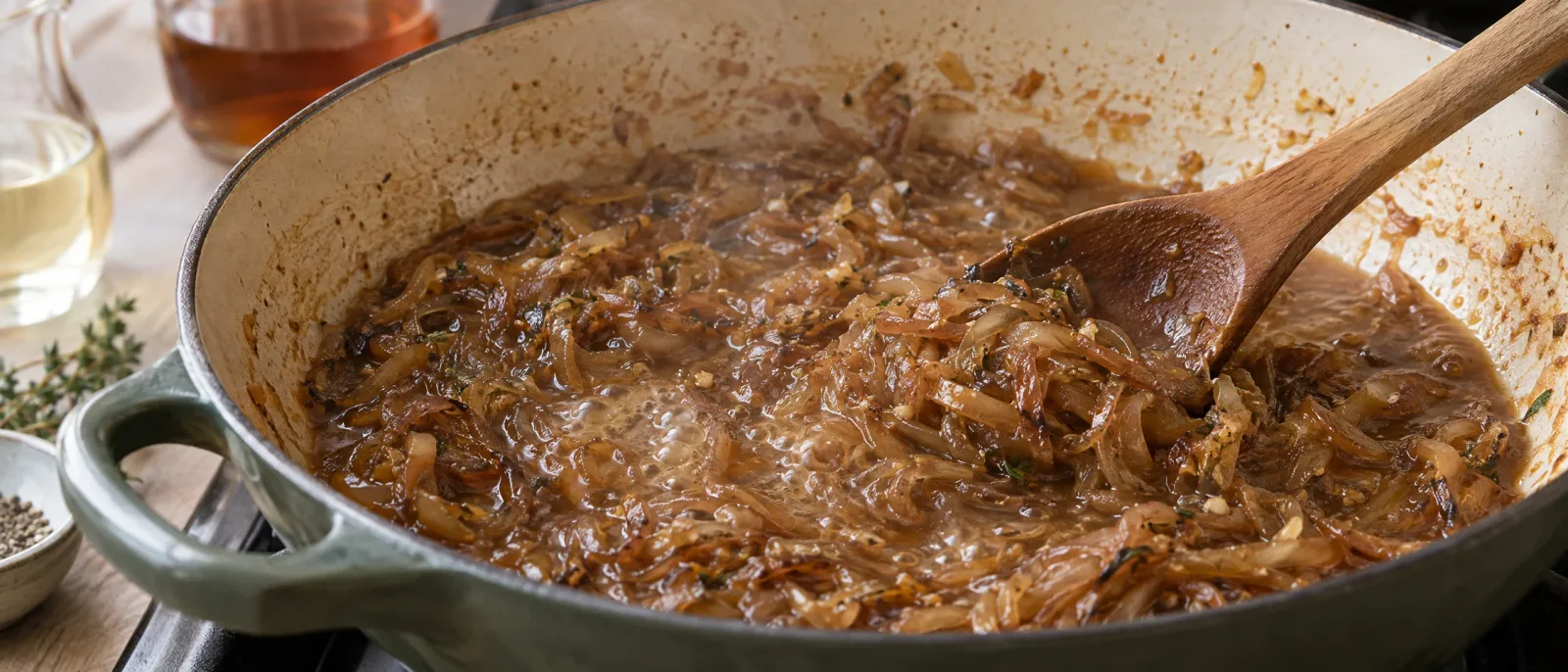
Move the pan away from the flame and pour in the Cognac from a measuring jug, not the bottle. Return to a medium heat, stir and bubble for about 1–2 minutes once simmering again, until noticeably reduced. Add the white wine and scrape up the browned deposits. Bubble for about 3–5 minutes from simmering, until the visible liquid has reduced by roughly half; continue reducing if needed. Do not flambé.
Reduce the Cognac and wine Add the stocks
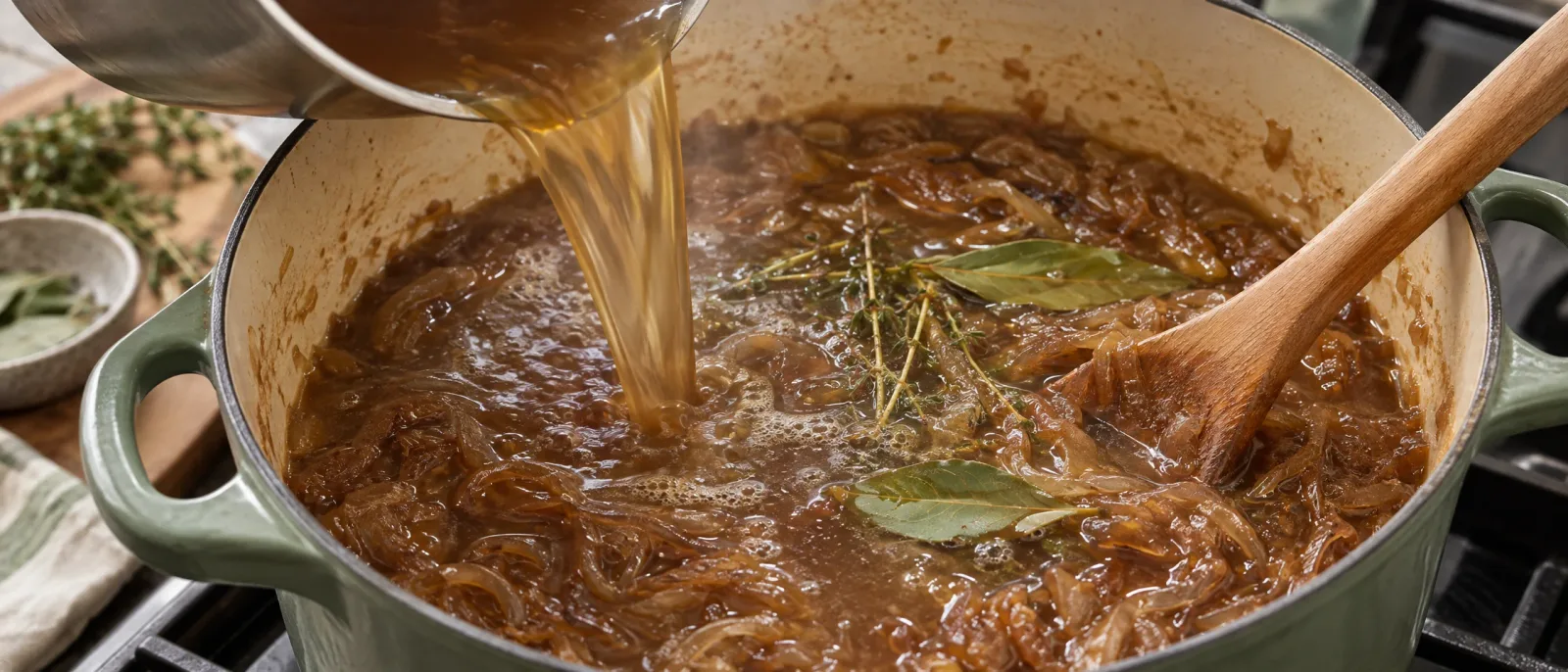
Check that the stocks are hot and the wine has reduced. Gradually pour the hot stocks into the onions, stirring so the flour blends into the liquid without lumps. Add the reserved thyme stalks and the bay leaves. Bring the soup to a gentle simmer over a medium heat; allow about 5 minutes for combining and reheating.
Add the stocks Simmer the soup gently
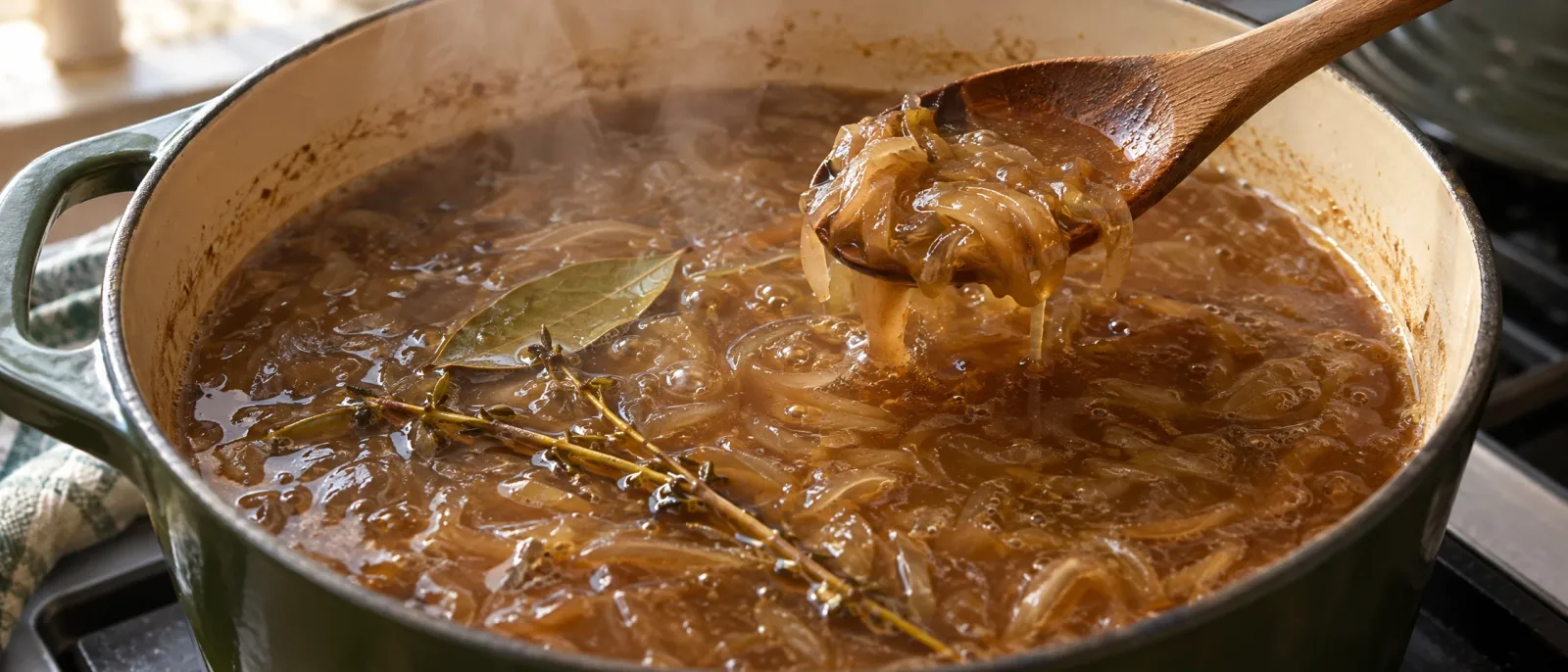
Once the whole soup reaches a gentle simmer, cook over a low heat with the lid slightly ajar for 45 minutes to 1 hour; the schedule allows 1 hour. Stir roughly every 20 minutes. The soup should be fluid and lightly thickened, with soft strands of onion and no raw flour taste. Add a little water if it becomes too thick; simmer longer if the flavour remains harsh and unblended. While it simmers, prepare and toast the bread and grate the cheese. Check the soup's flavour and consistency again before filling the bowls.
1:00:00Simmer the soup gently Prepare the bread and cheese
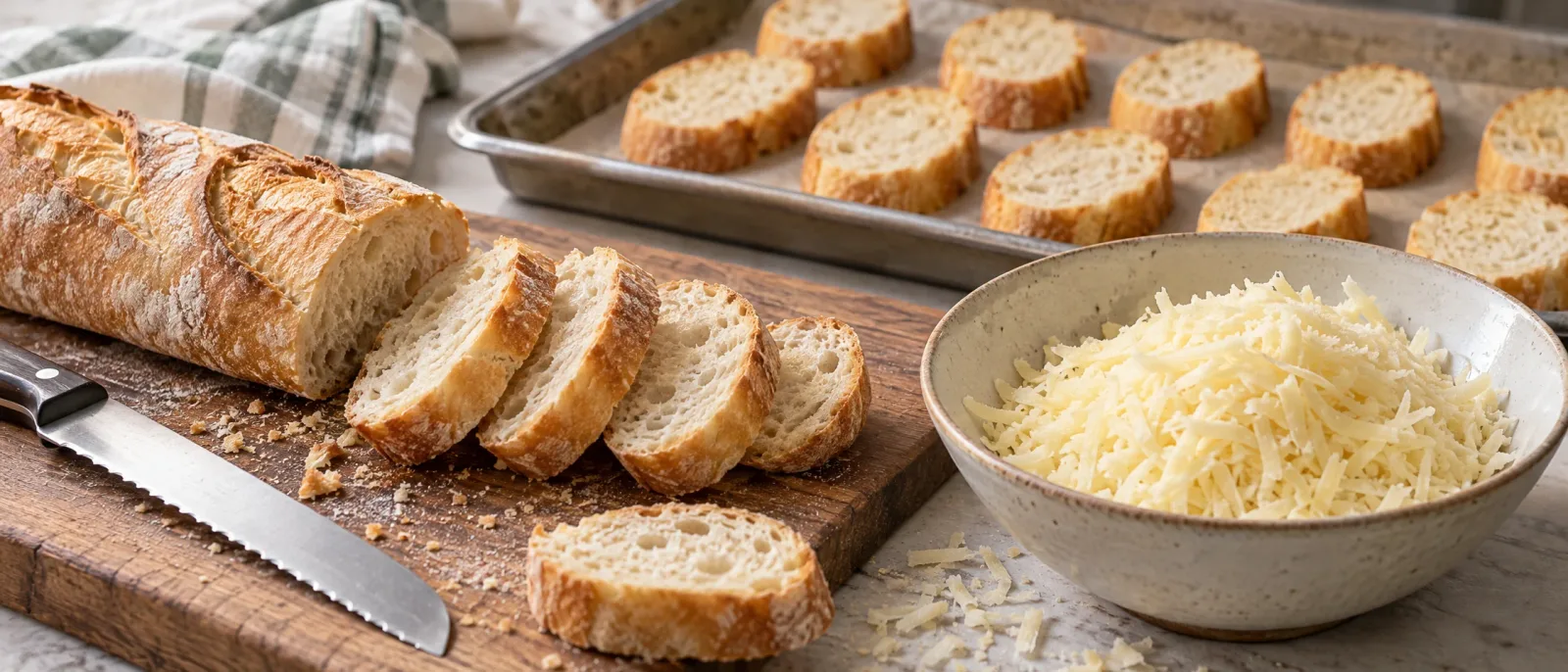
After the soup has simmered for about 25 minutes, switch on the oven to 180°C conventional. While it heats, cut the baguette into slices about 1.5 cm thick and arrange in a single layer on a baking tray. Grate the Gruyère and set aside. Allow about 9 minutes for slicing the bread and grating the cheese, with the oven heating meanwhile.
Prepare the bread and cheese Toast the bread
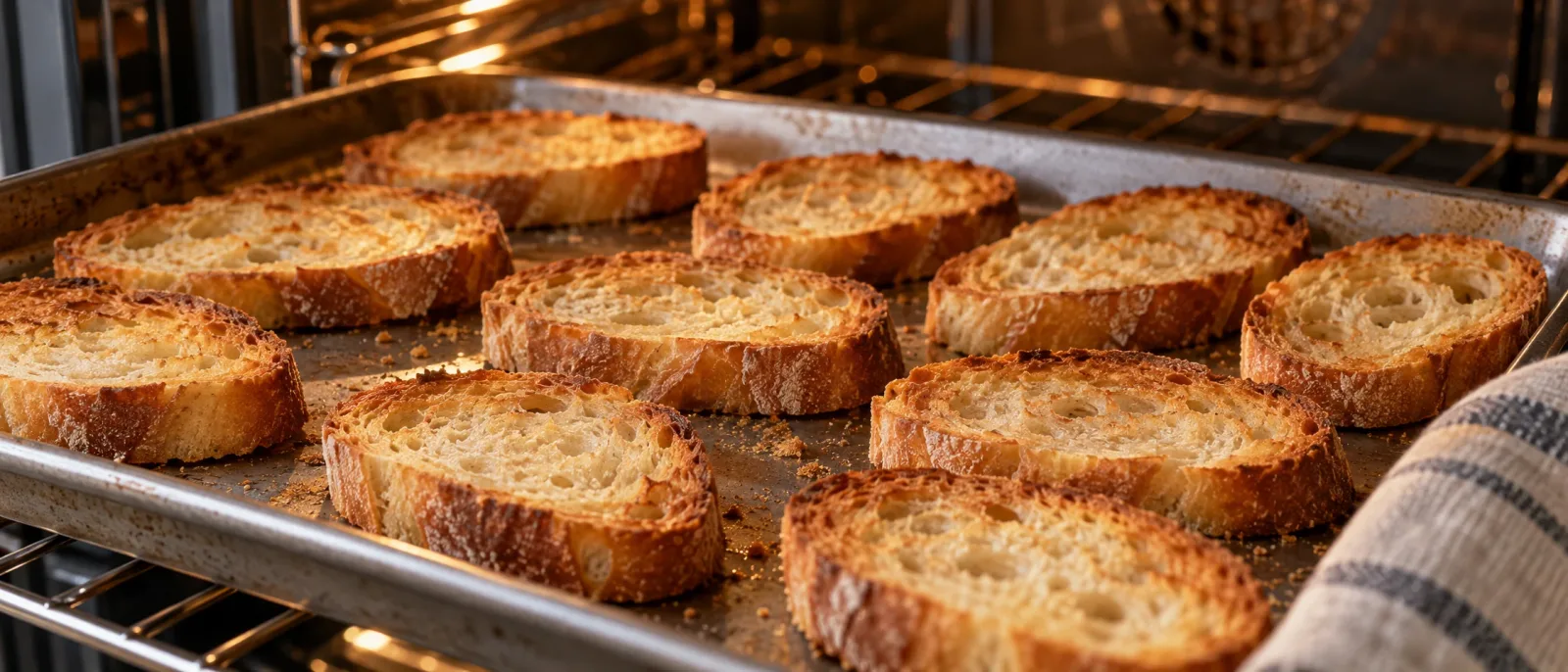
Put the bread into the preheated oven. Bake for about 10 minutes from putting it in, until the slices are dry, firm and lightly golden; if the centres remain soft, continue in 2-minute increments. Remove the tray and set the toast aside. The soup is still simmering over a low heat, so check that it has not reduced too much.
10:00Toast the bread Assemble the bowls
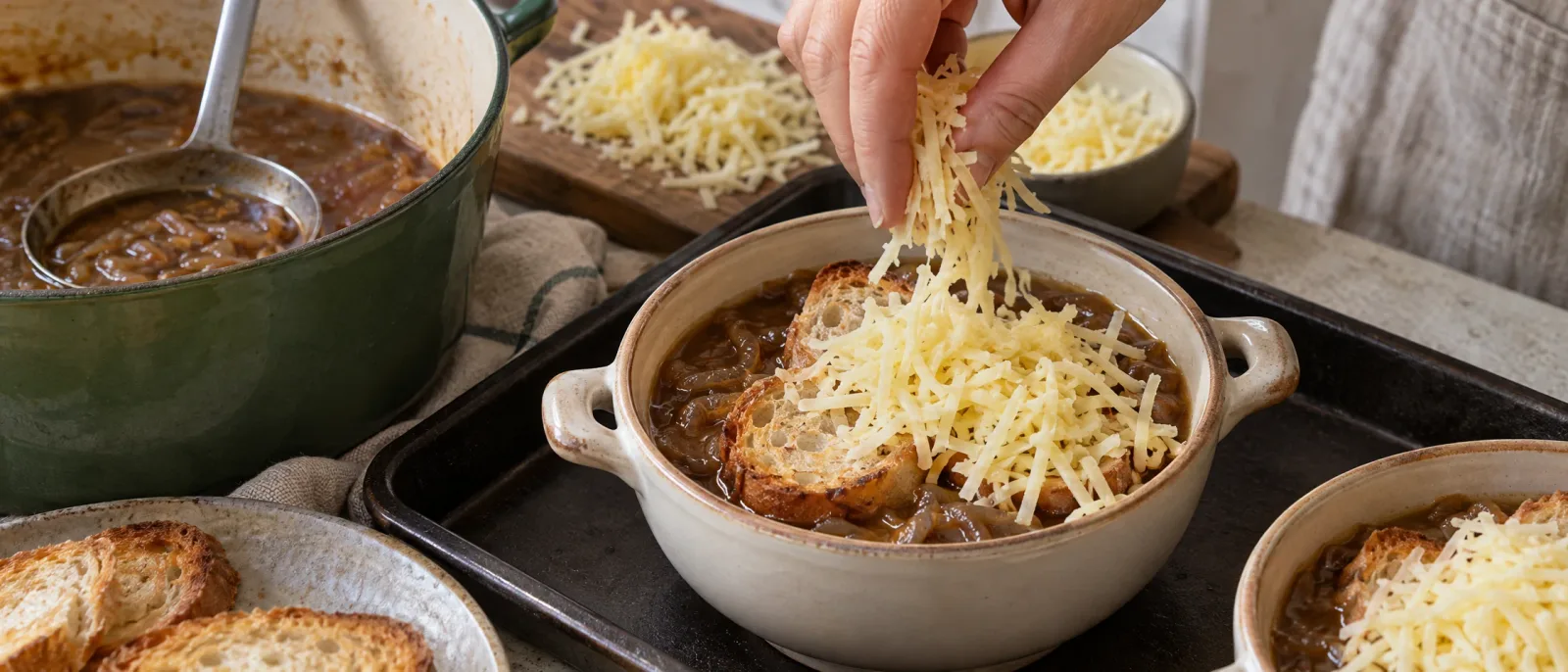
About 5 minutes before the soup finishes simmering, switch the oven to grill at 220°C. Once simmering is complete, check that the onions are soft and the soup tastes rounded. Turn off the hob and remove the bay leaves and thyme stalks. Season with pepper and salt if needed; add the optional sugar only if a little sweetness is missing. Set the bowls on the second tray. Ladle in the hot soup, leaving space for the bread and cheese. Add toast in a single layer, trimming it if necessary to cover the surface. Reserve any extra toast to serve alongside. Divide all the grated Gruyère between the bowls, covering the bread right up to the inside edges. Allow about 8 minutes for seasoning and assembly.
Assemble the bowls Grill the cheese
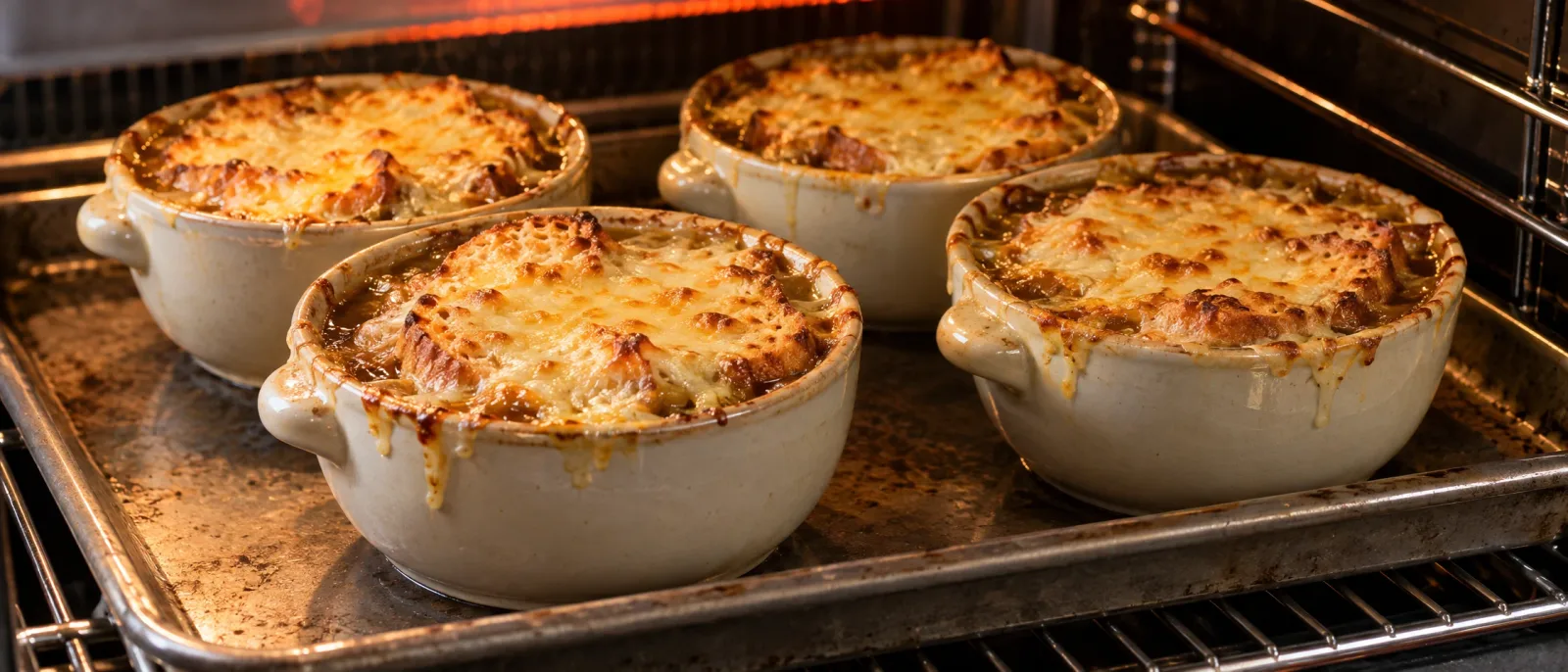
Put the tray into the heated oven with the cheese about 10–15 cm below the grill element. Grill for roughly 8–12 minutes from putting it in, but watch from minute 3 as grill strength varies. Remove when the cheese has melted completely, is bubbling and is golden with brown patches. If it browns before melting, move the tray lower. If still pale after the expected time, continue checking every minute. Use oven gloves to remove the tray.
10:00Grill the cheese Rest briefly and serve
Leave the bowls for 3–5 minutes after removing them, until the vigorous bubbling subsides; they will still be very hot. Using oven gloves, place each bowl on a protective plate and serve with the reserved toast alongside. Warn diners that both the bowls and soup are very hot. Eat with a spoon, breaking through the cheese and bread.
04:00Rest briefly and serve
My note for next time
Saved automatically in this browser. This note is not sent to the editors. 0/2000
Tips
- A wide base helps moisture evaporate. If the onions remain pale and sit in liquid, increase the heat slightly and stir more often; lower it once they begin to brown.
- Loosen brown deposits with a splash of water and stir them into the onions. Do not scrape black, bitter burnt patches into the soup.
- Do not replace slow browning with added sugar. The optional sugar is only for balancing the finished flavour.
- Use bowls explicitly suitable for grilling. Being ovenproof does not necessarily mean they can withstand direct heat from a grill element.
- The soup can be cooked ahead and chilled following the storage instructions. Bring it back to the boil before adding the toast; allow an additional 10–15 minutes for reheating.
Storage
Store the soup without the bread and cheese. Once cooked, divide between shallow containers, cool quickly and refrigerate within 2 hours. Keep at 4°C or below and use within 48 hours, or freeze in portions. Defrost in the fridge. Reheat only once, stirring and bringing the whole soup to the boil; add the toast and cheese just before grilling. Assembled portions are best eaten straight away, as the bread softens.
Timing
Hands-on: 1 hr 52 min · Cooking: 2 hr 40 min · Resting: 4 min
The total allows for tasks done in parallel. The individual times can overlap.