Dessert Thai-inspired
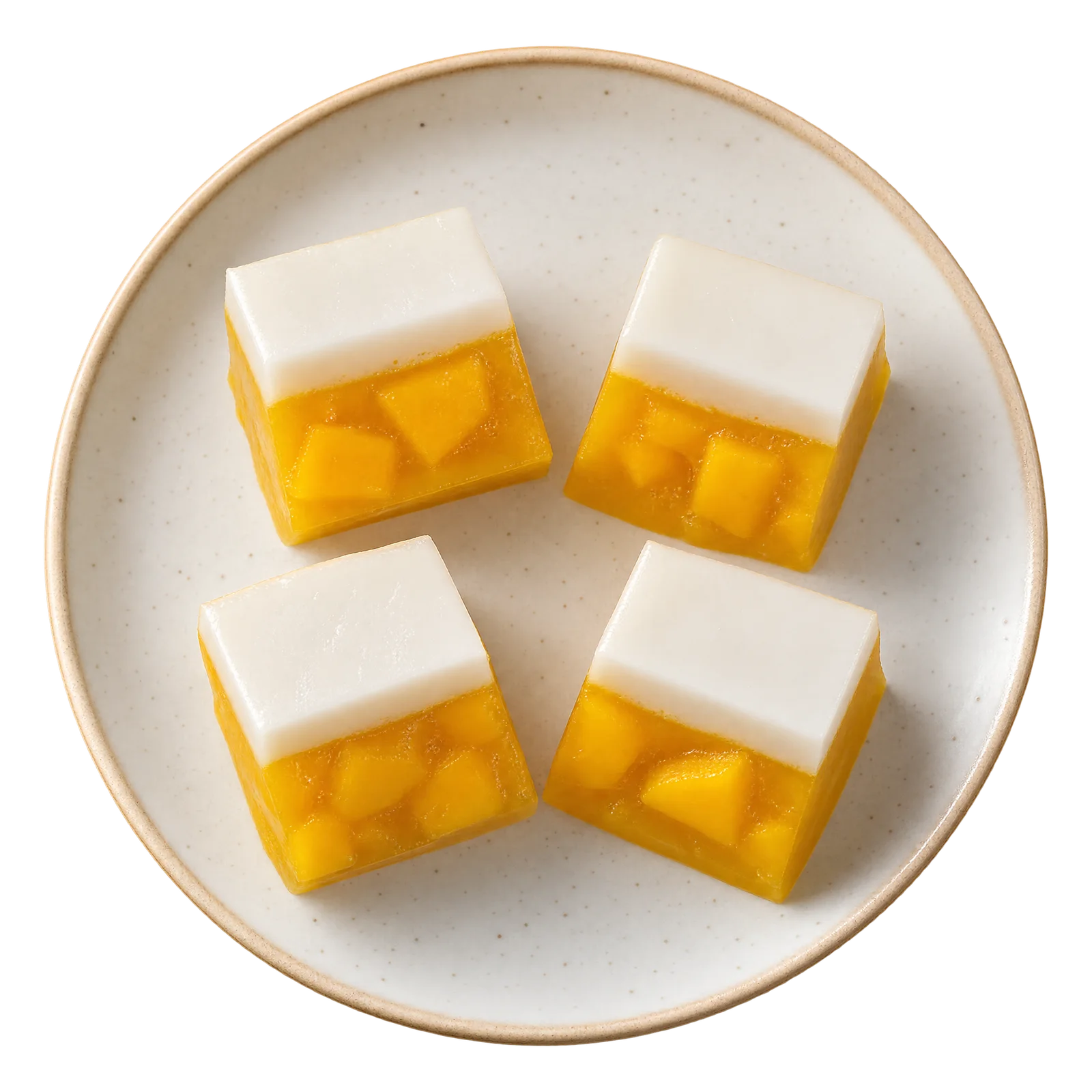
Mango and coconut jelly cubes
Vegan
Editorially prepared
A Thai-inspired agar jelly with a fruity mango and lime layer and lightly salted coconut. Make it the day before, then cut it into small, firm cubes just before serving: four per portion.
Plan this meal
Set your servings and add the meal. Open your plan to choose more meals and find your combined shopping list.
COOK YOUR WAY
Take this recipe to the kitchen
Start a session to tick off ingredients and steps and use timers.
Ingredients
4 servings · metric units
When changing the number of servings, keep the proportions and depth of both layers unchanged. Choose a mould whose base area increases in proportion to the ingredients. Very small amounts of agar are difficult to measure accurately; do not reduce the batch without suitable measuring spoons.
Substitutions
Substitute amounts are adjusted to your selected servings.
- Instead of ripe mango flesh for blendingdefrosted mango
Use it instead of the fresh flesh intended for blending, weighing the same amount after defrosting. Defrost in the fridge beforehand. Flavour depends on how ripe the fruit was when frozen; fresh mango is preferable for the visible cubes. Defrosting is not included in the main timing.
Shopping for this recipe
Your list uses the selected servings and fridge. Stock quantities are unknown — check you have enough.
Optional ingredients and substitutions
You’ll need
A watertight mould with internal dimensions of about 14 × 14 cm and at least 4 cm deep, preferably silicone · Two small saucepans, one with a lid · One hob ring · Blender or hand blender with a narrow jug · Kitchen scales, measuring jug and 5 ml and 2.5 ml measuring spoons · Whisk, spoon and flexible spatula · Sharp knife and chopping board · Four dessert plates
Method
0/9 stepsPrepare the mango and mould
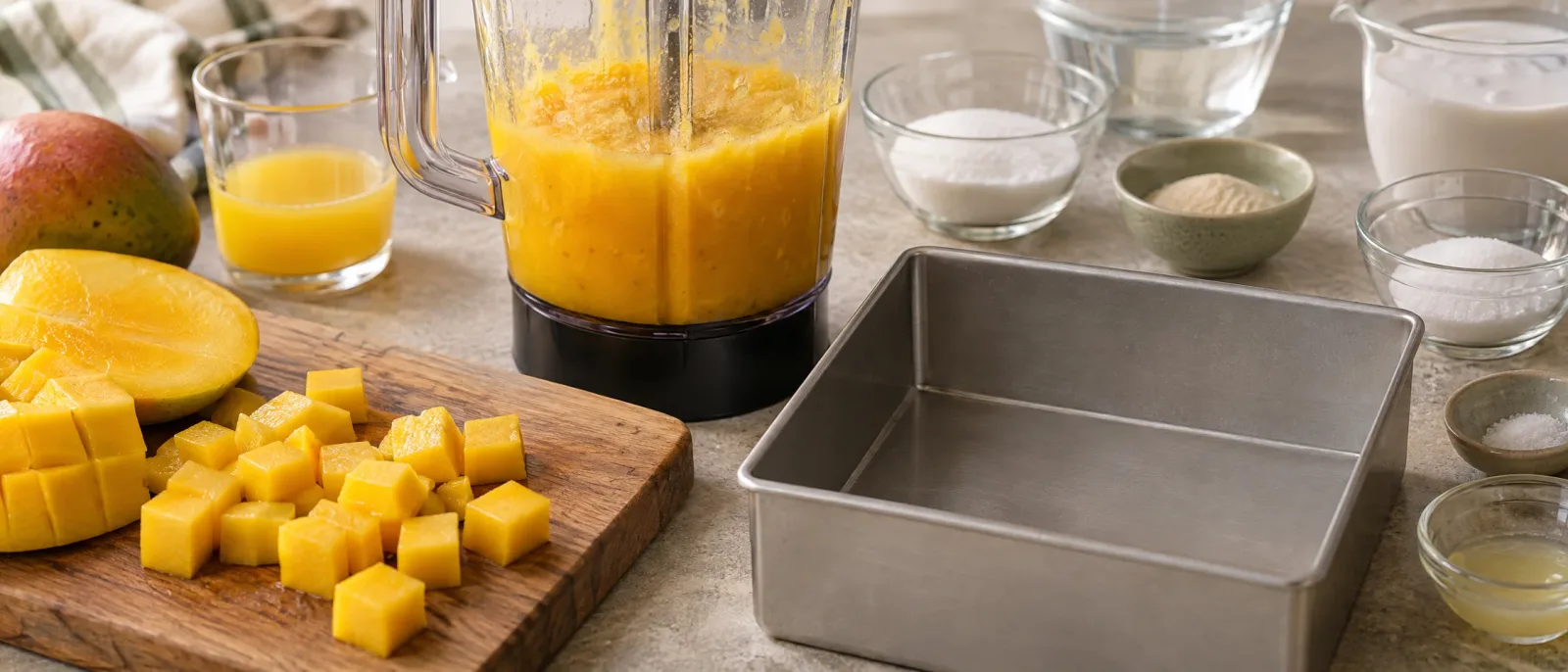
Place the mould on a level surface. Wash and peel the mango, remove the stone and weigh both portions of flesh. Blend the flesh intended for blending with the orange juice until smooth. Cut the second portion into roughly 1 cm cubes. Measure the remaining ingredients separately for each layer; stir the coconut milk thoroughly before measuring. The purée and coconut milk should not be fridge-cold. Allow about 15 minutes for preparation.
Prepare the mango and mould Cook the mango layer
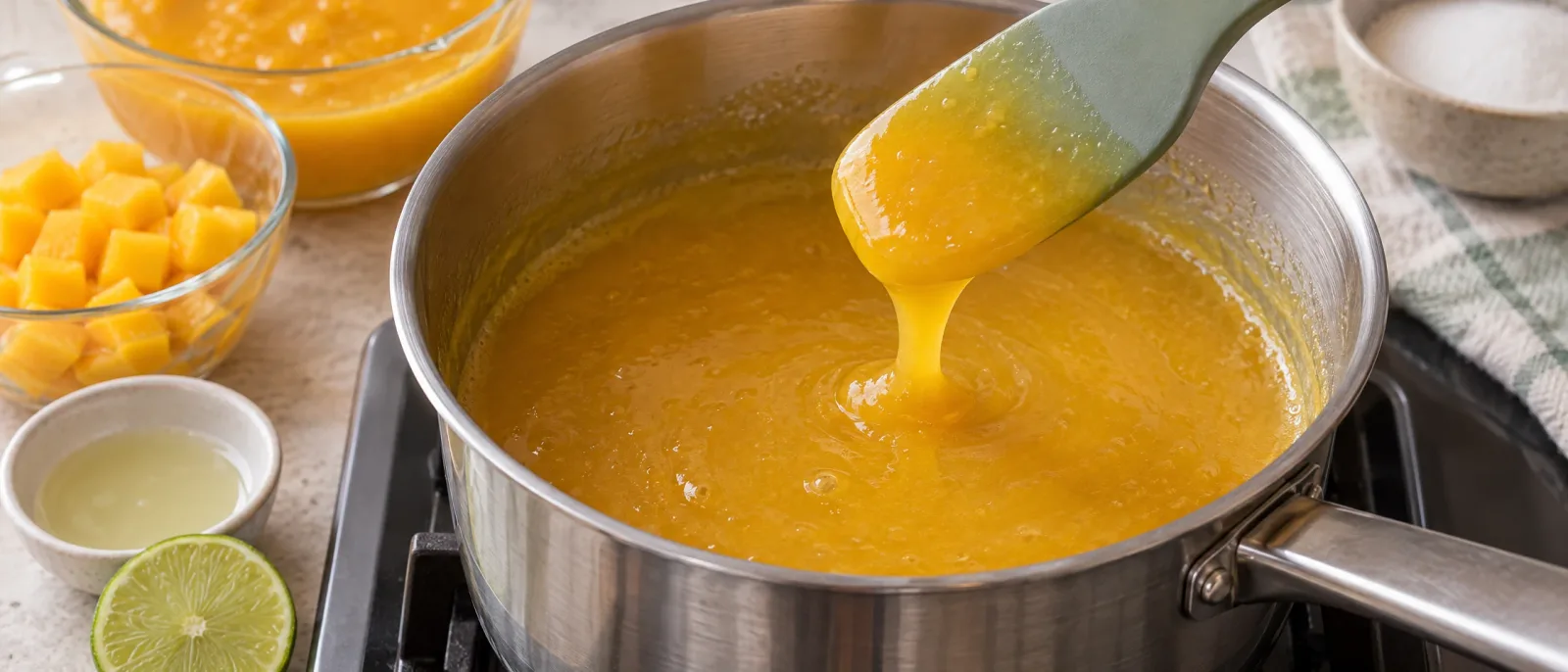
In the first saucepan, mix the water and agar for the mango layer. Bring to a full boil over a medium heat, stirring; allow about 3 minutes. From the moment it boils, cook at a gentle boil for about 3 minutes, stirring, until no agar particles remain visible on a spoon. If any remain, continue cooking and check every minute. Add the mango-layer sugar and dissolve it, then stir in the purée. Heat for about 2 minutes until smooth and hot. Remove from the heat and stir in the lime juice.
03:00Cook the mango layer Pour the mango into the mould
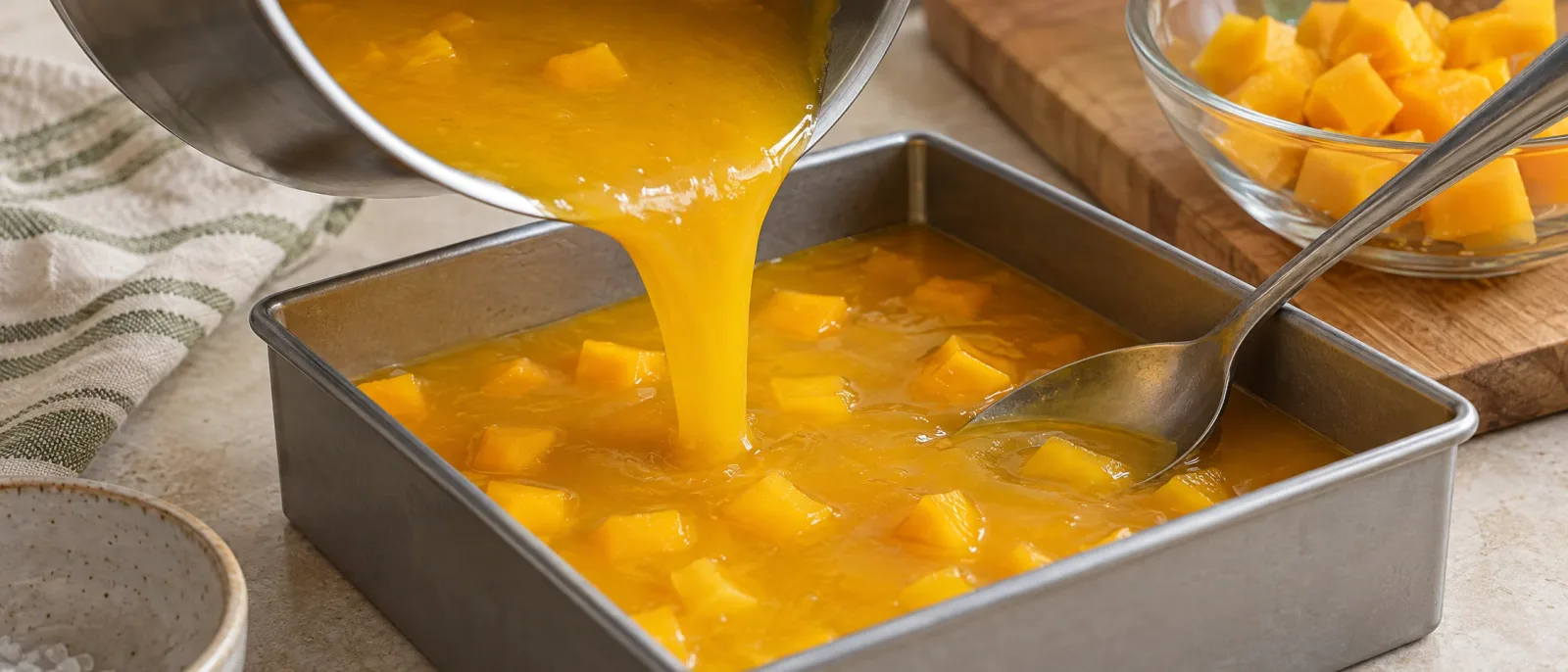
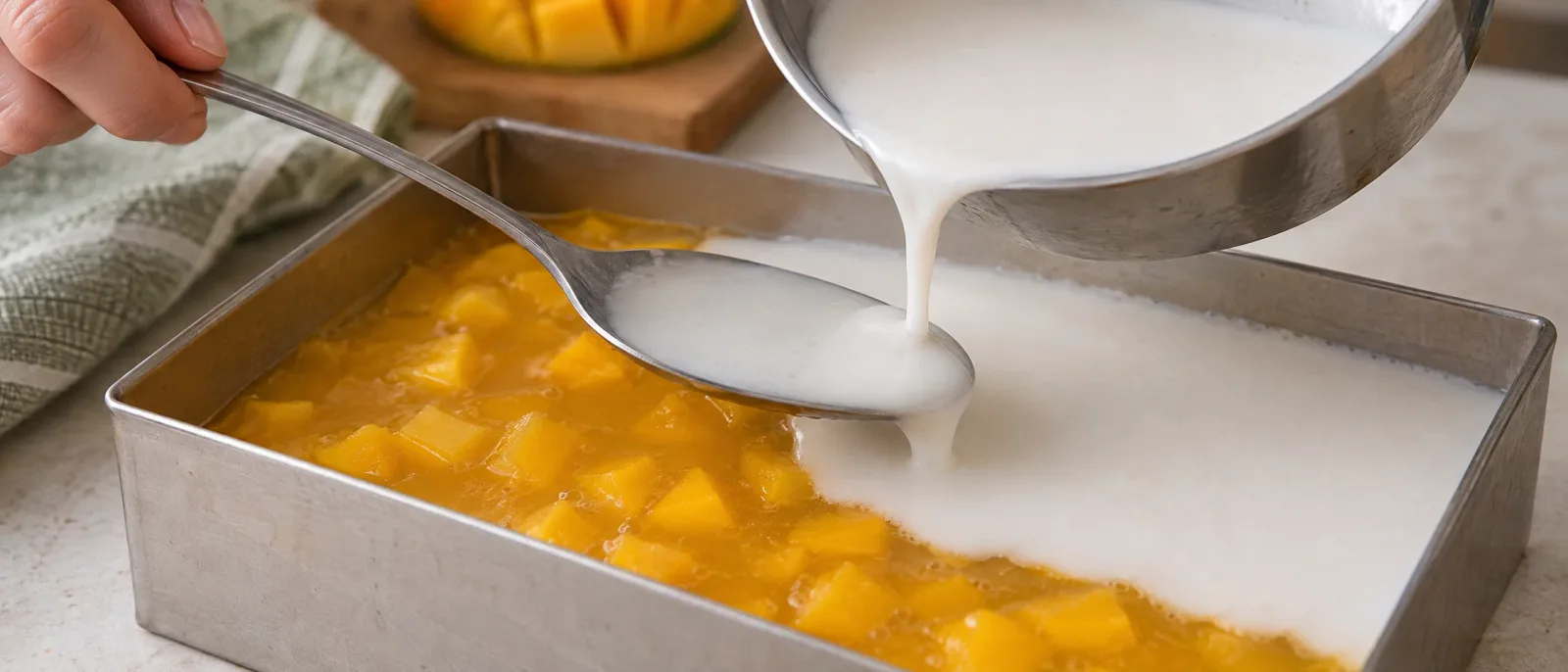
Immediately pour the hot mango mixture into the mould. Distribute the prepared mango cubes evenly and gently push them below the surface with a spoon. Remove any large surface bubbles. Work promptly before the mixture starts to set.
Pour the mango into the mould Let the surface set
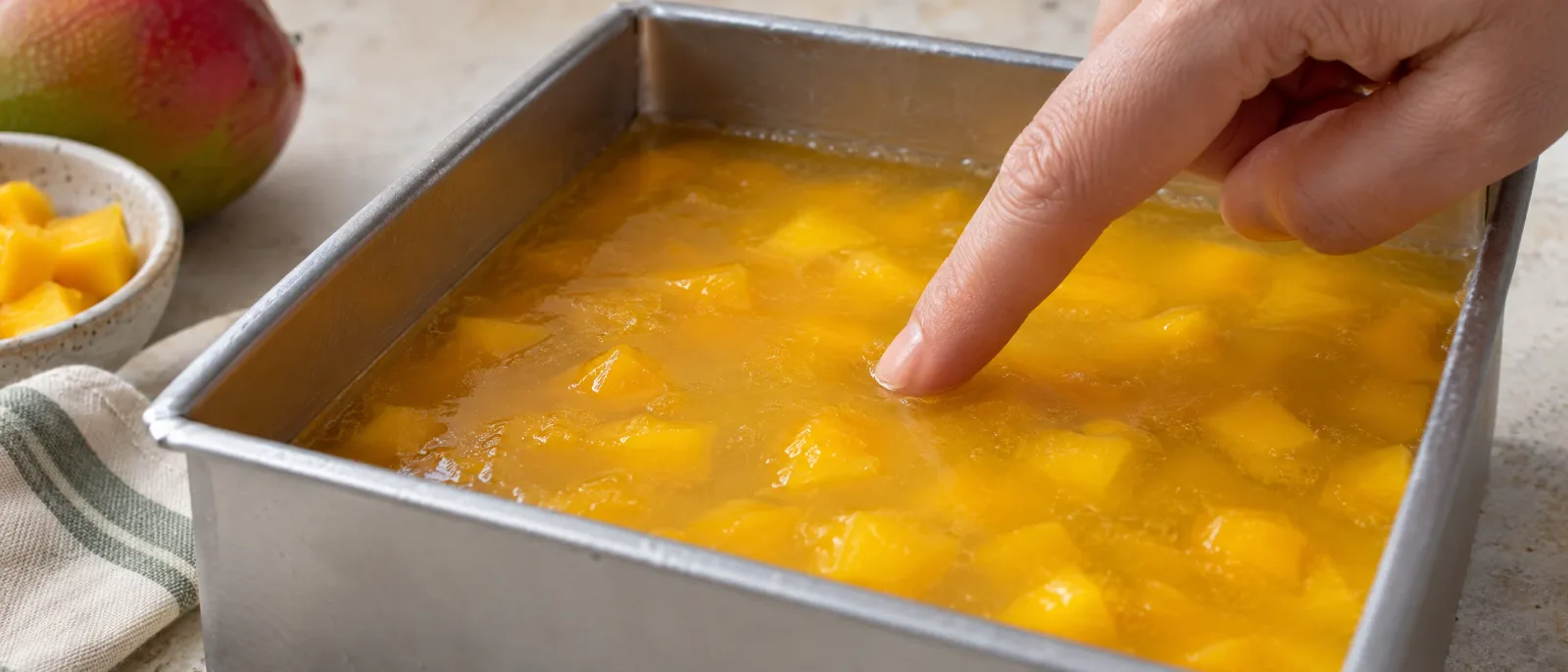
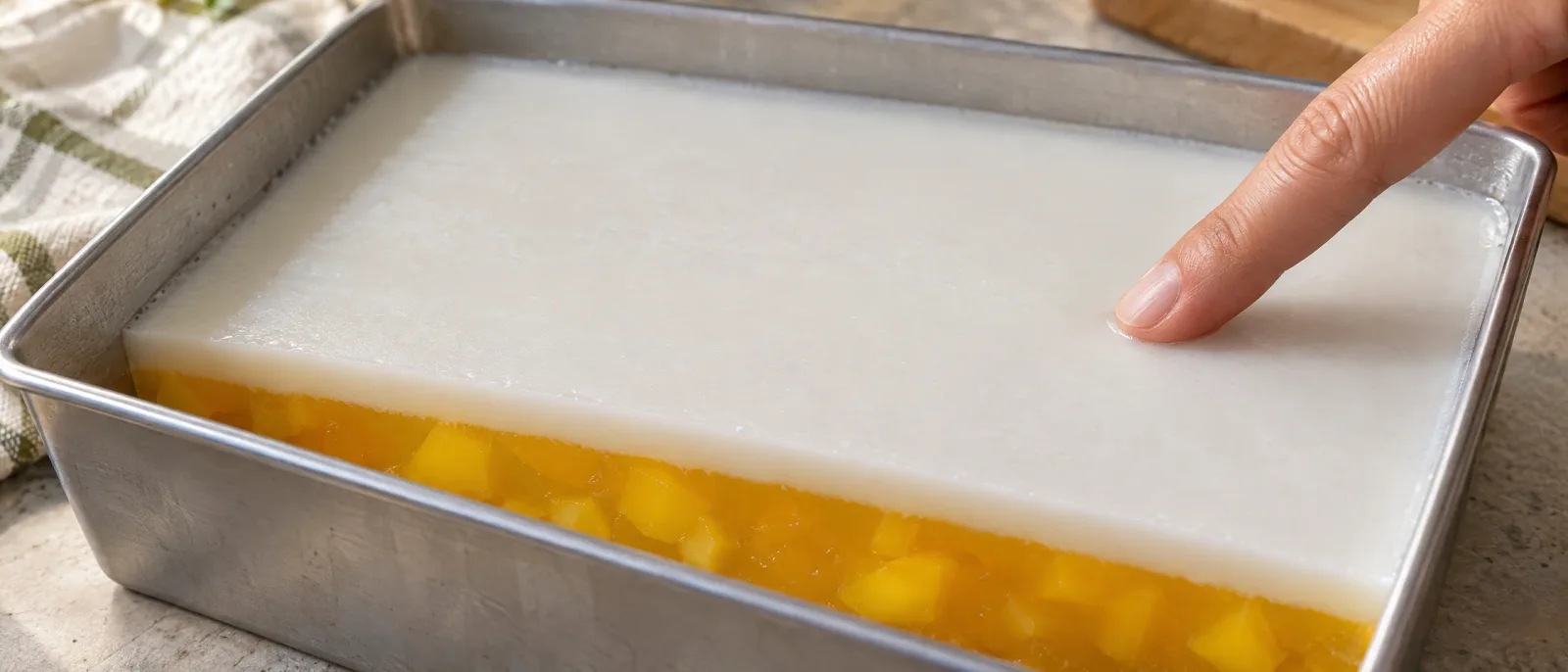
Once poured, leave the mango layer at room temperature for about 10–15 minutes; do not refrigerate it. Meanwhile, move on to preparing the coconut layer. Before joining the layers, test the surface with a clean finger: it should withstand a gentle touch without breaking but still feel warm. If it is liquid, wait a few more minutes and check again.
15:00Let the surface set Cook the coconut layer
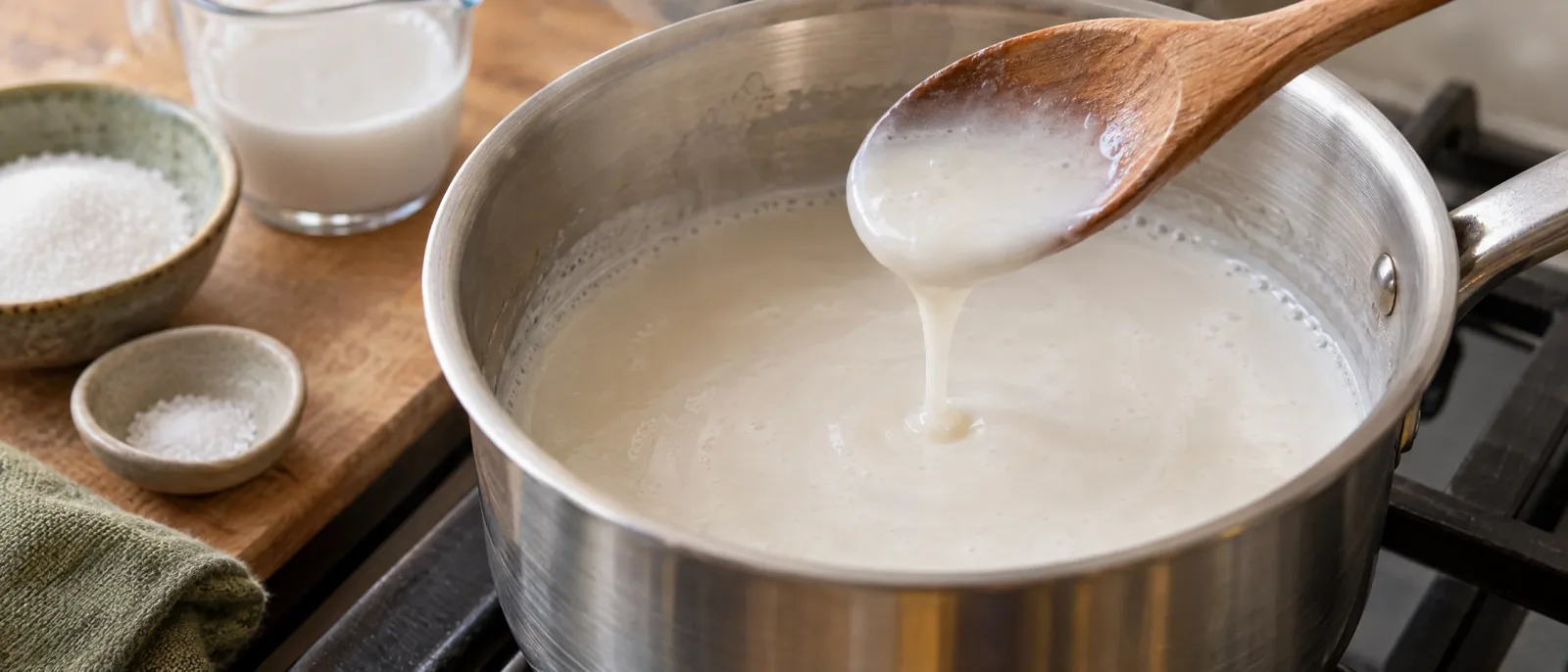
While the mango is setting, mix the coconut-layer water and agar in the second saucepan. Bring to a full boil over a medium heat, stirring, allowing about 3 minutes. From boiling, cook gently for about 3 minutes until the agar particles disappear; continue longer if necessary, checking every minute. Add the coconut-layer sugar and salt and dissolve them. Stir in the coconut milk and heat for about 2 minutes until smooth, thoroughly hot and steaming. If the mango is not ready yet, cover the saucepan and keep it over the lowest heat without vigorous boiling, usually for up to 5 minutes. The mixture must remain completely liquid.
03:00Cook the coconut layer Join the two layers
Check that the mango surface has set but is still warm, and that the coconut mixture is hot and liquid. Slowly pour the coconut over the back of a spoon held just above the mango, moving it across the mould. Do not direct a strong stream onto one spot. You should have an even white layer without breaking the yellow layer underneath.
Join the two layers Let the dessert cool
Once the coconut has been poured, leave the mould at room temperature for about 20 minutes, until the surface has set and the dessert is no longer steaming. Do not move the mould while the surface is still liquid. If it is still steaming strongly after this time, wait a few minutes longer.
20:00Let the dessert cool Chill overnight
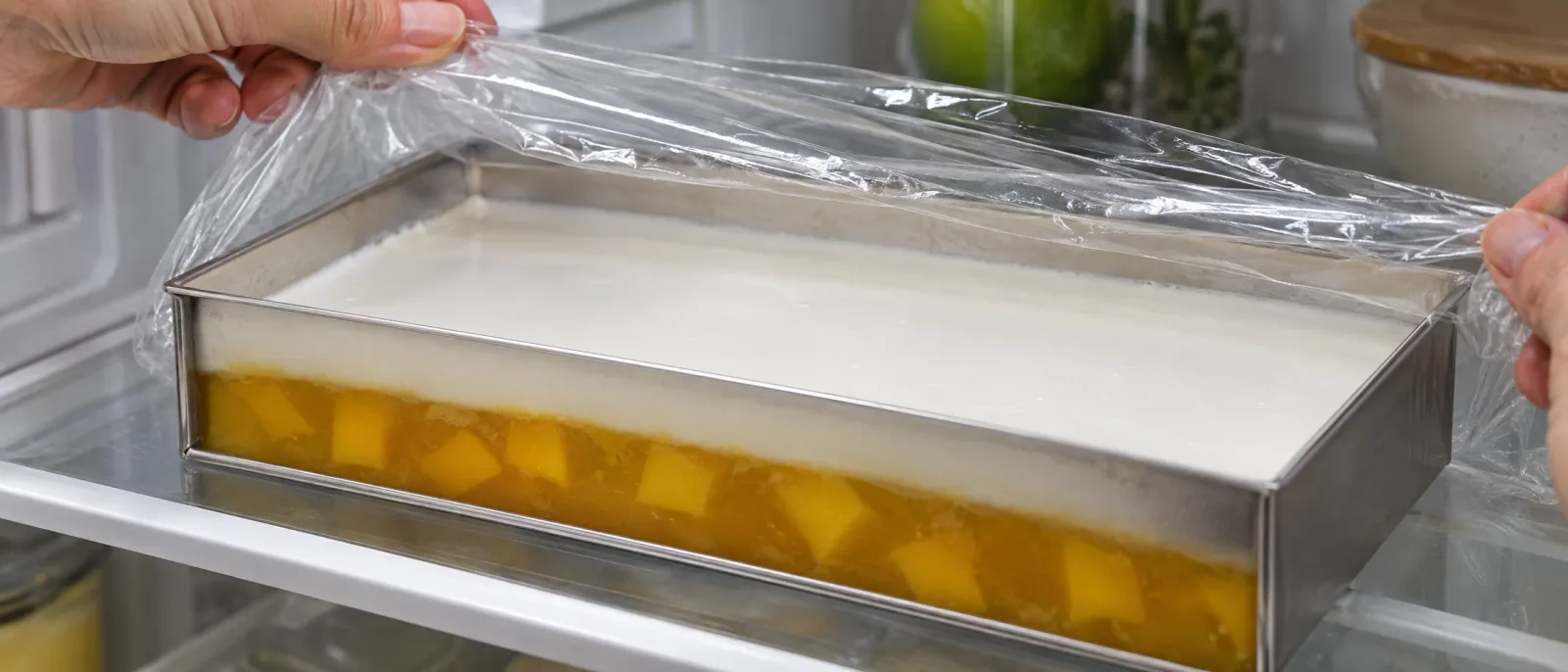
Cover the mould without touching the dessert's surface and refrigerate. Chill overnight, allowing about 12 hours from placing it in the fridge. Before unmoulding, check that both layers are cold and firm, including in the centre. If the centre remains soft or warm, leave the dessert in the fridge longer.
Chill overnight Cut and serve
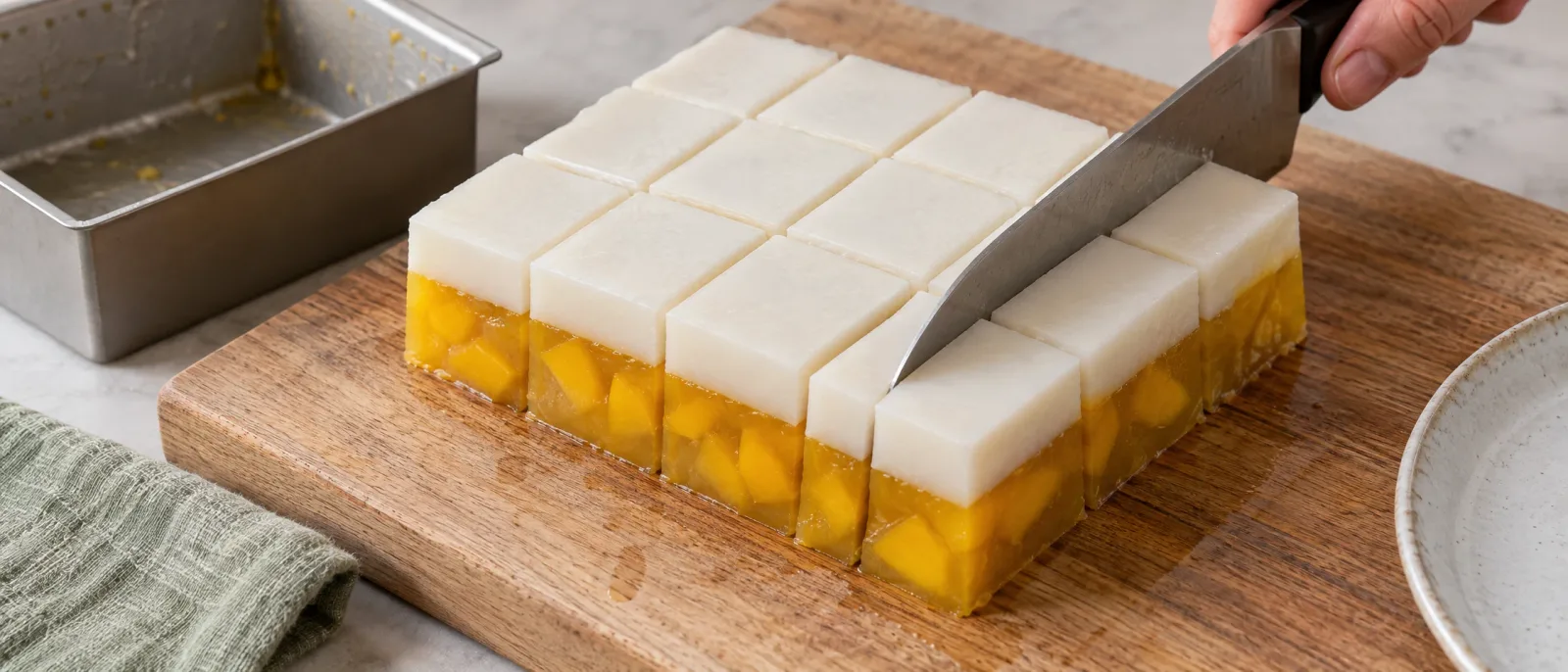
Just before serving, gently release the jelly from the sides of the mould. Peel a silicone mould away from the dessert; use a thin spatula for a rigid mould. Carefully turn it out onto a board and lift off the mould without pulling on the coconut layer. Cut with a sharp knife in a 4 × 4 grid to make 16 cubes. Arrange four on each dessert plate with the white layer uppermost. Serve chilled, without garnishes.
Cut and serve
My note for next time
Saved automatically in this browser. This note is not sent to the editors. 0/2000
Tips
- Do not refrigerate the mango layer on its own before adding the coconut. Prepare the second layer while the first is setting.
- If the coconut mixture starts setting in the saucepan, reheat it gently, stirring until completely liquid again. Do not pour a lumpy mixture.
- Choose properly ripe mango: underripe fruit will leave a sour flavour and firm pieces.
- Wipe the knife between cuts and lift the cubes with a broad spatula, supporting both layers.
Storage
Keep refrigerated at 4°C or below, covered in the mould, for up to 2 days. Unmould and cut as close to serving as possible. A little released liquid is normal; drain it before serving. Do not freeze, as the jelly may release water and lose its even texture after thawing.
Timing
Hands-on: 46 min · Cooking: 21 min · Resting: 12 hr 35 min
The total allows for tasks done in parallel. The individual times can overlap.