Starter Moroccan-inspired
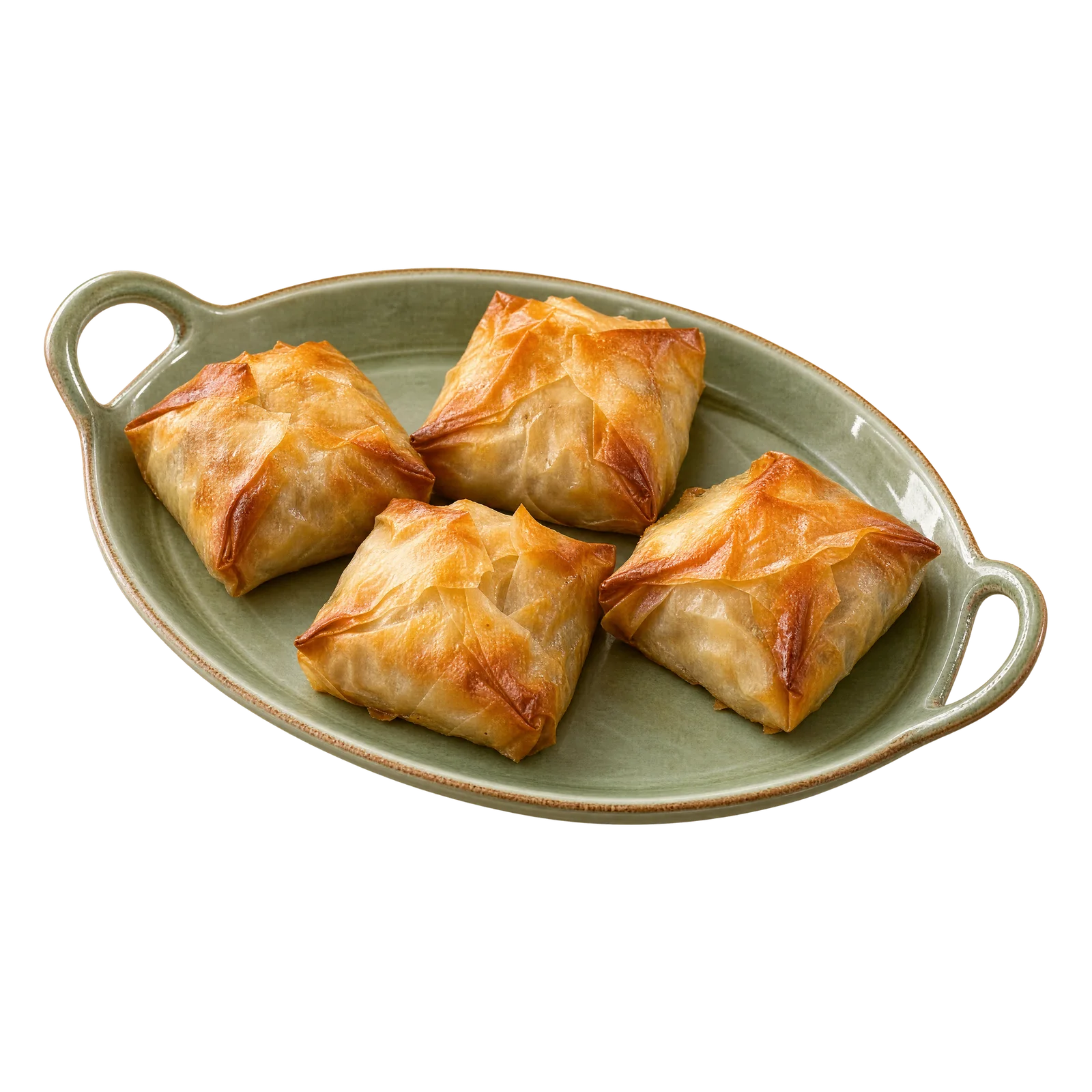
Mini duck, apricot and pine nut pastillas
Meat & fish
Editorially prepared
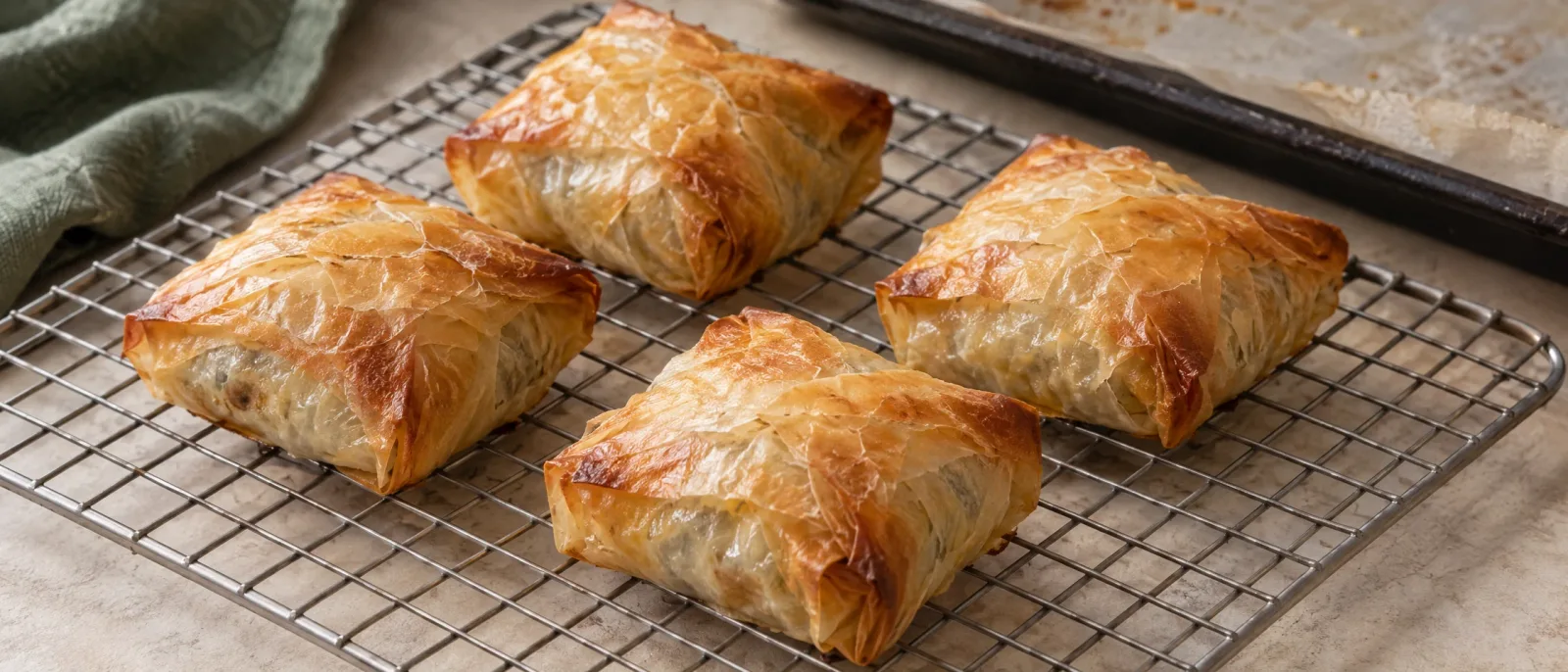
Small, closed filo parcels filled with tender confit duck, dried apricot and pine nuts. Lemon balances the sweetness of the fruit, while cinnamon and saffron give the filling a warm aroma. Makes four small starter portions.
Plan this meal
Set your servings and add the meal. Open your plan to choose more meals and find your combined shopping list.
COOK YOUR WAY
Take this recipe to the kitchen
Start a session to tick off ingredients and steps and use timers.
Ingredients
4 servings · metric units
One serving is one small parcel, not a main course. Scale the ingredients proportionally and keep the parcel size unchanged. Reduce a larger quantity of filling in a wider pan. Chopping and wrapping will take longer; bake in batches if the parcels cannot sit comfortably apart on one tray.
Substitutions
Substitute amounts are adjusted to your selected servings.
- Instead of toasted pine nutstoasted blanched almonds
Use in place of the pine nuts, finely chopped, adjusting the quantity to give a similar proportion in the filling. Almonds are firmer and less buttery; avoid large pieces that could puncture the filo.
- Instead of fully cooked confit duck leg meat, skin and bones removedslow-roasted duck leg meat
Choose fully cooked, chilled leg meat that pulls apart easily, with skin and bones removed. Weigh out the same amount of meat as in the recipe. It will usually be less fatty than confit; avoid dry breast meat. Roasting a leg from scratch requires additional time.
Shopping for this recipe
Your list uses the selected servings and fridge. Stock quantities are unknown — check you have enough.
Optional ingredients and substitutions
You’ll need
kitchen scales and measuring spoons · knife, chopping board and fine grater · small frying pan, about 18 cm, and spatula · flat plate for cooling and a mixing bowl · pastry brush · baking tray and baking parchment · cling film and a clean tea towel for covering the filo · oven · probe thermometer · wire rack · serving platter
Method
0/9 stepsPrepare the ingredients
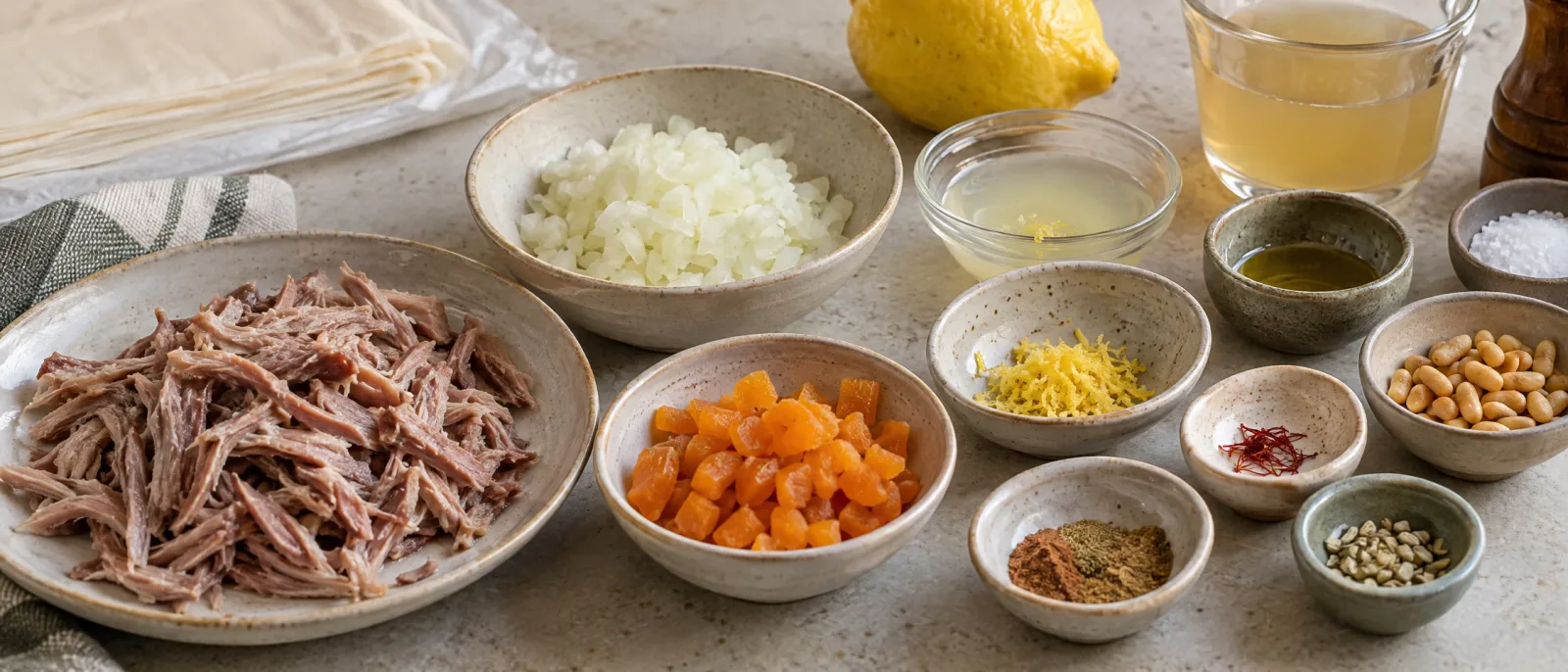
Pull the confit duck meat into short strands, weigh it and return it to the fridge. Peel and very finely chop the onion, then cut the apricots into roughly 3 mm dice. Wash and dry the lemon, then prepare the zest and juice. Measure the remaining filling ingredients and lightly crush the fennel seeds. Leave the filo wrapped so it does not dry out.
Prepare the ingredients Soften the onion
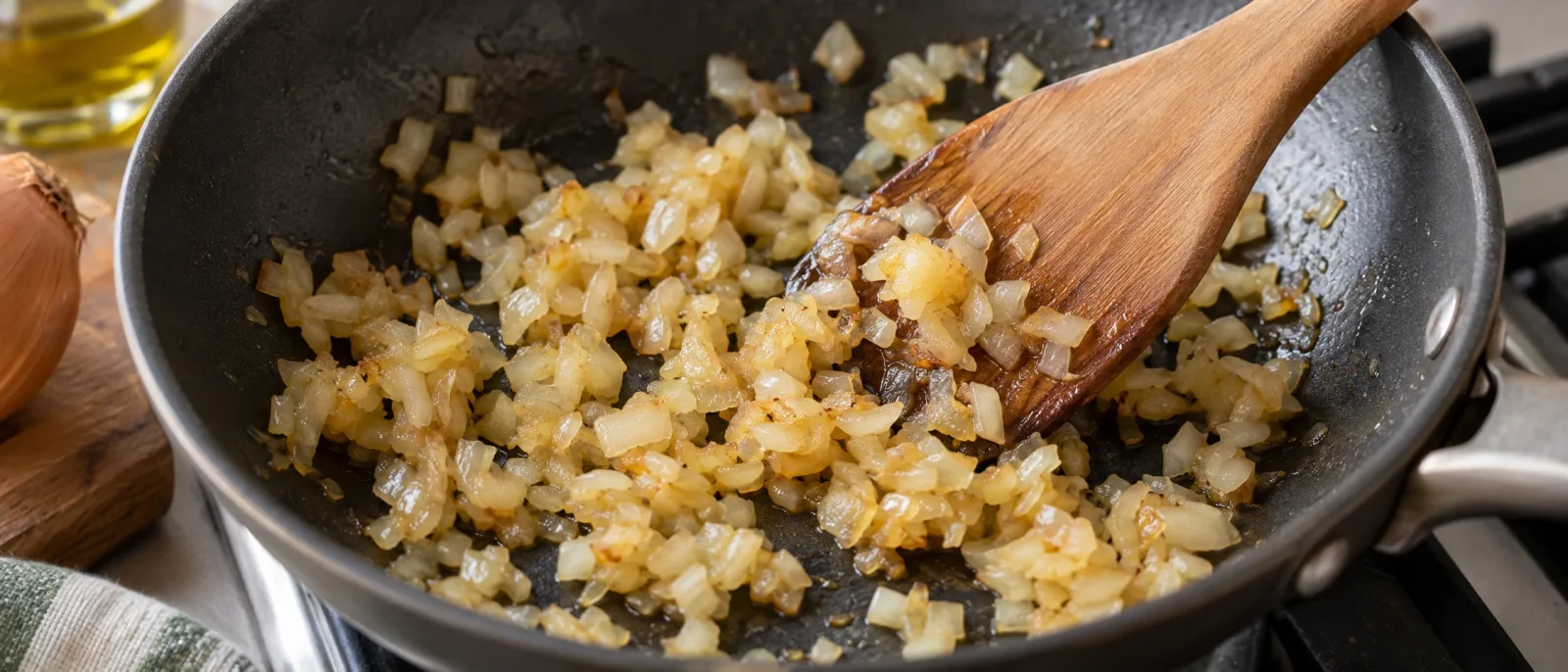
Warm 3 ml of olive oil in a small frying pan over a low to medium heat for about 2 minutes, without letting it smoke. Add the onion and cook for about 8 minutes from adding it, stirring frequently. It should soften and turn lightly golden without dark edges. If it is still firm, continue cooking over a low heat.
08:00Soften the onion Add the apricots and spices
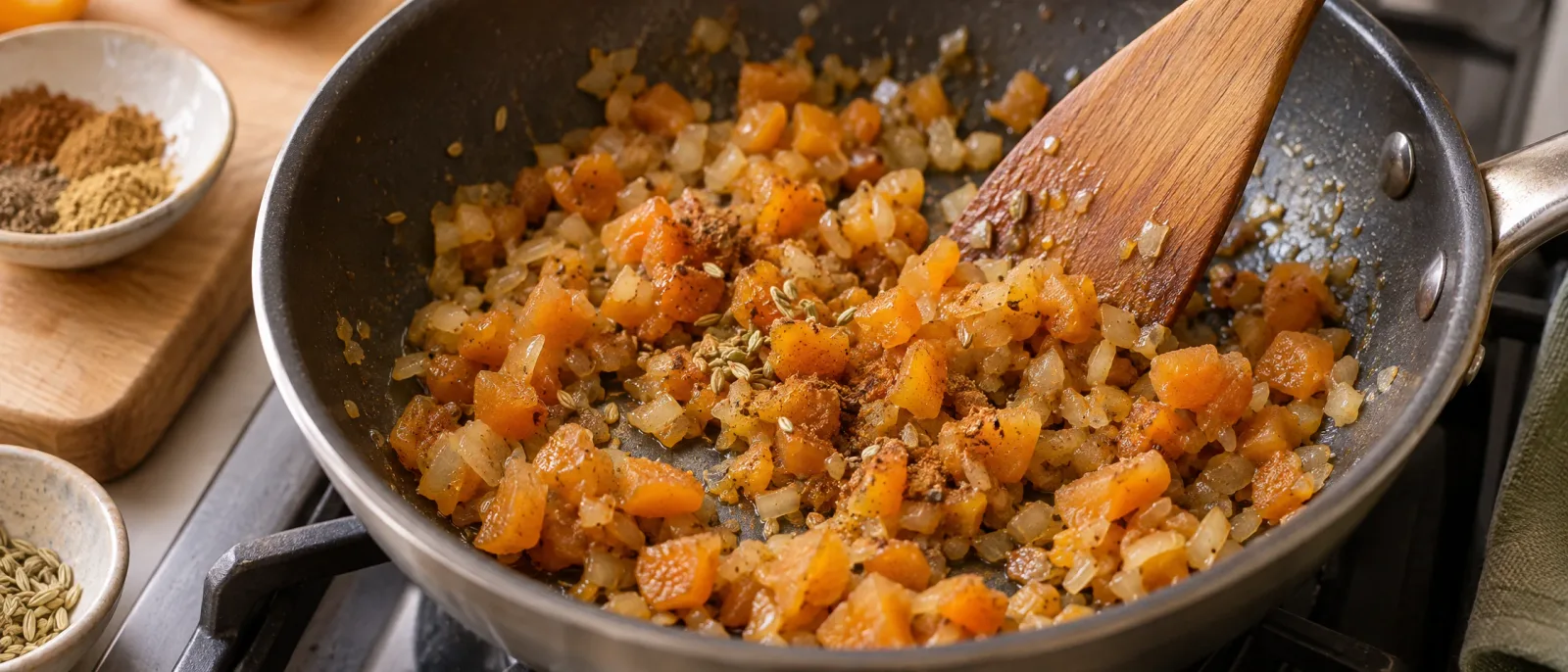
Add the apricots, cinnamon, coriander, cumin and fennel seeds. Cook over a low heat for about 2 minutes from adding them, stirring, until the spices smell fragrant. Do not let them burn; if they start sticking, move straight on to adding the stock.
02:00Add the apricots and spices Reduce the filling base
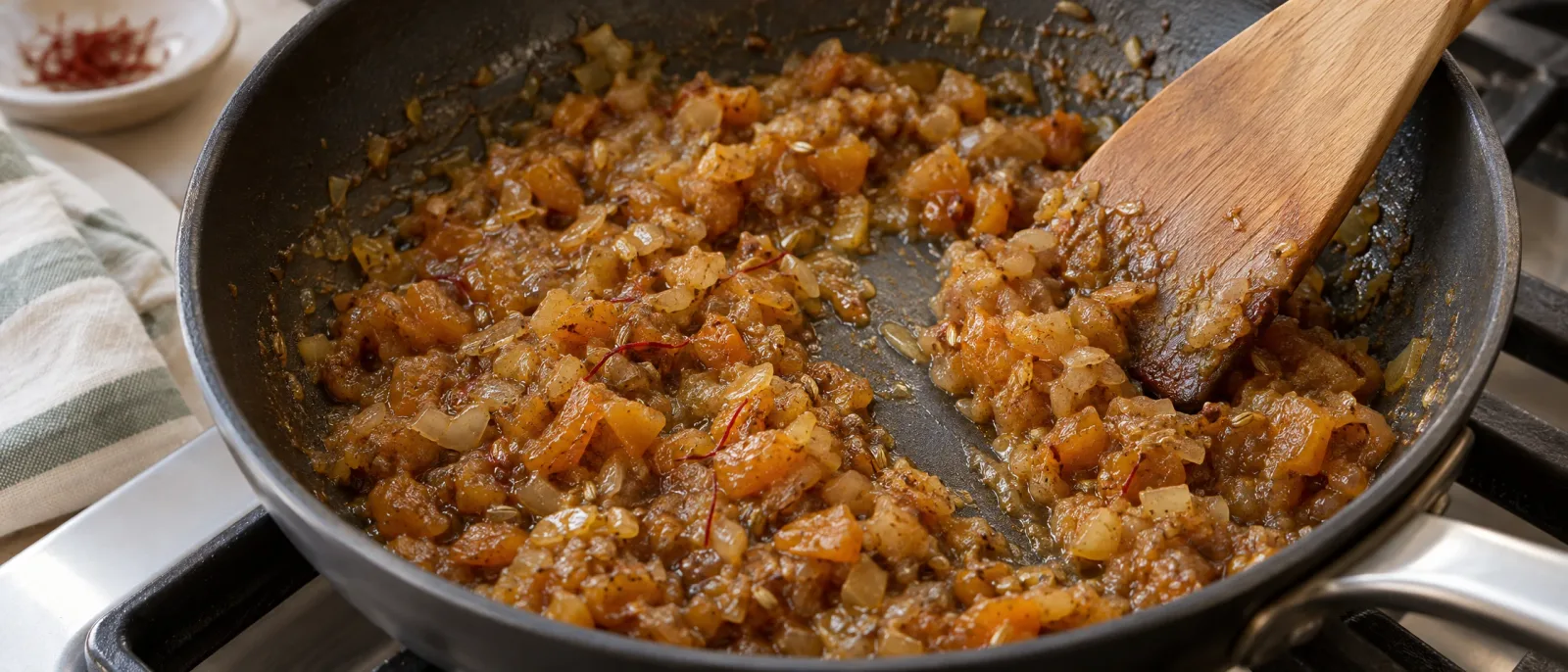
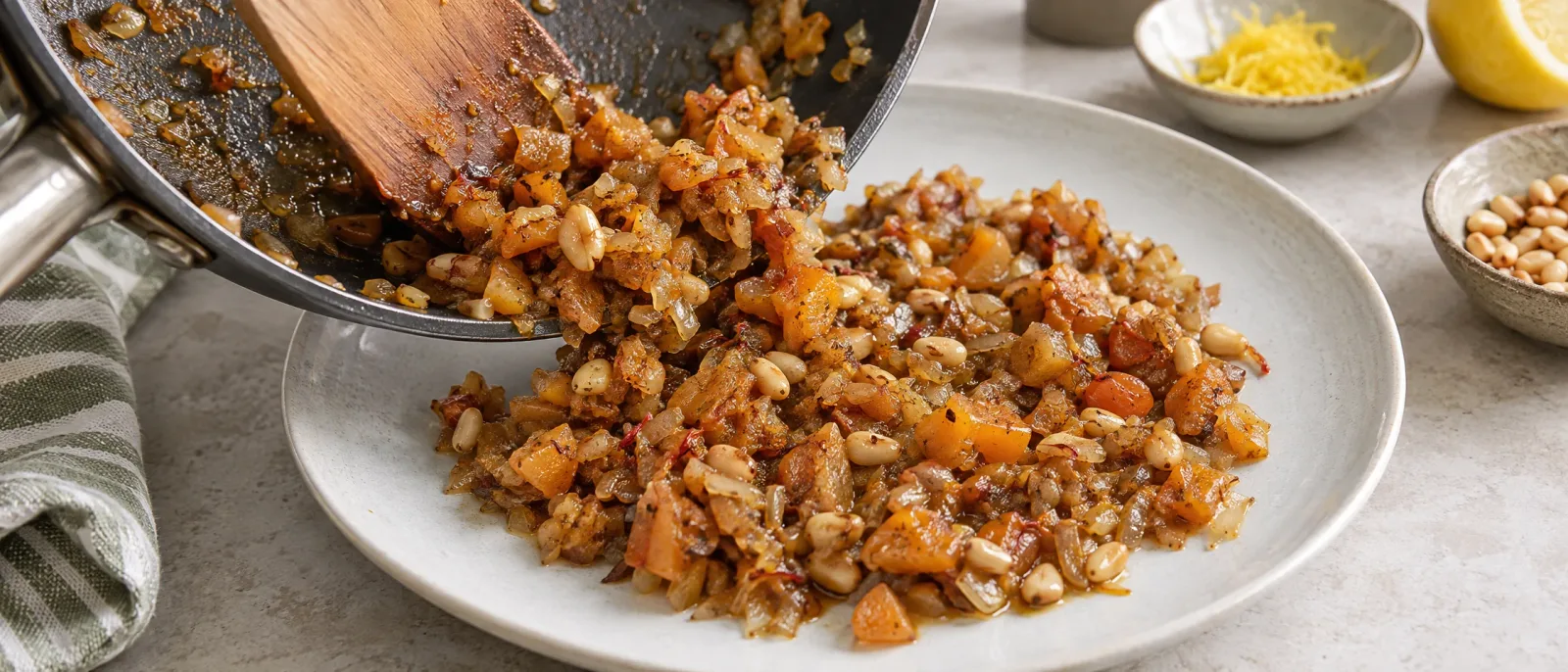
Pour in 25 ml of chicken stock and add the saffron. Bring to a gentle simmer, allowing about 2 minutes. From that point, simmer uncovered for about 6 minutes, stirring halfway through. The apricots should soften and almost all free liquid should evaporate: dragging a spatula through the mixture should leave the pan base visible. If liquid still pools, continue reducing and check every minute.
06:00Reduce the filling base Cool the filling base
Take the pan off the heat. Stir in the lemon zest, lemon juice and pine nuts. Spread thinly over a flat plate and cool for about 20 minutes from spreading it out, until the base no longer feels warm or gives off steam. Allow longer if it is still warm. After about 10 minutes of cooling, you can start preheating the oven; keep the duck in the fridge.
20:00Cool the filling base Preheat the oven
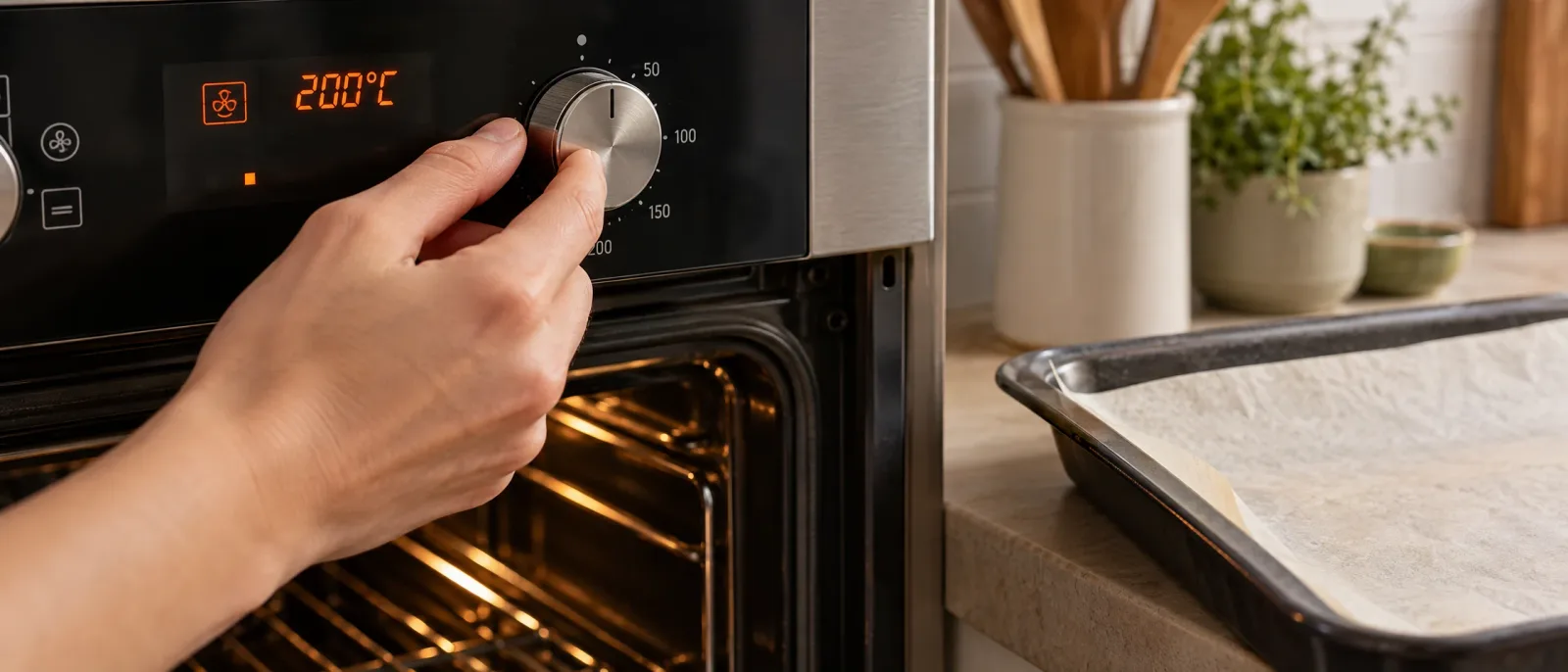
While the base cools, set the oven to 200°C conventional or 180°C fan. Line a baking tray with baking parchment. Allow about 20 minutes for preheating; the oven can continue heating while you wrap the parcels. Check that it has reached the set temperature before baking.
Preheat the oven Fill and wrap the filo
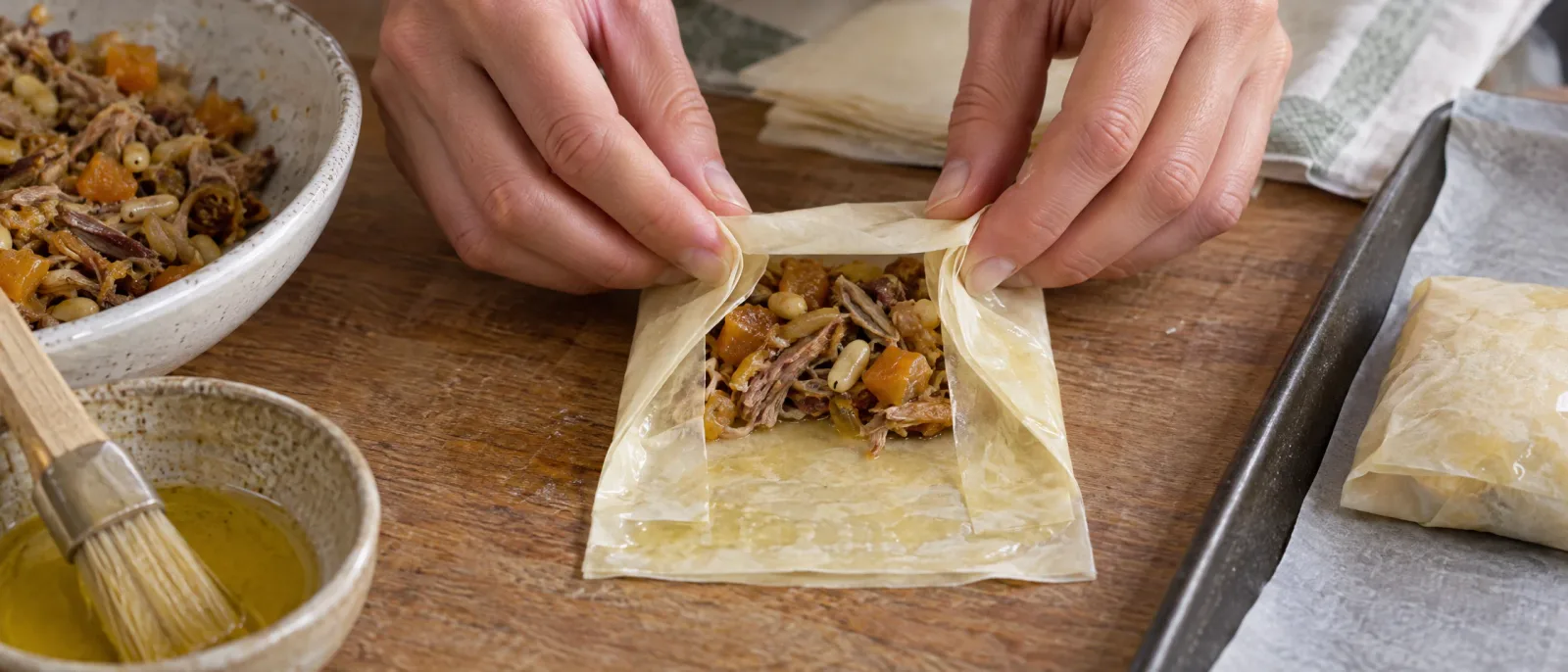
Check that the base has cooled completely, then mix it with the cold duck. Season with pepper and salt if needed. Divide the filling into as many equal portions as you are making parcels. Cut the filo into two squares per parcel, about 12–14 cm across. Keep unused pastry covered. Divide the pastry oil between brushing the layers, edges and tops. For each parcel, stack two squares, brushing them thinly with oil. Place a portion of filling in a small rectangle in the centre. Fold the sides in, followed by the bottom and top, enclosing the filling without stretching the pastry tightly. Seal the edge with a little of the oil allocated for this. Place seam-side down on the tray and brush the top with the remaining pastry oil.
Fill and wrap the filo Bake the parcels
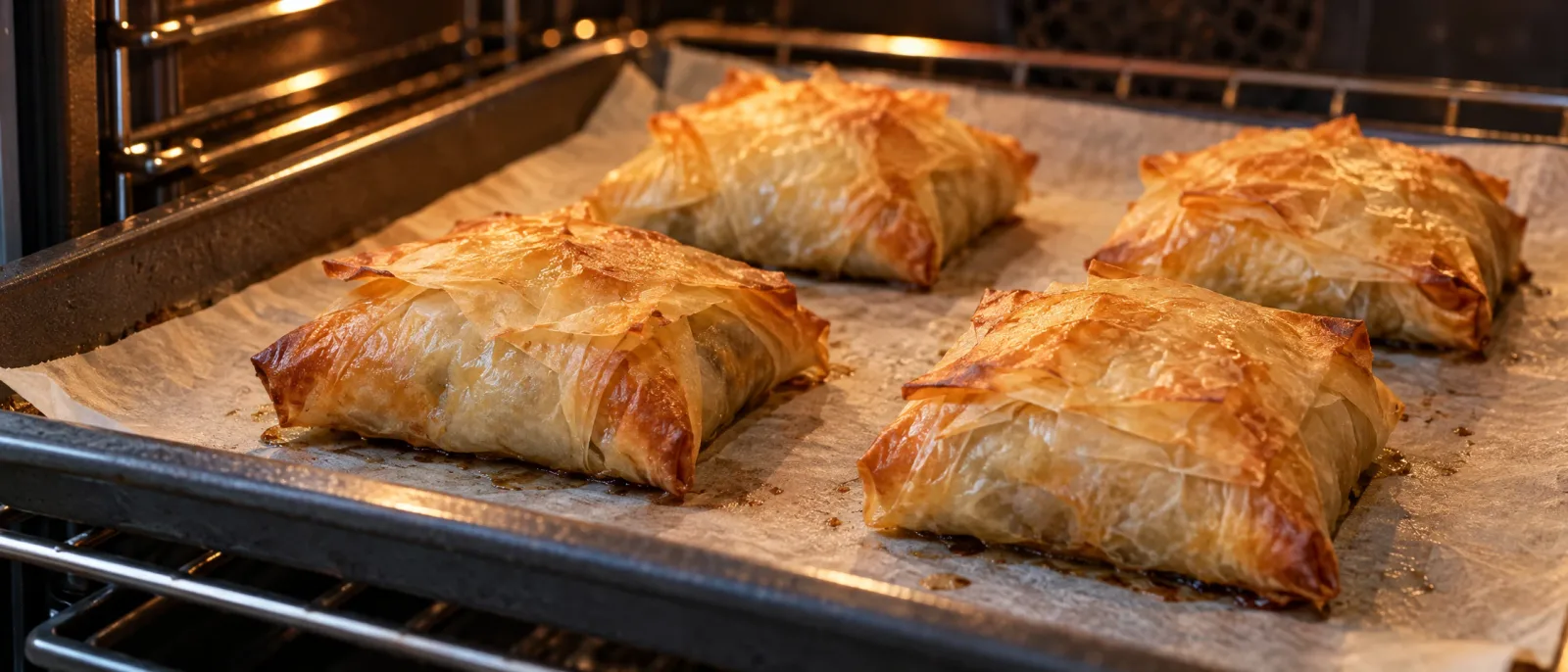
Place the tray on the middle shelf of the preheated oven. Bake for about 18–22 minutes from putting it in, checking for the first time after 18 minutes. The parcels should be golden and crisp, including underneath, with the filling hot in the centre and at least 74°C. Insert the probe through the side of one parcel. If the centre is not ready, continue baking and check every 2–3 minutes; loosely cover the tops with foil if they brown too quickly.
20:00Bake the parcels Cool briefly and serve
Remove the parcels and carefully transfer them to a wire rack. Leave for about 3 minutes from transferring them so steam can escape and the filling cools slightly. Arrange seam-side down on a shared platter and serve warm, without an additional topping.
03:00Cool briefly and serve
My note for next time
Saved automatically in this browser. This note is not sent to the editors. 0/2000
Tips
- Do not open the filo until the filling base has cooled. Keep unused pieces beneath cling film and a lightly damp tea towel, without letting wet fabric touch the pastry.
- If the filling looks wet after adding the duck, do not wrap it immediately. Transfer it to a sieve and let excess liquid drain away; do not reheat the meat in the frying pan.
- Bake parcels prepared ahead straight from the fridge. Start checking after 18 minutes, but allow a few extra minutes if necessary until the centre is hot.
- Bake frozen, unbaked parcels without thawing at the same temperature for about 25–30 minutes from placing them in the preheated oven, approximately 5–10 minutes longer. Check the centre temperature; loosely cover with foil if the filo browns too quickly.
- Add salt sparingly: the ready-cooked confit and stock may provide enough seasoning.
Storage
Keep the assembled, unbaked parcels containing fully cooked duck covered in the fridge at 4°C or below for up to 24 hours, without exceeding the meat's use-by date. Alternatively, freeze on a tray, then pack airtight and keep at −18°C for up to a month. See the tips for baking from frozen. Cool baked leftovers and refrigerate within 2 hours; eat cold within 24 hours. Do not reheat them again, as baking the parcels already reheats the confit duck.
Timing
Hands-on: 48 min · Cooking: 40 min · Resting: 23 min
The total allows for tasks done in parallel. The individual times can overlap.