Main course Italian-American
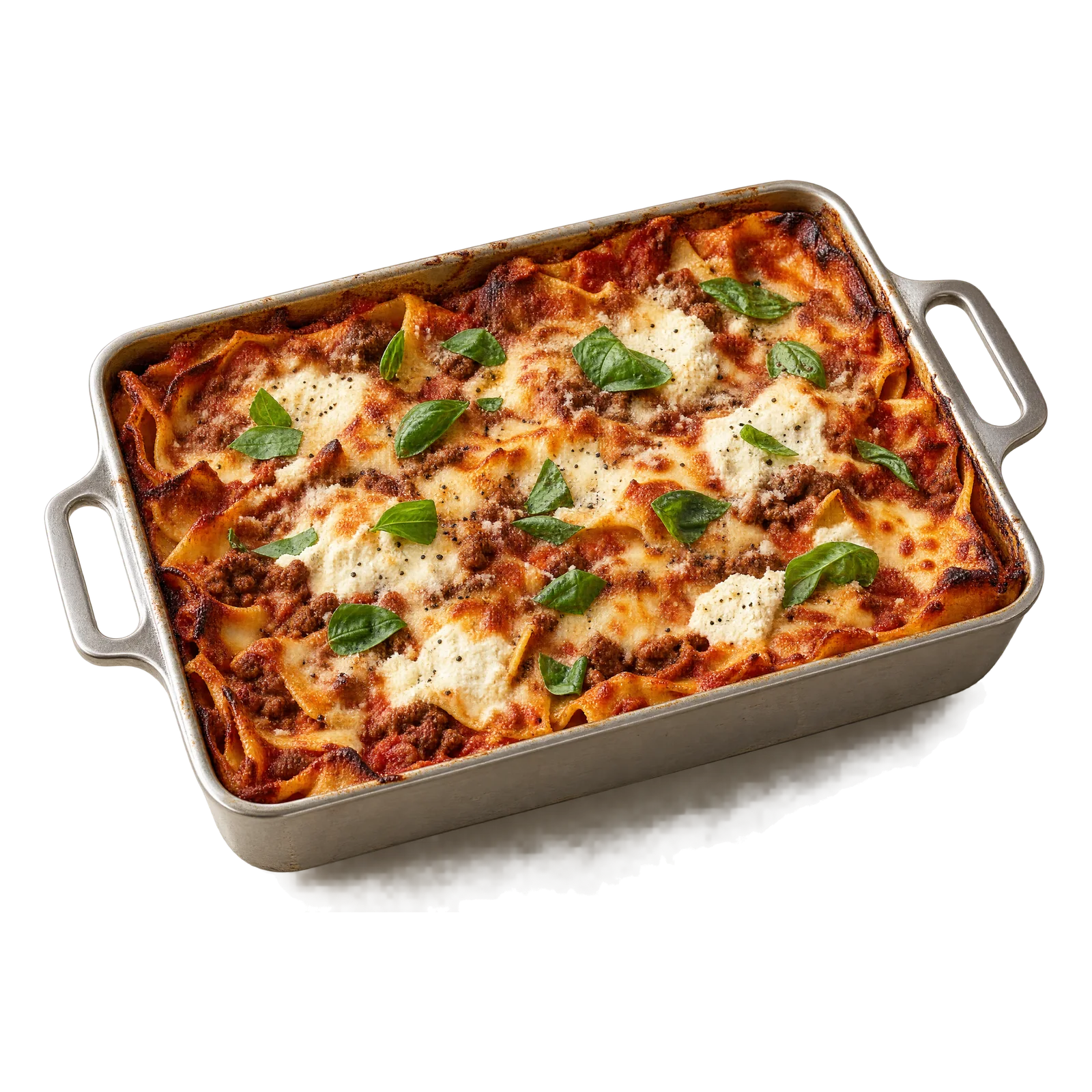
Sheet-Pan Lasagne with Ricotta and Crispy Edges
Editorially prepared
Layerless lasagne with pasta pieces tossed in beef and tomato sauce, then baked on a shallow tray with mozzarella and ricotta. The centre stays saucy while the edges turn golden and crisp.
Plan this meal
Set your servings and add the meal. Open your plan to choose more meals and find your combined shopping list.
COOK YOUR WAY
Take this recipe to the kitchen
Start a session to tick off ingredients and steps and use timers.
Ingredients
4 servings · metric units
When increasing the servings, increase the tray area too. For a double batch, use two trays of the same size rather than making a deeper layer. Baking them one at a time gives the most even result and increases the overall preparation time.
Substitutions
Substitute amounts are adjusted to your selected servings.
- Instead of ricottadrained cottage cheese
Drain in a fine sieve and briefly blend into a thick mixture. After draining, weigh out the amount specified for the ricotta. The flavour will be slightly tangier; season only after adding the Parmesan.
- Instead of ParmesanGrana Padano
Use the same quantity as the Parmesan, divided between the ricotta and the topping. The flavour will be milder; grate the cheese finely.
Shopping for this recipe
Your list uses the selected servings and fridge. Stock quantities are unknown — check you have enough.
Optional ingredients and substitutions
You’ll need
metal baking tray approximately 30 × 35 cm, with sides at least 3 cm high · large deep frying pan · large saucepan · colander · large bowl for mixing the pasta · small bowl · grater · knife, chopping board and spatula
Method
0/8 stepsPrepare the tray and ingredients
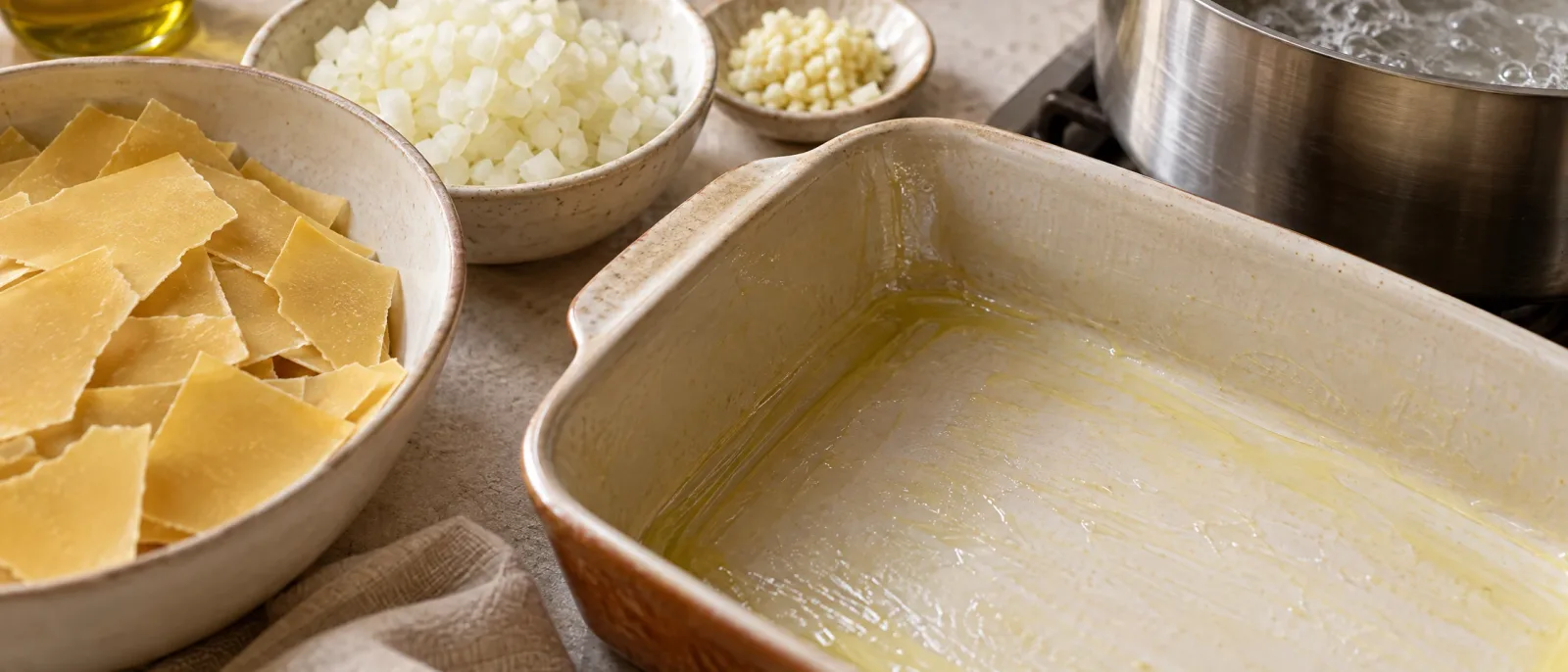
Preheat the oven to 200°C conventional or 180°C fan. Grease the base and sides of the tray with half the olive oil; reserve the remaining oil for frying. Finely dice the onion and chop the garlic. Break the dried lasagne sheets over a bowl into pieces roughly 5–7 cm across. Put a large saucepan of salted water on to boil. If it boils before the sauce and cheese are prepared, lower the heat and bring it back to the boil before adding the pasta.
Prepare the tray and ingredients Cook the onion and beef
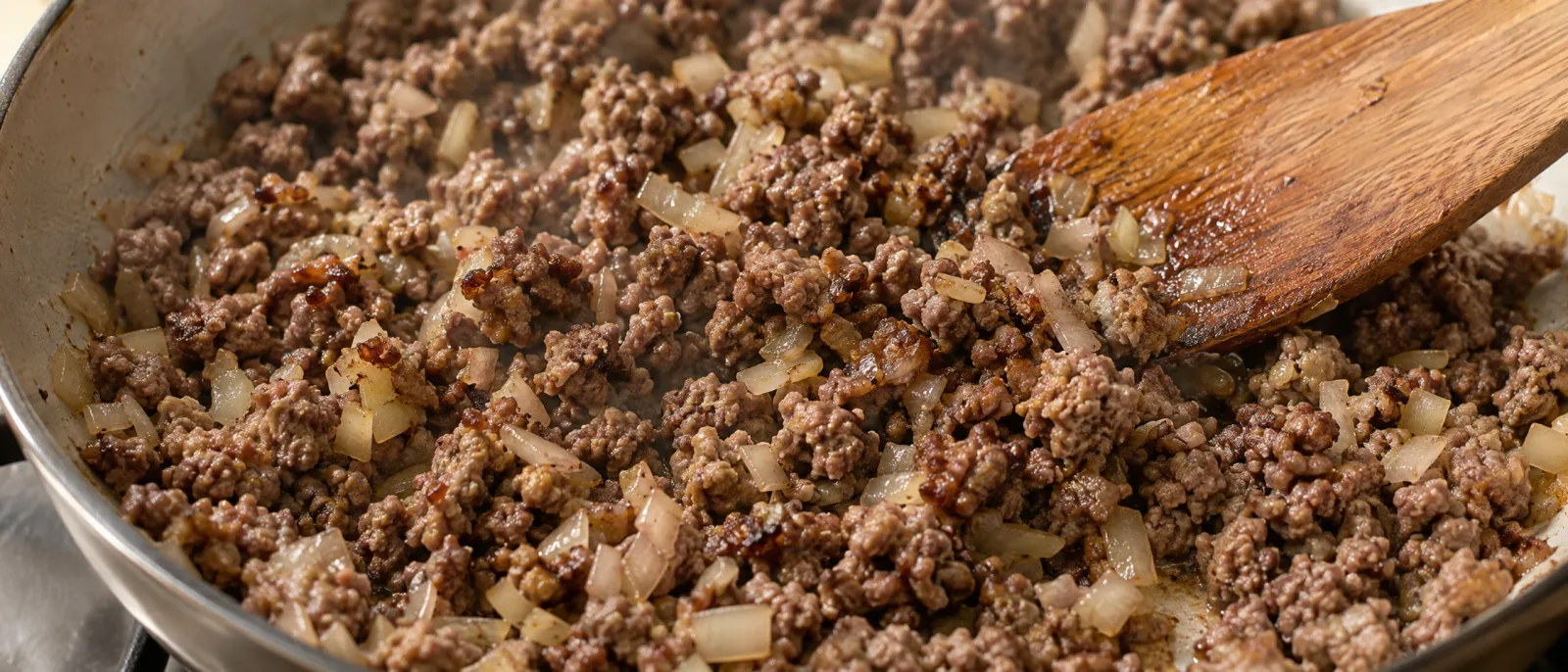
Heat the remaining olive oil in a large frying pan over a medium heat. Add the onion and cook for about 5 minutes from adding it, stirring, until soft and translucent. If it is still firm, cook a little longer. Add the beef mince, increase to a medium-high heat and cook for about 7–9 minutes from adding the meat, breaking it up with a spatula. Continue once the mince is broken into small pieces, has no pink patches and is browned in places, with the watery liquid evaporated. If liquid is still pooling, cook a little longer.
Cook the onion and beef Simmer and reduce the sauce
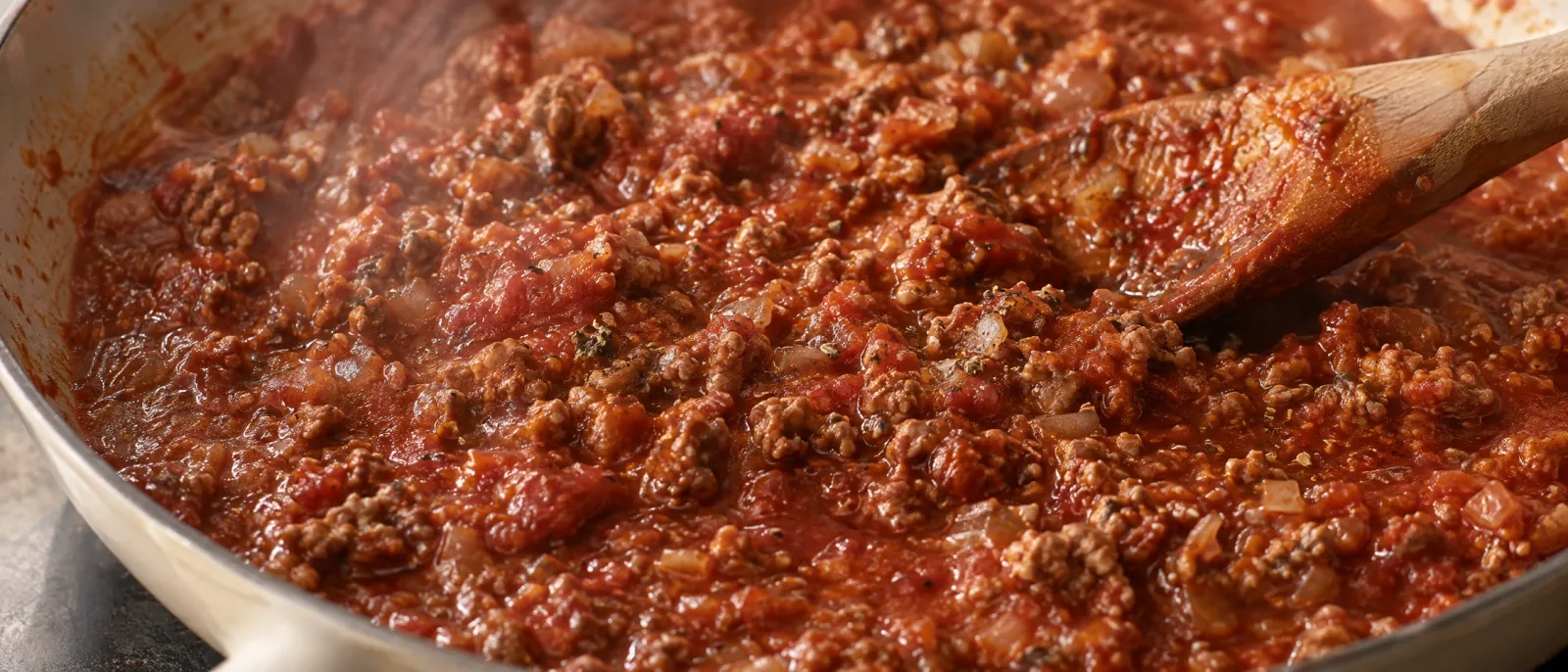
Add the garlic and oregano to the beef. Stir for about a minute, until fragrant but not browned. Pour in the passata and season with pepper and a little salt. Bring to a gentle simmer, lower the heat and cook uncovered for about 12–15 minutes from the first gentle bubbles, stirring occasionally. The sauce should thicken but still coat pasta easily; if it remains watery, cook it longer. While it simmers, prepare the cheese and parboil the pasta in the following steps.
12:00Simmer and reduce the sauce Prepare the cheese
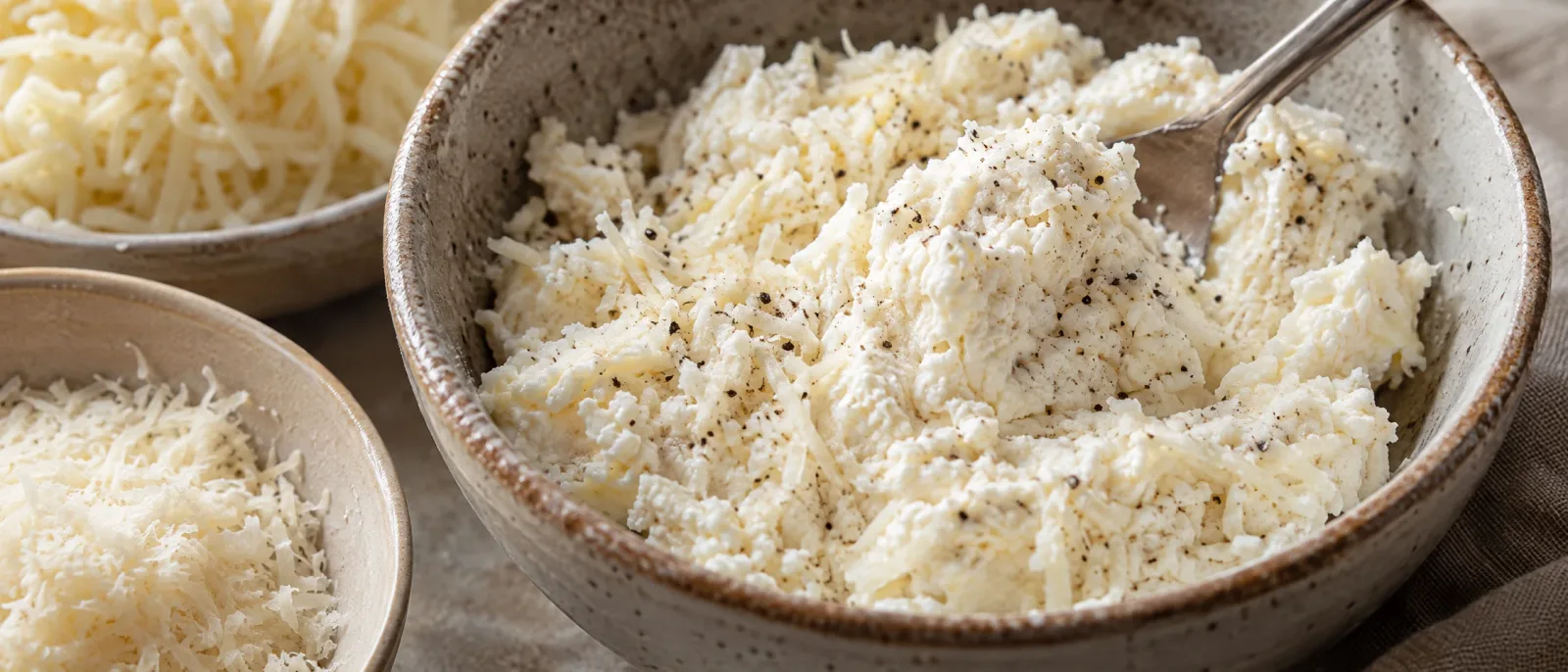
While the sauce continues to simmer, finely grate the Parmesan and coarsely grate the mozzarella. Pour off any liquid from the ricotta tub, then mix the ricotta with half the Parmesan and some pepper. Taste and add a little salt if needed. The mixture should be thick and spoonable. Reserve the remaining Parmesan for the topping.
Prepare the cheese Parboil the pasta
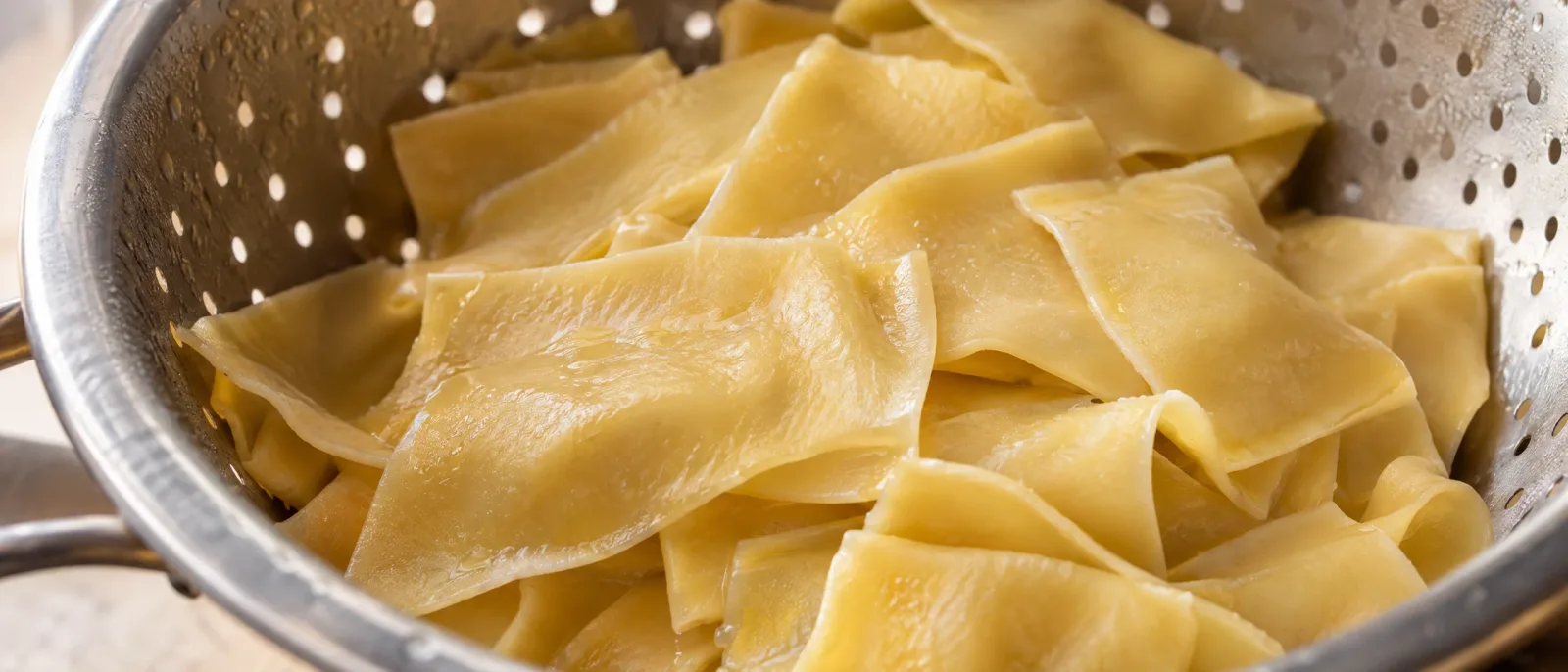
Add the broken lasagne sheets to the boiling water and stir gently straight away to prevent sticking. Cook for roughly 5–8 minutes after the water returns to the boil, about 2 minutes less than the full cooking time on the packet. The pieces should be flexible but distinctly firm in the centre; if still rigid, check every minute. Reserve a mugful of cooking water and drain the pasta. Check the sauce too: if watery liquid surrounds the meat, continue reducing it; if it thickened earlier, turn off the heat. Combine the components only once the pasta is parboiled and the sauce has thickened.
Parboil the pasta Assemble the lasagne on the tray
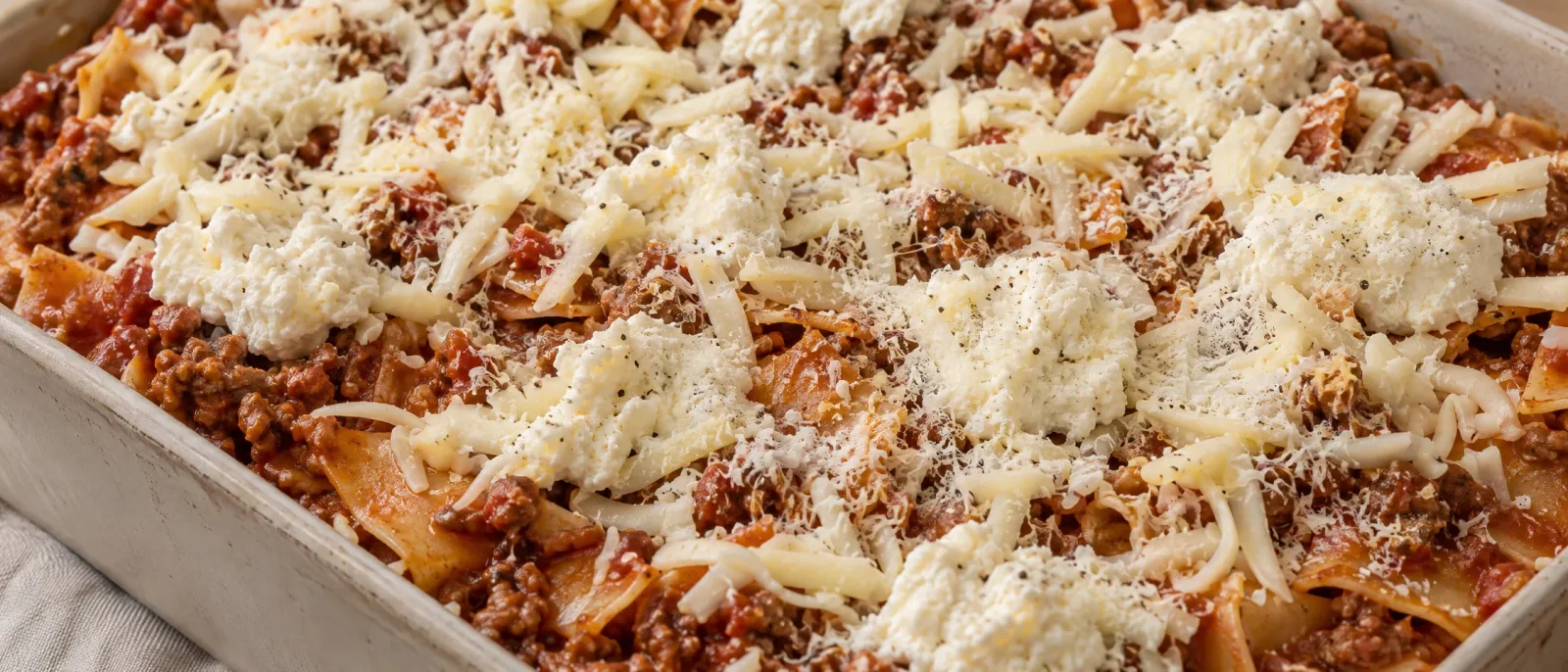
Gently combine the drained pasta and finished sauce in a large bowl. Every piece should be coated. If the mixture is dry and difficult to stir, add the reserved pasta water a little at a time, just to loosen it; there should be no puddle at the bottom. Spread evenly over the prepared tray, right to the sides. Scatter over the mozzarella, add small spoonfuls of the prepared ricotta mixture and sprinkle with the remaining Parmesan. Leave uncovered.
Assemble the lasagne on the tray Bake until the edges are crisp
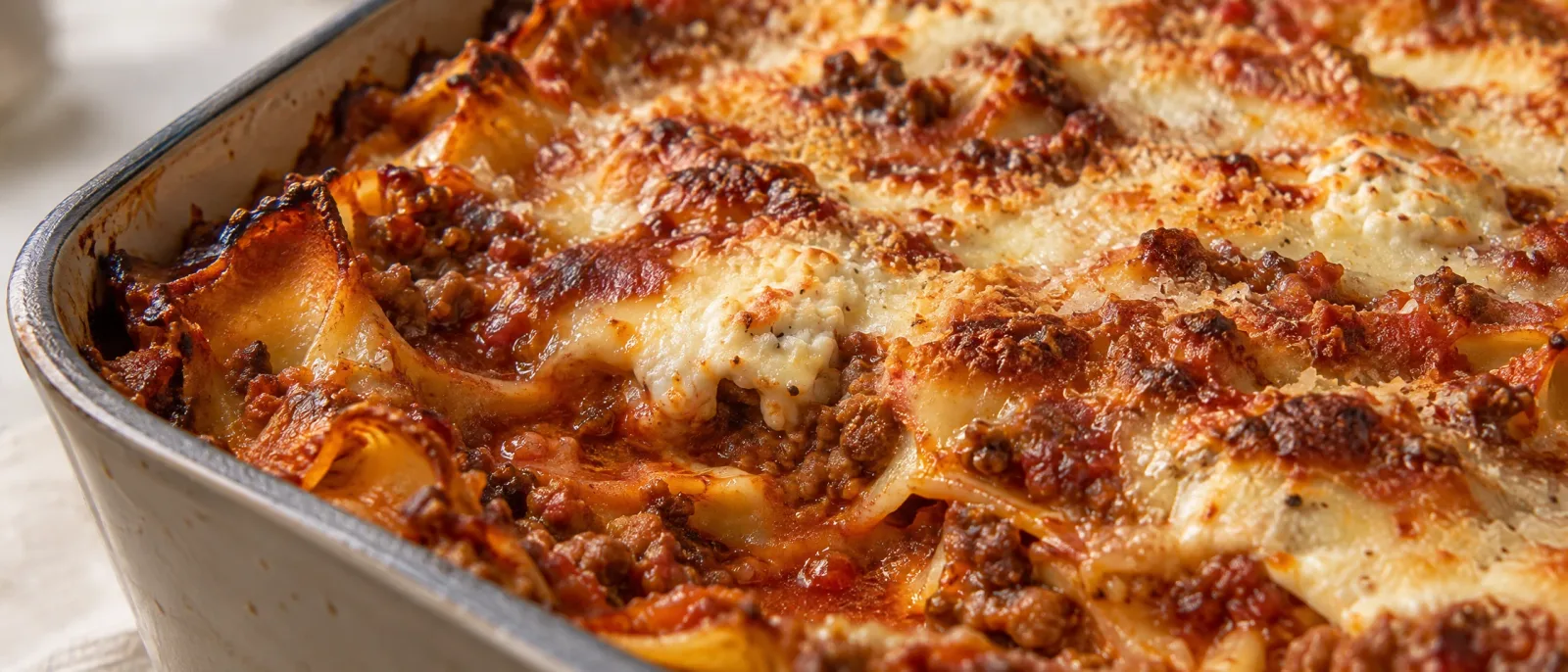
Place the tray on the middle shelf of the preheated oven. Bake for about 25–30 minutes from putting it in, until the sauce bubbles towards the centre, the mozzarella is melted and browned, and the exposed pasta edges are golden and crisp. Check a pasta piece from the centre: it should be tender with no hard core. If the centre is not ready, continue baking and check every 3–5 minutes; loosely cover the top with foil if it browns too quickly.
25:00Bake until the edges are crisp Rest and serve with basil
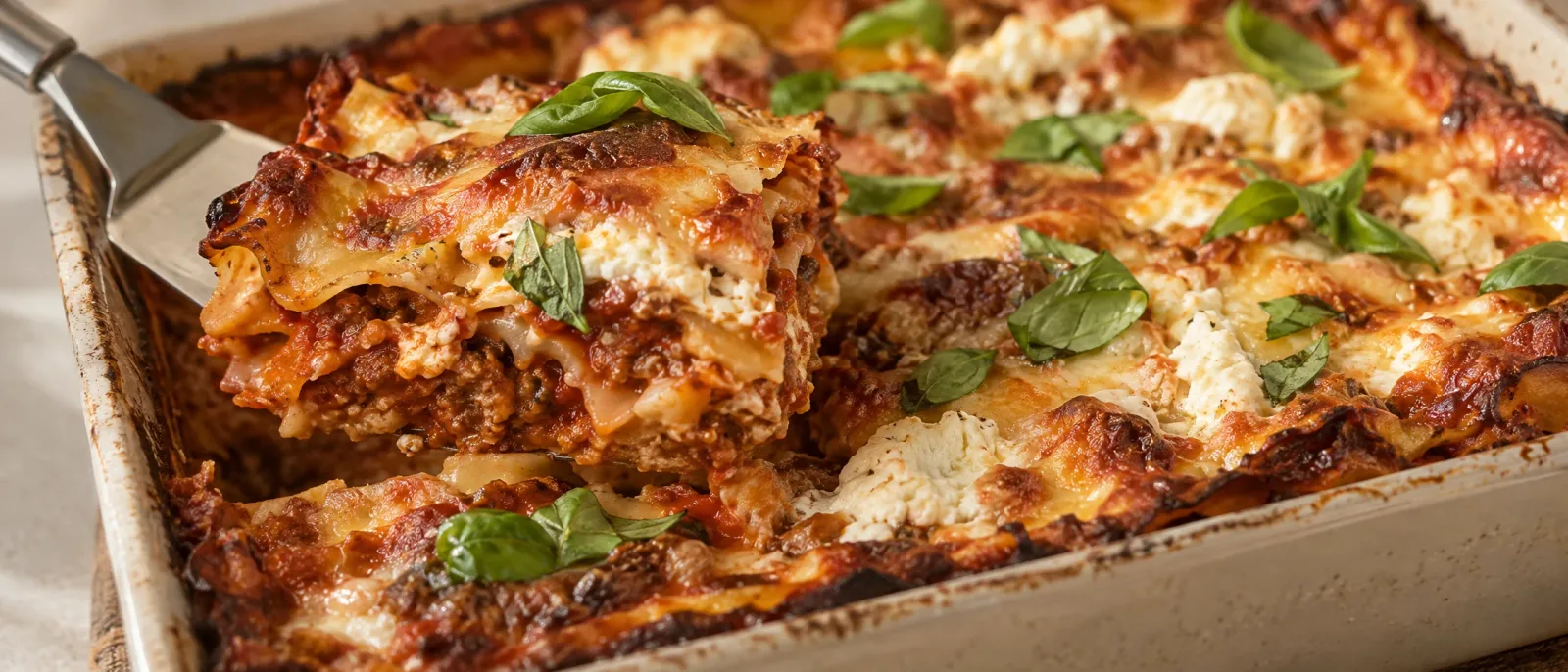
After removing the tray from the oven, leave it uncovered for about 5 minutes so the sauce thickens slightly and stops bubbling vigorously. If it is still bubbling strongly, wait a little longer. Scatter over the basil leaves, tearing any large ones. Serve straight from the tray, using a broad spatula to give each portion some saucy centre and crisp edges.
05:00Rest and serve with basil
My note for next time
Saved automatically in this browser. This note is not sent to the editors. 0/2000
Tips
- Do not line the tray with baking parchment: spread the oil directly over the metal base and sides.
- Add the ricotta in small spoonfuls, leaving mozzarella and pasta exposed between them.
- Do not replace the parboiled sheets with dry ones without changing the method. This version does not contain the extra liquid needed to cook dry pasta in the oven.
Storage
Store only fully baked lasagne. Divide leftovers into small portions, cool promptly and refrigerate within 2 hours of baking. Keep covered at 5°C or below and eat within 48 hours, or freeze for up to 2 months. Defrost in the fridge. Reheat only once, covered in an oven preheated to 180°C, until steaming hot throughout, including the centre. Uncover towards the end to dry the top slightly.
Timing
Hands-on: 35 min · Cooking: 60 min · Resting: 5 min